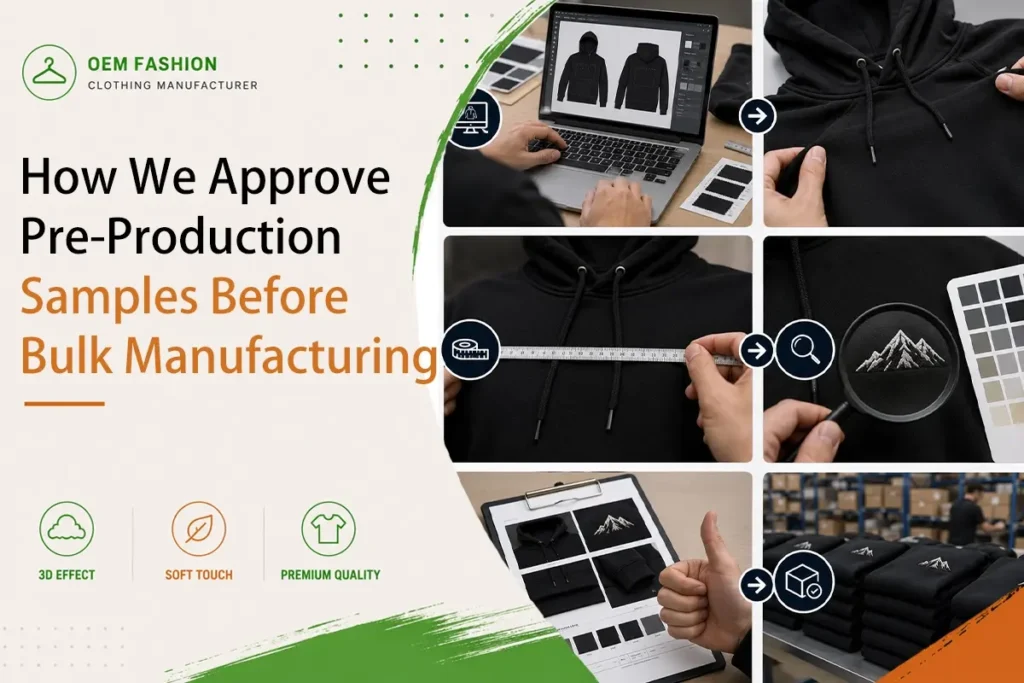
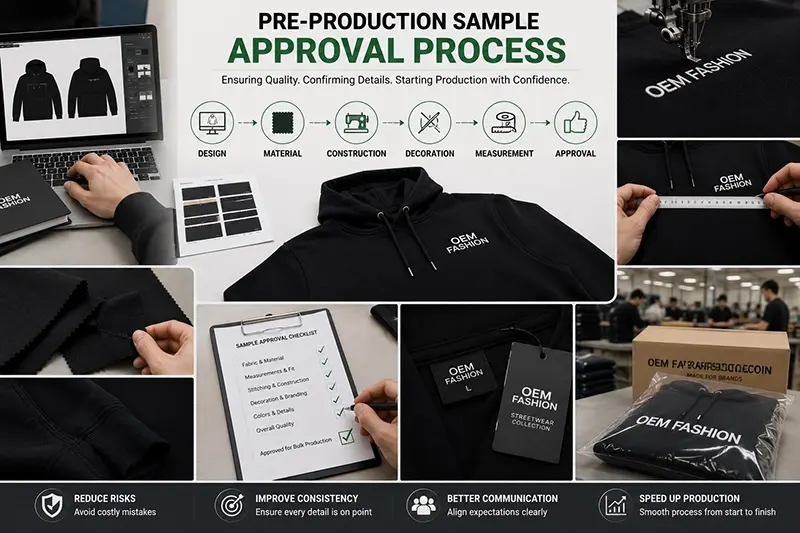
Pre-production sample approval is one of the most important stages in apparel manufacturing.
Before bulk production begins, both the manufacturer and the customer must confirm that the product meets all approved specifications. This process helps reduce production risks, prevent costly mistakes, and improve consistency across the entire order.
At OEM Fashion, every bulk order goes through a structured pre-production sample approval process before manufacturing starts. By reviewing materials, measurements, construction details, decorations, and branding elements, we ensure that production teams work from approved standards.
What Is a Pre-Production Sample?
A pre-production sample, often referred to as a PP sample, is the final sample approved before bulk manufacturing begins.
It represents the product exactly as it will be produced during bulk production.
The sample typically includes:
Approved fabric
Approved trims
Approved measurements
Approved branding
Approved decoration methods
Approved packaging requirements
Once approved, the PP sample becomes the reference standard for production.
Why Pre-Production Sample Approval Matters
Skipping sample approval can create significant production risks.
Without a clearly approved sample, manufacturers may interpret specifications differently, leading to:
Size inconsistencies
Fabric substitutions
Decoration errors
Label placement issues
Packaging mistakes
A formal approval process helps ensure everyone works from the same expectations before production begins.
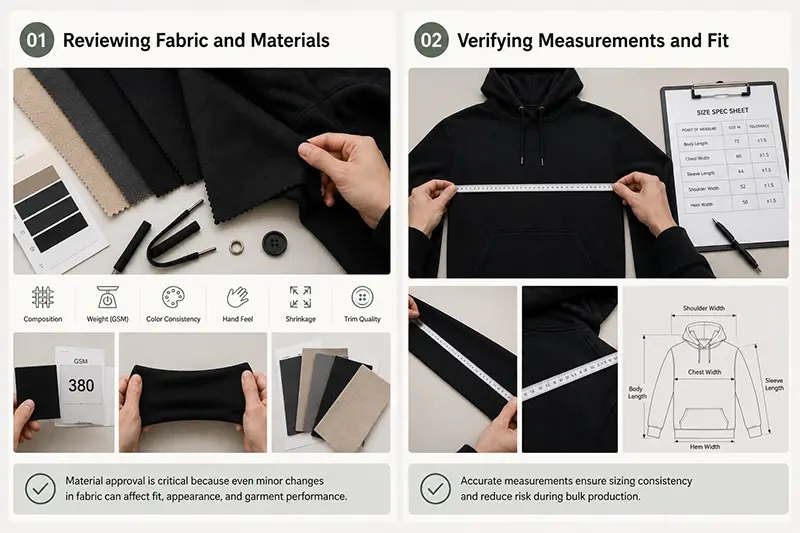
Step 1: Reviewing Fabric and Materials
The first stage of approval focuses on materials.
Our team verifies:
Fabric composition
Fabric weight (GSM)
Color consistency
Fabric hand feel
Shrinkage performance
Trim quality
For projects involving custom fabrics or special finishes, additional reviews may be required through our Fabric Customization process.
Material approval is critical because even minor changes in fabric can affect fit, appearance, and garment performance.
Step 2: Verifying Measurements and Fit
Measurement accuracy is one of the most important aspects of sample approval.
Inspectors compare the sample against the approved size specifications to verify:
Body length
Chest width
Sleeve length
Shoulder width
Hem measurements
Tolerance compliance
Any deviations must be corrected before production begins.
This stage helps ensure sizing consistency throughout the bulk order.
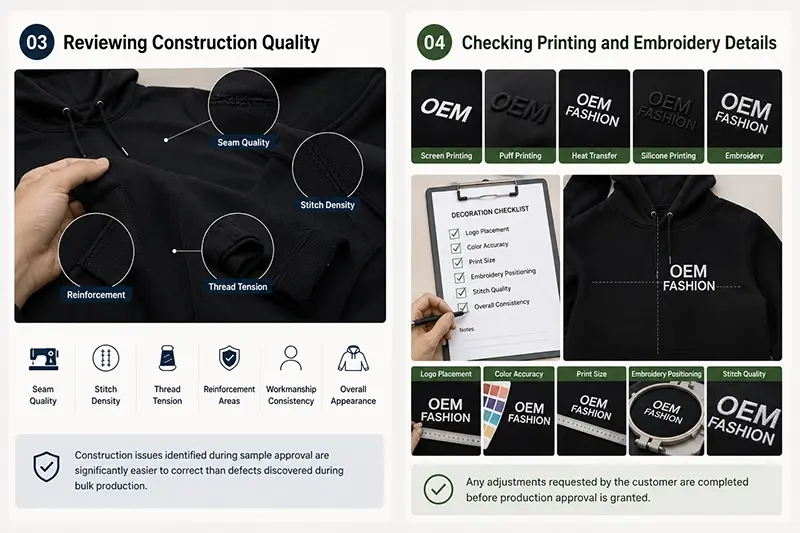
Step 3: Reviewing Construction Quality
The sample is then evaluated for overall construction quality.
Inspection points include:
Seam quality
Stitch density
Thread tension
Reinforcement areas
Workmanship consistency
Overall garment appearance
Construction issues identified during sample approval are significantly easier to correct than defects discovered during bulk production.
Step 4: Checking Printing and Embroidery Details
For customized garments, decoration approval is essential.
Through our Customized Craftsmanship capabilities, brands may incorporate screen printing, embroidery, puff printing, heat transfer graphics, silicone printing, and other decoration methods.
During approval, inspectors verify:
Logo placement
Color accuracy
Print size
Embroidery positioning
Stitch quality
Overall branding consistency
Any adjustments requested by the customer are completed before production approval is granted.
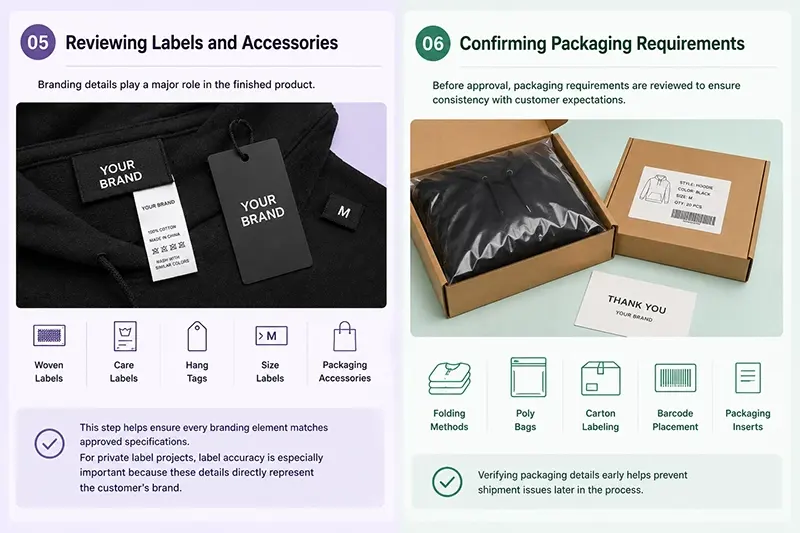
Step 5: Reviewing Labels and Accessories
Branding details play a major role in the finished product.
Inspectors review:
Woven labels
Care labels
Hang tags
Size labels
Packaging accessories
This step helps ensure every branding element matches approved specifications.
For private label projects, label accuracy is especially important because these details directly represent the customer’s brand.
Step 6: Confirming Packaging Requirements
Before approval, packaging requirements are reviewed to ensure consistency with customer expectations.
Items checked include:
Folding methods
Poly bags
Carton labeling
Barcode placement
Packaging inserts
Verifying packaging details early helps prevent shipment issues later in the process.
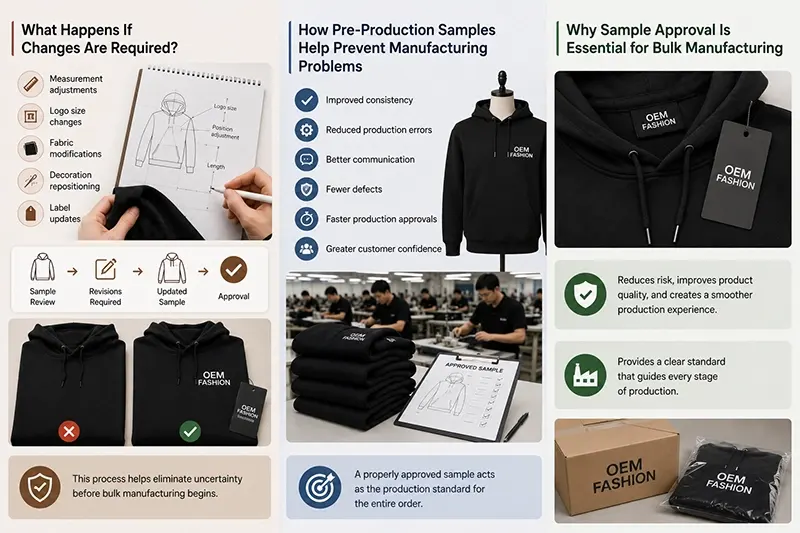
What Happens If Changes Are Required?
In many cases, customers request revisions before approving a sample.
Common revisions include:
Measurement adjustments
Logo size changes
Fabric modifications
Decoration repositioning
Label updates
When revisions are required, updated samples are produced and reviewed again before production approval is granted.
This process helps eliminate uncertainty before bulk manufacturing begins.
How Pre-Production Samples Help Prevent Manufacturing Problems
A properly approved sample acts as the production standard for the entire order.
Benefits include:
Improved consistency
Reduced production errors
Better communication
Fewer defects
Faster production approvals
Greater customer confidence
By establishing a clear reference point, manufacturers and customers can work together more efficiently throughout production.
This process is particularly important for products produced by a Custom Embroidered Hoodies manufacturer, where fabric, decoration, and branding details must remain consistent across the entire order.
Why Sample Approval Is Essential for Bulk Manufacturing
Bulk production should never begin without a fully approved sample.
The approval process provides an opportunity to verify every important detail before large quantities are manufactured.
For apparel brands, this step helps reduce risk, improve product quality, and create a smoother production experience.
For manufacturers, it provides a clear standard that guides every stage of production.
Conclusion
Pre-production sample approval is one of the most effective ways to improve manufacturing accuracy and reduce production risks.
By carefully reviewing fabrics, measurements, construction details, decorations, labels, and packaging before production begins, apparel brands can achieve greater consistency and confidence in their bulk orders.
Contact us today to learn how our sample development and approval process helps ensure reliable apparel manufacturing and consistent production quality.
FAQs
What is a pre-production sample?
A pre-production sample is the final approved garment used as the reference standard before bulk manufacturing begins.
Why is sample approval important?
Sample approval helps prevent production errors by ensuring fabrics, measurements, construction details, decorations, and branding elements are confirmed before manufacturing starts.
Can changes be made after a sample is approved?
Changes can be made, but they may require additional development time, revised samples, and updated production schedules.
What should be checked during sample approval?
Fabric quality, measurements, construction, decoration details, labels, accessories, and packaging requirements should all be reviewed.
Should bulk production start before sample approval?
No. Bulk production should only begin after the pre-production sample has been reviewed and formally approved.