How We Ensure Garment Quality: Our Complete Quality Control Process
When choosing an apparel manufacturing partner, quality is often one of the most important factors. Even the best designs can fail if garments arrive with sizing inconsistencies, fabric defects, poor stitching, or printing issues.
For apparel brands, quality directly affects customer satisfaction, return rates, and long-term business growth. That’s why quality control should never be treated as a final inspection step. Instead, it should be built into every stage of production.
At OEM Fashion, we follow a structured quality control process that begins before production starts and continues until products are packed and ready for shipment. This approach helps ensure consistent product quality while reducing production risks for our customers.
Why Quality Control Matters in Apparel Manufacturing
In today’s apparel market, customers expect products that look professional, fit correctly, and maintain their appearance after repeated wear and washing.
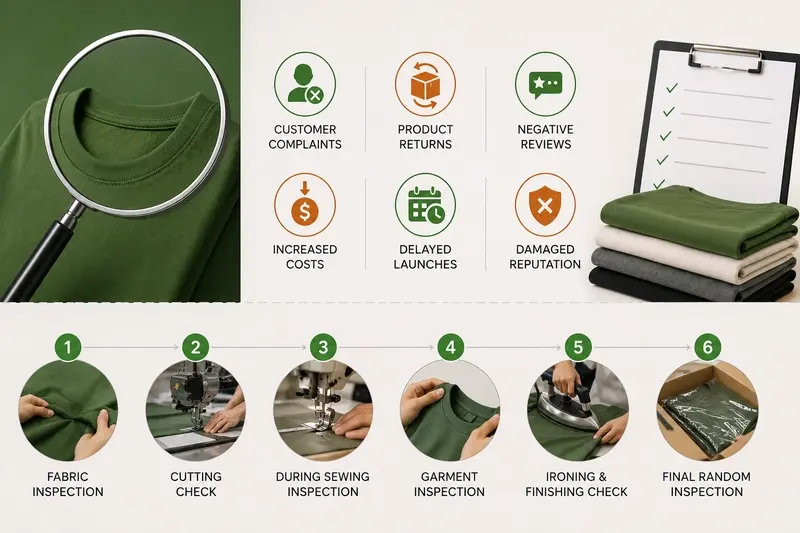
Poor quality garments can lead to:
- Customer complaints
- Product returns
- Negative reviews
- Increased operating costs
- Delayed product launches
- Damage to brand reputation
For brands sourcing products internationally, maintaining consistent quality standards becomes even more important.
A reliable quality control system helps ensure that every garment meets approved specifications before reaching the market.
Our 6-Step Garment Quality Control Process
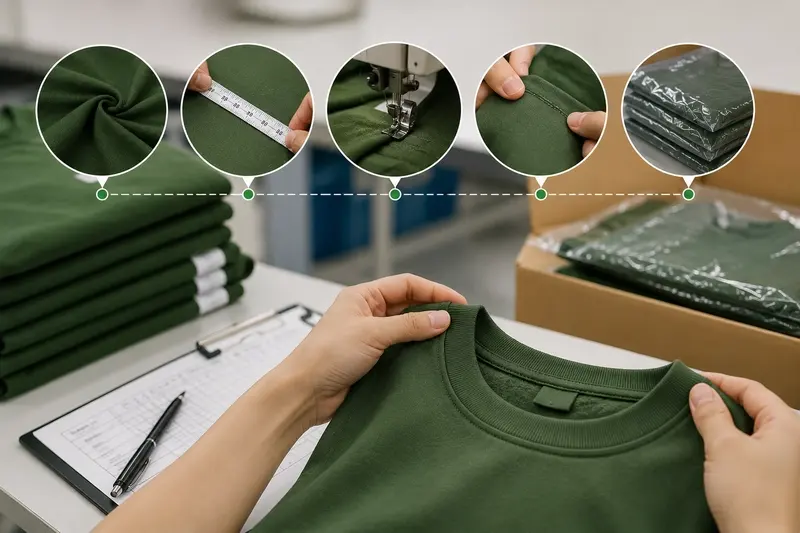
Rather than relying on a single inspection before shipment, quality checks are performed throughout production.
| Production Stage | Inspection Focus |
|---|---|
| Fabric Inspection | Material quality verification |
| Product Development Review | Sample and specification approval |
| Cutting Inspection | Measurement accuracy |
| Sewing Inspection | Construction quality |
| Customization Inspection | Printing and embroidery quality |
| Final Inspection & Shipping Verification | Shipment readiness |
Step 1: Fabric Inspection Before Production
Quality starts with the fabric.
Before bulk production begins, all incoming materials are inspected to ensure they meet approved specifications and performance requirements.
Our team evaluates:
- Fabric appearance
- Color consistency
- Fabric weight (GSM)
- Fabric width
- Shrinkage performance
- Surface defects
- Weaving irregularities
- Dye lot consistency
Identifying fabric issues before cutting begins helps prevent costly delays and reduces the risk of defects later in production.
This process is particularly important for brands that require specialized textiles, custom dyeing, or unique material finishes through our Fabric Customization services.
Step 2: Product Development Review
Many production issues originate before manufacturing begins.
That’s why quality control starts during Product Development.
Before bulk production starts, our team carefully reviews:
- Tech packs
- Approved samples
- Measurement specifications
- Fabric selections
- Trim requirements
- Label placements
- Packaging instructions
- Branding details
Every department works from the same approved specifications to minimize misunderstandings and production errors.
A strong product development process provides the foundation for successful manufacturing and helps ensure consistency throughout production.
Step 3: Cutting Inspection
Once materials are approved, the cutting process begins.
Although often overlooked, cutting accuracy plays a major role in garment consistency and sizing precision.
During cutting inspections, we verify:
- Marker accuracy
- Pattern alignment
- Fabric utilization
- Panel consistency
- Fabric grain direction
- Measurement tolerances
Even small cutting inaccuracies can create sizing issues across an entire production run. By monitoring this stage closely, we help ensure all garment components are prepared correctly before sewing begins.
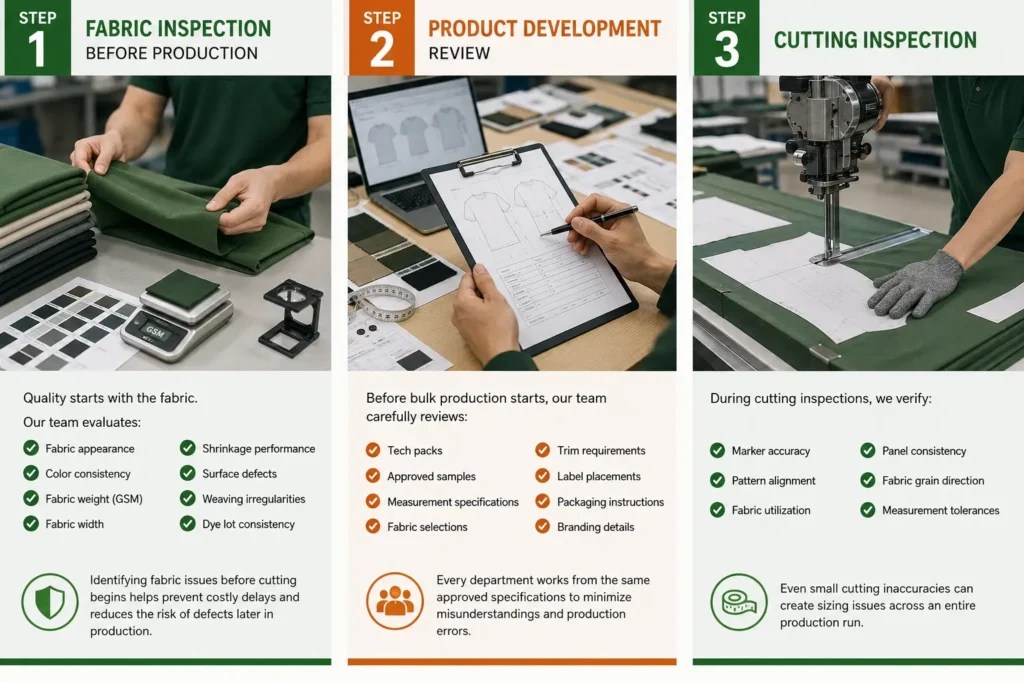
Step 4: In-Line Sewing Inspection
Sewing is one of the most labor-intensive stages of Apparel Manufacturing, making continuous monitoring essential.
Rather than waiting until production is complete, our quality control team conducts regular in-line inspections throughout the sewing process.
Inspection points include:
- Stitch density
- Seam strength
- Thread tension
- Measurement accuracy
- Label placement
- Pattern alignment
- Overall workmanship
Our inspectors monitor production lines throughout the manufacturing process to identify potential issues before they affect larger quantities of garments. Common problems such as open seams, loose threads, measurement deviations, and construction inconsistencies can often be corrected immediately when detected during production.
By identifying issues early, production teams can take corrective action quickly, helping maintain consistent quality across every production run.
Step 5: Printing, Embroidery, and Customization Inspection
For custom apparel projects, decoration quality is just as important as garment construction.
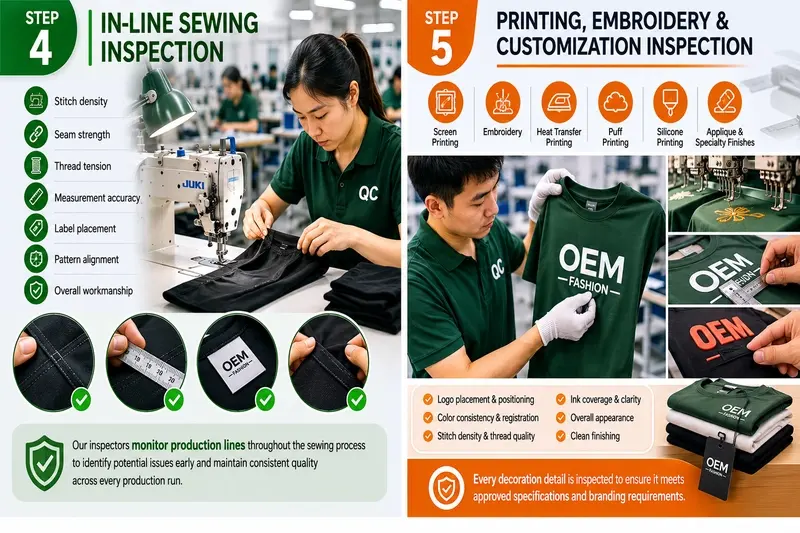
Through our Customized Craftsmanship capabilities, brands can incorporate a variety of customization techniques, including screen printing, puff printing, embroidery, heat transfer printing, silicone printing, applique, and specialty finishes.
Each decoration method requires its own quality control standards.
For printed garments, our inspectors verify logo placement, color consistency, registration accuracy, ink coverage, and overall appearance. For embroidery projects, we check stitch density, thread consistency, logo positioning, and finishing quality to ensure a clean and professional result.
Additional inspections may be performed for specialty applications such as puff printing, silicone printing, reflective prints, and other custom decorative techniques.
Before garments move to final inspection, our quality control team reviews all decoration details to ensure they meet approved specifications and branding requirements.
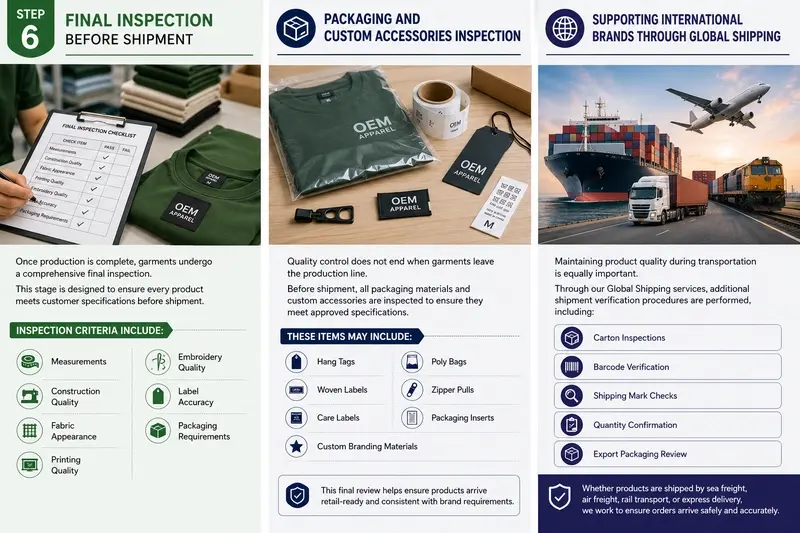
Step 6: Final Inspection Before Shipment
Once production is complete, garments undergo a comprehensive final inspection.
This stage is designed to ensure every product meets customer specifications before shipment.
Inspection criteria include:
- Measurements
- Construction quality
- Fabric appearance
- Printing quality
- Embroidery quality
- Label accuracy
- Packaging requirements
Final Inspection Checklist
| Inspection Area | What We Check |
|---|---|
| Measurements | Size tolerance and consistency |
| Fabric | Defects, color, and appearance |
| Sewing | Seam quality and workmanship |
| Decoration | Print and embroidery accuracy |
| Labels | Placement and information accuracy |
| Packaging | Folding, packing, and carton labeling |
Packaging and Custom Accessories Inspection
Quality control does not end when garments leave the production line.
Before shipment, all packaging materials and Custom Accessories are inspected to ensure they meet approved specifications.
These items may include:
- Hang tags
- Woven labels
- Care labels
- Poly bags
- Zipper pulls
- Packaging inserts
- Custom branding materials
This final review helps ensure products arrive retail-ready and consistent with brand requirements.
Supporting International Brands Through Global Shipping
Maintaining product quality during transportation is equally important.
Through our Global Shipping services, additional shipment verification procedures are performed, including:
- Carton inspections
- Barcode verification
- Shipping mark checks
- Quantity confirmation
- Export packaging review
Whether products are shipped by sea freight, air freight, rail transport, or express delivery, we work to ensure orders arrive safely and accurately.
Common Garment Defects We Prevent
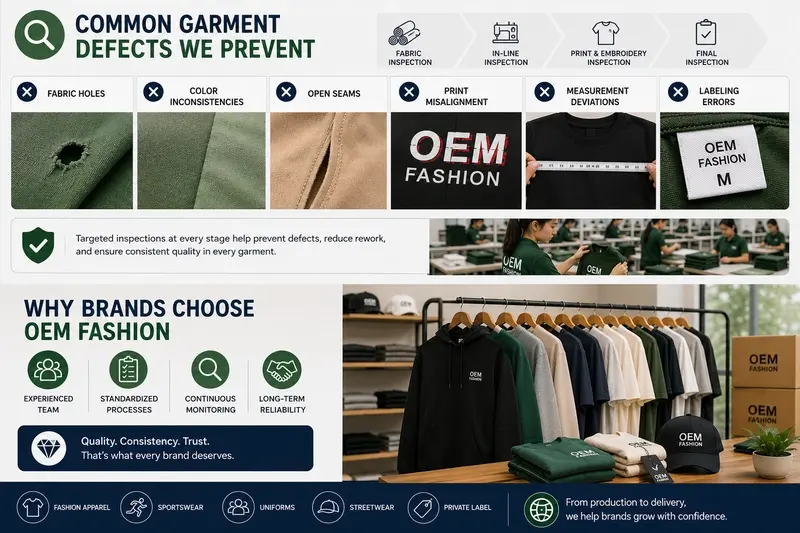
Throughout apparel production, even small issues can affect the final quality of a garment. Common defects include fabric holes, color inconsistencies, open seams, print misalignment, measurement deviations, and labeling errors.
At each stage of production, our quality control team performs targeted inspections to identify and correct these issues before products move to the next process. This proactive approach helps reduce defects, minimize rework, and maintain consistent quality across every order.
Why Brands Choose OEM Fashion
Successful apparel manufacturing requires more than production capacity.
Brands need a manufacturing partner that understands quality, consistency, communication, and long-term reliability.
By combining experienced inspectors, standardized procedures, and continuous monitoring, we help brands reduce production risks while maintaining consistent product standards across every order.
Whether you’re producing fashion apparel, sportswear, uniforms, streetwear, or private label collections, our team is committed to delivering products that meet your expectations.
Conclusion
Consistent garment quality doesn’t happen by accident. It requires a structured quality control system, experienced production teams, and continuous inspection throughout the manufacturing process.
By implementing quality checks at every stage—from fabric inspection and product development to production and final shipment—brands can reduce defects, improve consistency, and deliver better products to their customers.
Contact us today to discuss your next apparel project and learn how we can help bring your products to market with confidence.
FAQs
How do clothing manufacturers ensure garment quality?
Professional manufacturers use multiple quality control checkpoints, including fabric inspection, production monitoring, decoration inspection, and final product verification before shipment.
Why is fabric inspection important in apparel manufacturing?
Fabric inspection helps identify defects, color inconsistencies, and performance issues before production begins, reducing waste and preventing costly delays.
What is in-line inspection in garment production?
In-line inspection refers to quality checks conducted during production rather than after completion. It allows issues to be identified and corrected immediately.
Can OEM Fashion provide quality reports before shipment?
Yes. Inspection reports, production photos, and quality verification records can be provided upon request before shipment.
How does quality control help reduce production defects?
It depends on the design. Puff printing is ideal for bold graphics and streetwear aesthetics, while embroidery is often preferred for premium logos and corporate branding.
Share With
Related Articles
Hot Products