Apparel Trims Guide: Labels, Tags, Packaging, and Accessories Explained
OEM Fashion is a professional custom apparel manufacturer specializing in private label clothing, OEM/ODM production, and custom branding solutions for fashion brands worldwide.
When developing a clothing brand, most business owners focus on fabric selection, garment design, and fit development. While these factors are essential, the details that truly elevate a product often come from apparel trims and accessories.
Labels, hang tags, packaging, patches, zippers, and other garment components help create a professional appearance, improve customer experience, and strengthen brand identity. These seemingly small details can make a significant difference in how customers perceive your products and whether they remember your brand.
Whether you’re launching a startup fashion label or expanding an established collection, understanding apparel trims is an important step toward building a successful apparel business.
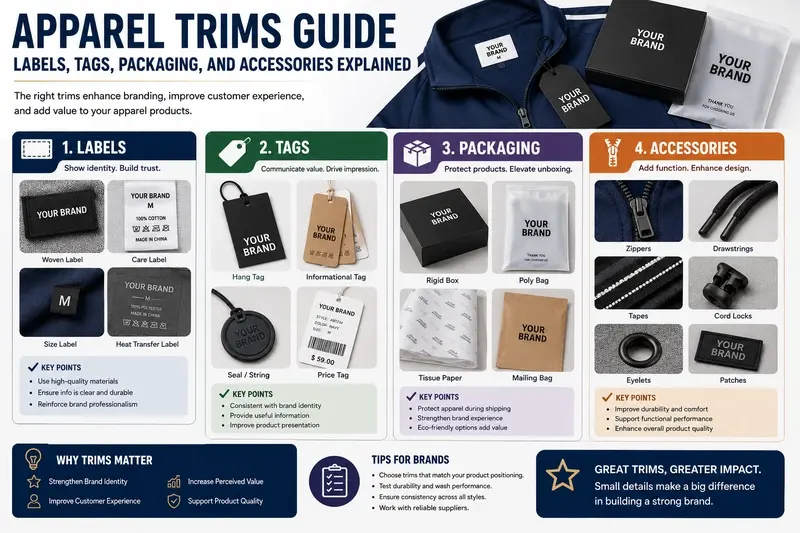
What Are Apparel Trims?
Apparel trims refer to all materials and accessories used in garment production besides the main fabric. They serve functional, decorative, and branding purposes throughout a garment’s lifecycle.
Common apparel trims include:
- Woven labels
- Printed labels
- Care labels
- Size labels
- Hang tags
- Patches
- Zippers
- Buttons
- Drawcords
- Elastic bands
- Packaging materials
While trims often account for only a small portion of overall production costs, they play a major role in enhancing the perceived quality and value of a product.
Why Are Apparel Trims Important?
Many successful fashion brands invest heavily in trim development because these details directly influence customer perception.
Stronger Brand Recognition
Custom labels, branded packaging, and professionally designed hang tags help customers identify and remember your brand.
Higher Perceived Value
Premium trims create a more polished appearance and often justify higher retail pricing.
Better Customer Experience
Packaging, labels, and branded accessories contribute to a memorable unboxing experience that encourages repeat purchases.
Product Information and Compliance
Care labels provide important information about garment care, fabric composition, and country of origin, helping brands meet regulatory requirements in international markets.
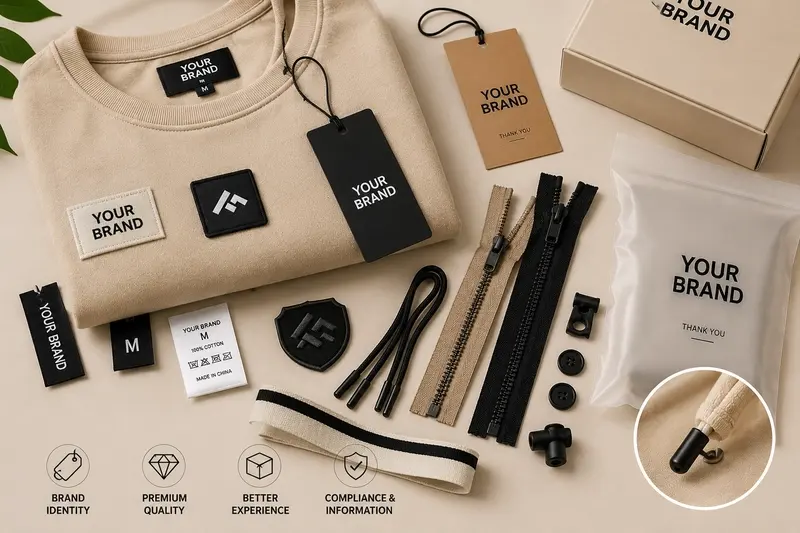
Clothing Labels Explained
Labels are among the most important branding elements in apparel manufacturing.
Woven Labels
Woven labels are produced by weaving threads directly into a design. They are highly durable and offer a premium appearance, widely used by fashion and streetwear brands.
Advantages include:
- Professional appearance
- Excellent durability
- Premium brand perception
Printed Labels
Printed labels use ink to display logos, sizing, and product information. They are often chosen for their softer feel and lower production cost.
Advantages include:
- Cost-effective
- Comfortable against the skin
- Suitable for minimalist branding
Care Labels
Care labels provide essential product information, including:
- Washing instructions
- Fabric composition
- Country of origin
- Manufacturing details
In many countries, care labels are mandatory for apparel products.
Size Labels
Size labels help consumers quickly identify garment sizing and improve overall shopping convenience.
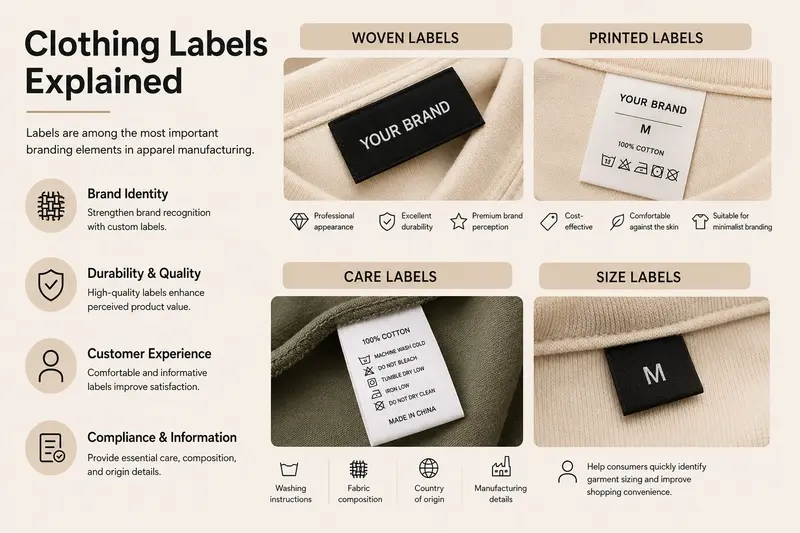
The Role of Hang Tags in Branding
Hang tags are often the first branding element customers notice before making a purchase.
A well-designed hang tag can communicate:
- Brand identity
- Product features
- Sustainability initiatives
- QR codes
- Website information
- Social media channels
For emerging clothing brands, hang tags provide an affordable way to create a stronger brand presence and improve product presentation.
Apparel Packaging Options
Packaging is more than just product protection. It is an extension of your brand experience.
Poly Bags
Poly bags are commonly used for garment protection during storage and transportation. Custom-printed poly bags can also reinforce branding.
Mailer Bags
Mailer bags are popular among e-commerce brands because they create a professional and recognizable unboxing experience.
Custom Boxes
Premium apparel brands often use custom boxes for luxury collections, corporate gifting, and limited-edition products.
Well-designed packaging can significantly increase perceived product value while improving customer satisfaction.
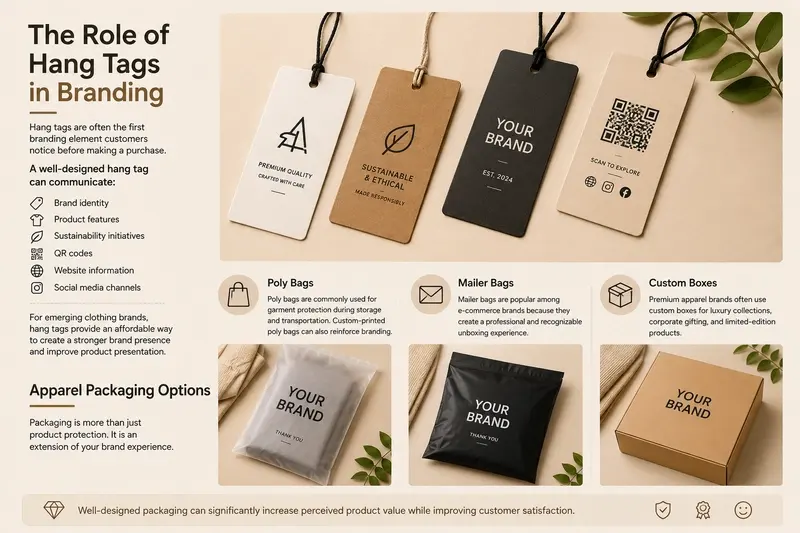
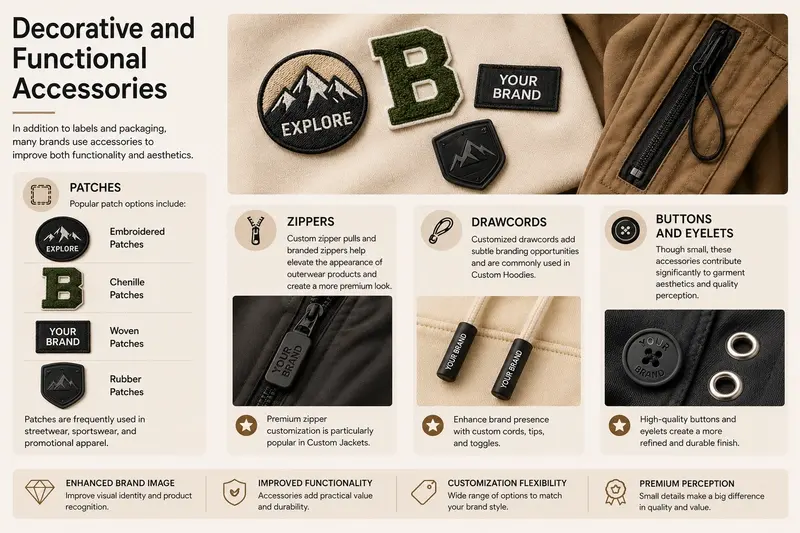
Decorative and Functional Accessories
In addition to labels and packaging, many brands use accessories to improve both functionality and aesthetics.
Patches
Popular patch options include:
- Embroidered patches
- Chenille patches
- Woven patches
- Rubber patches
Patches are frequently used in streetwear, sportswear, and promotional apparel.
Zippers
Custom zipper pulls and branded zippers help elevate the appearance of outerwear products and create a more premium look.
Premium zipper customization is particularly popular in Custom Jackets.
Drawcords
Customized drawcords add subtle branding opportunities and are commonly used in Custom Hoodies.
Buttons and Eyelets
Though small, these accessories contribute significantly to garment aesthetics and quality perception.
Choosing the Right Trims for Your Brand
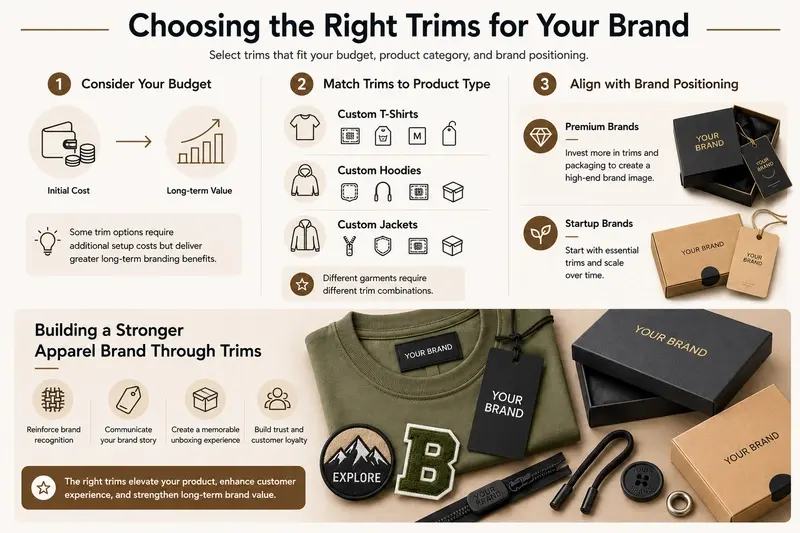
Selecting the right trims depends on your budget, product category, and brand positioning.
Consider Your Budget
Some trim options require additional setup costs but deliver greater long-term branding benefits.
Match Trims to Product Type
Different garments require different trim combinations.
For example:
- Custom T-Shirts typically use woven labels, care labels, size labels, and hang tags.
- Custom Hoodies often incorporate patches, drawcords, woven labels, and custom packaging.
- Custom Jackets commonly feature branded zippers, custom patches, premium labels, and luxury packaging.
Align with Brand Positioning
Premium fashion brands often invest more heavily in trims and packaging, while startup brands may begin with essential branding components and expand over time.
Building a Stronger Apparel Brand Through Trims
Successful apparel brands understand that branding extends beyond logos and garment designs. Every detail contributes to how customers experience a product.
A high-quality woven label can reinforce brand recognition. A professionally designed hang tag can communicate your brand story. Premium packaging can create a memorable unboxing experience that customers share on social media.
When combined, these elements help transform ordinary garments into branded products that customers recognize and trust.
Investing in the right trims not only improves product presentation but also strengthens long-term brand value.
Conclusion
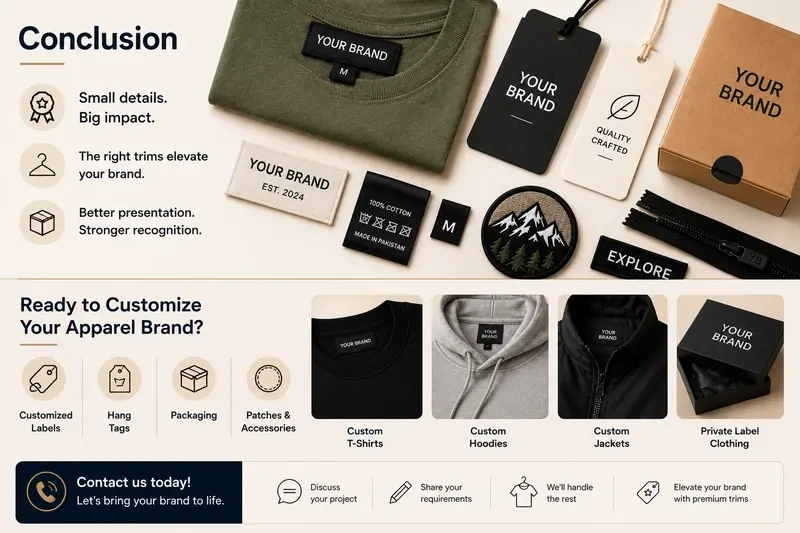
Apparel trims may seem like small details, but they play a crucial role in product presentation, customer experience, and brand recognition. From labels and hang tags to packaging and accessories, the right trims help transform basic garments into professional, branded products.
For clothing brands looking to stand out in a competitive market, investing in quality trims is an essential part of product development and brand growth.
Ready to Customize Your Apparel Brand?
Whether you’re developing Custom T-Shirts, Custom Hoodies, Custom Jackets, or a complete private label clothing collection, selecting the right trims and branding components can significantly enhance your products and strengthen your brand identity.
Our team can help you source, develop, and manufacture apparel with customized labels, packaging, patches, and accessories tailored to your specific requirements.
Contact us today to discuss your project and receive a personalized quotation.
FAQs
What are apparel trims?
Apparel trims are all materials and accessories used in garment production besides the main fabric, including labels, tags, packaging, patches, zippers, buttons, and drawcords.
What is the difference between woven labels and printed labels?
Woven labels are created by weaving threads into a design and generally provide a more premium appearance, while printed labels use ink and are often more cost-effective.
Are care labels required on clothing?
Yes. In many countries, care labels are legally required to provide information such as fabric composition, washing instructions, and country of origin.
Which trims are most important for a startup clothing brand?
Most startup brands should prioritize woven or printed labels, care labels, hang tags, and basic branded packaging before investing in more advanced trim customization.
How can apparel trims increase product value?
High-quality trims improve product presentation, strengthen brand identity, enhance customer experience, and help create a more premium perception of your products, ultimately increasing their market value.
Share With
Related Articles

Hot Products