How to Choose Fabric for Jackets
Choosing the right fabric for jackets is essential for creating products that balance comfort, durability, functionality, and style. Unlike basic apparel, jackets must perform well under different weather conditions while maintaining structure and long-term wear resistance.
The fabric used for a jacket directly affects warmth, weight, water resistance, breathability, and overall product positioning. Whether you’re developing lightweight fashion jackets, winter outerwear, or technical outerwear collections, selecting the right material is critical for product quality and customer satisfaction.
Our OEM Fashion Manufacturer services support global apparel brands with jacket fabric sourcing, sampling, and bulk production solutions.
Why Fabric Selection Matters for Jackets
Jackets are more complex than standard garments because they must combine appearance with performance.
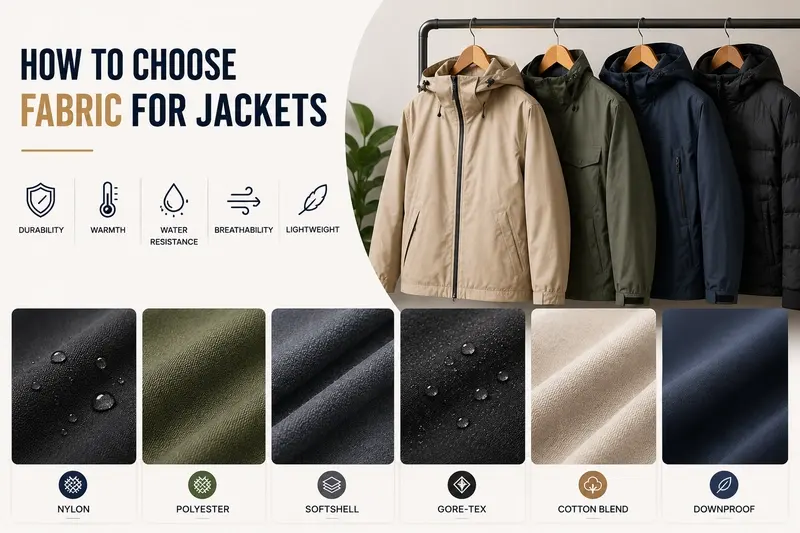
The right jacket fabric affects:
- Weather resistance
- Durability
- Comfort and mobility
- Warmth and insulation
- Garment structure
- Water resistance
- Product lifespan
For example, lightweight nylon jackets are commonly used for sportswear and outdoor products, while wool blends and heavyweight cotton fabrics are preferred for premium fashion outerwear.
Poor-quality jacket materials may lead to:
- Weak durability
- Poor insulation
- Fabric tearing
- Water penetration
- Shape distortion after washing
This is why fabric selection is one of the most important stages in jacket manufacturing.
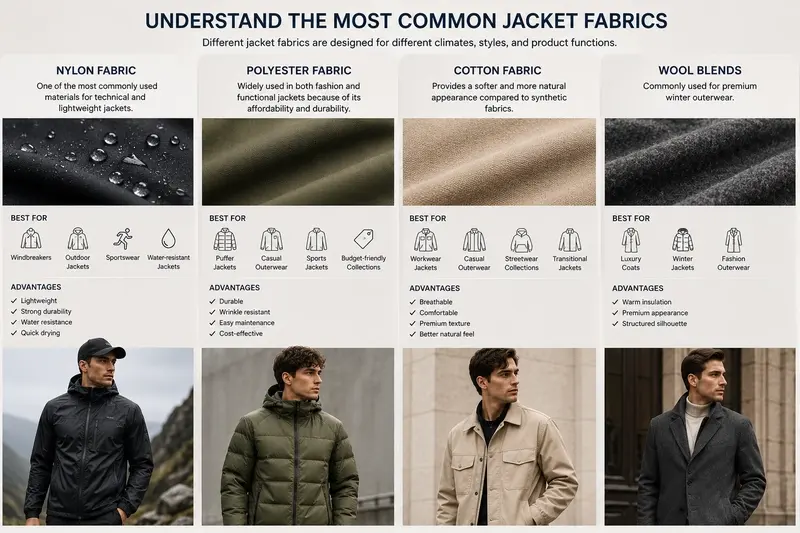
Understand the Most Common Jacket Fabrics
Different jacket fabrics are designed for different climates, styles, and product functions.
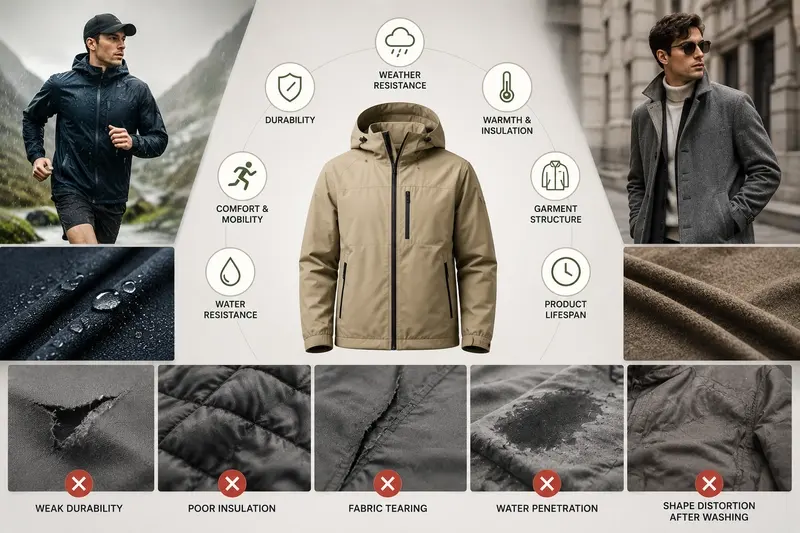
Nylon Fabric
Nylon is one of the most commonly used materials for technical and lightweight jackets.
Best for:
- Windbreakers
- Outdoor jackets
- Sportswear
- Water-resistant jackets
Advantages:
- Lightweight
- Strong durability
- Water resistance
- Quick drying
Nylon is especially popular for activewear and outdoor outerwear because it performs well in different weather conditions.
Polyester Fabric
Polyester is widely used in both fashion and functional jackets because of its affordability and durability.
Best for:
- Puffer jackets
- Casual outerwear
- Sports jackets
- Budget-friendly collections
Advantages:
- Durable
- Wrinkle resistant
- Easy maintenance
- Cost-effective
Polyester is often blended with other materials to improve comfort and performance.
Cotton Fabric
Cotton jackets provide a softer and more natural appearance compared to synthetic fabrics.
Best for:
- Workwear jackets
- Casual outerwear
- Streetwear collections
- Transitional jackets
Advantages:
- Breathable
- Comfortable
- Premium texture
- Better natural feel
However, standard cotton fabrics may absorb moisture more easily unless treated with protective coatings.
Wool Blends
Wool-blend fabrics are commonly used for premium winter outerwear.
Best for:
- Luxury coats
- Winter jackets
- Fashion outerwear
Advantages:
- Warm insulation
- Premium appearance
- Structured silhouette
Wool jackets generally create a more elevated and formal look compared to synthetic outerwear.
How to Choose Jacket Fabric Based on Function
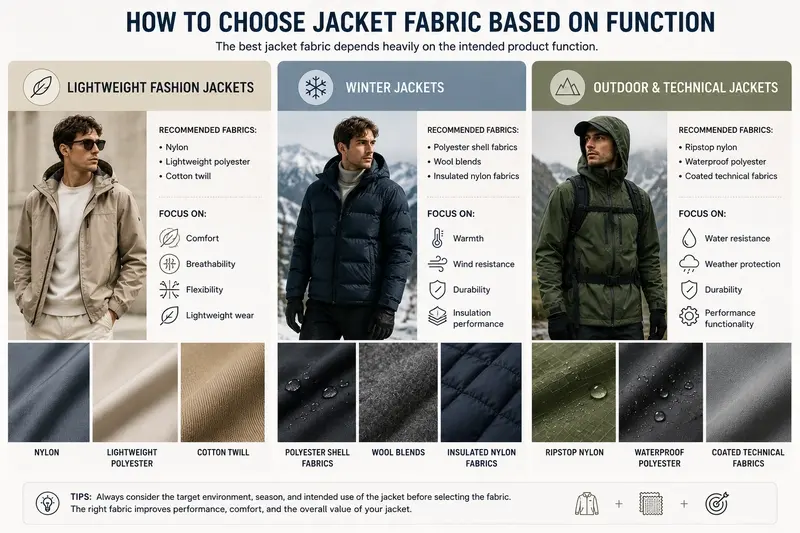
The best jacket fabric depends heavily on the intended product function.
Lightweight Fashion Jackets
Recommended fabrics:
- Nylon
- Lightweight polyester
- Cotton twill
Focus on:
- Comfort
- Breathability
- Flexibility
- Lightweight wear
Winter Jackets
Recommended fabrics:
- Polyester shell fabrics
- Wool blends
- Insulated nylon fabrics
Focus on:
- Warmth
- Wind resistance
- Durability
- Insulation performance
Outdoor and Technical Jackets
Recommended fabrics:
- Ripstop nylon
- Waterproof polyester
- Coated technical fabrics
Focus on:
- Water resistance
- Weather protection
- Durability
- Performance functionality
How Fabric Weight Affects Jackets
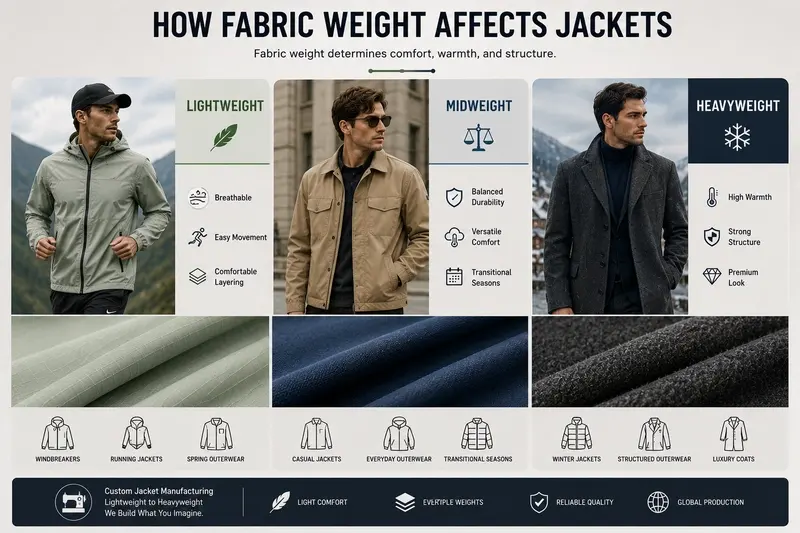
Fabric weight significantly impacts jacket comfort, warmth, and overall structure.
Lightweight Fabrics
Best for:
- Windbreakers
- Running jackets
- Spring outerwear
Advantages:
- Breathable
- Easy movement
- Comfortable layering
Midweight Fabrics
Best for:
- Casual jackets
- Everyday outerwear
- Transitional seasons
These fabrics balance durability and comfort.
Heavyweight Fabrics
Best for:
- Winter jackets
- Structured outerwear
- Luxury coats
Heavyweight fabrics provide better insulation and stronger silhouettes.
Our Custom Jacket manufacturing services support both lightweight and heavyweight outerwear production for fashion brands worldwide.
How Fabric Affects Jacket Performance
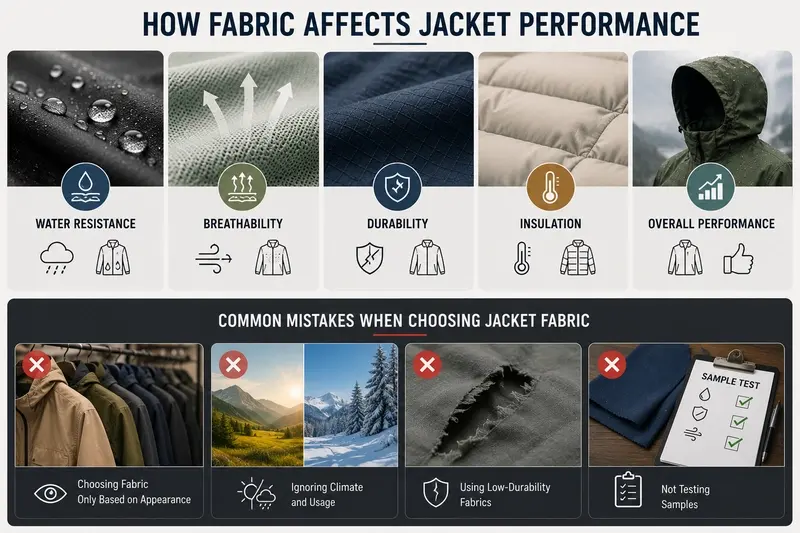
Jacket performance depends heavily on material quality and fabric construction.
Water Resistance
Coated nylon and polyester fabrics perform better in wet conditions.
Breathability
Cotton and technical breathable fabrics improve wearing comfort.
Durability
Ripstop nylon and heavyweight materials resist tearing more effectively.
Insulation
Wool blends and padded synthetic fabrics provide stronger heat retention.
Choosing the wrong fabric can negatively impact customer satisfaction and long-term garment performance.
Common Mistakes When Choosing Jacket Fabric
Choosing Fabric Only Based on Appearance
A fabric may look premium but perform poorly under different weather conditions.
Ignoring Climate and Usage
Outdoor jackets and fashion jackets require completely different materials.
Using Low-Durability Fabrics
Thin fabrics may tear or wear out quickly during regular use.
Not Testing Samples
Always test waterproofing, durability, and comfort before production.
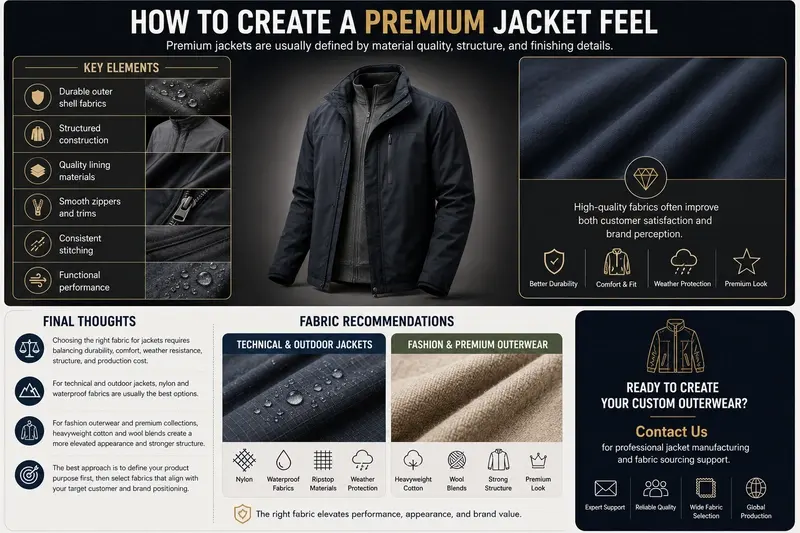
How to Create a Premium Jacket Feel
Premium jackets are usually defined by material quality, structure, and finishing details.
Key elements include:
- Durable outer shell fabrics
- Structured construction
- Quality lining materials
- Smooth zippers and trims
- Consistent stitching
- Functional performance
High-quality fabrics often improve both customer satisfaction and brand perception.
Final Thoughts
Choosing the right fabric for jackets requires balancing durability, comfort, weather resistance, structure, and production cost.
For technical and outdoor jackets, nylon and waterproof fabrics are usually the best options. For fashion outerwear and premium collections, heavyweight cotton and wool blends create a more elevated appearance and stronger structure.
The best approach is to define your product purpose first, then select fabrics that align with your target customer and brand positioning.
If you’re planning a custom outerwear collection, feel free to Contact Us for professional jacket manufacturing and fabric sourcing support.
FAQs
What is the best fabric for jackets?
The best jacket fabric depends on the product type. Nylon is excellent for outdoor jackets, while wool blends and heavyweight cotton work well for premium fashion outerwear.
Is nylon or polyester better for jackets?
Nylon is generally more durable and lightweight, while polyester is more affordable and easier to maintain.
What fabric is best for winter jackets?
Wool blends, insulated polyester, and padded nylon fabrics are commonly used for winter jackets because they provide warmth and weather resistance.
Are cotton jackets good for everyday wear?
Yes. Cotton jackets are breathable, comfortable, and suitable for casual and transitional outerwear collections.
How do I choose fabric for my jacket brand?
Start by identifying your target customer, climate needs, and product positioning. Then choose fabrics based on durability, comfort, weather resistance, and design goals.
Share With
Related Articles


Hot Products