How to Choose Fabric for T-Shirts
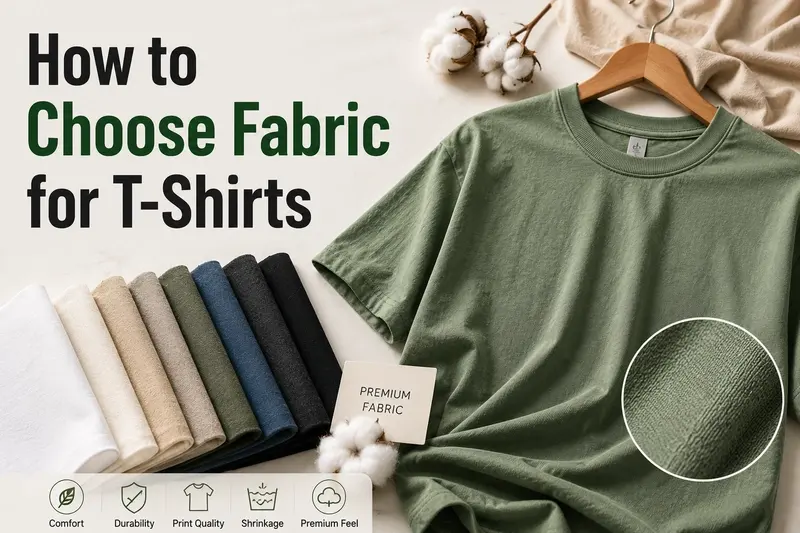
Choosing the right fabric for T-shirts is one of the most important decisions for any clothing brand. Fabric affects not only comfort and durability, but also fit, print quality, shrinkage, and how customers perceive the final product.
Today’s fashion market is highly competitive, and consumers pay close attention to fabric weight, softness, and overall garment quality. Whether you’re developing oversized streetwear T-shirts, promotional apparel, or premium basics, selecting the right material can significantly improve product value and customer satisfaction.
Our OEM Fashion Manufacturer services help brands source premium fabrics and develop high-quality custom apparel for global markets.
Why Fabric Selection Matters for T-Shirts
Many startup clothing brands focus mainly on graphics and branding. However, fabric quality often has a greater impact on customer experience and repeat purchases.
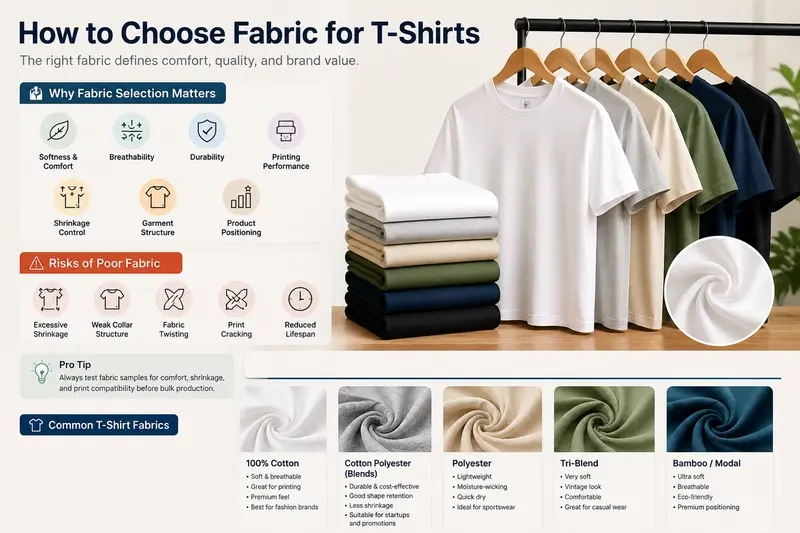
The right T-shirt fabric influences:
- Softness and comfort
- Breathability
- Garment structure
- Durability after washing
- Printing performance
- Shrinkage control
- Product positioning
For example, heavyweight cotton T-shirts create a more premium and structured appearance, while lightweight blends are often preferred for sportswear and promotional products.
Poor-quality fabric can lead to issues such as:
- Excessive shrinkage
- Weak collar structure
- Fabric twisting
- Print cracking
- Reduced garment lifespan
This is why fabric selection should be considered early during product development.
Understand the Most Common T-Shirt Fabrics
Different fabrics create different visual styles and wearing experiences. Choosing the right material depends on your target customer and brand positioning.
Cotton Fabric
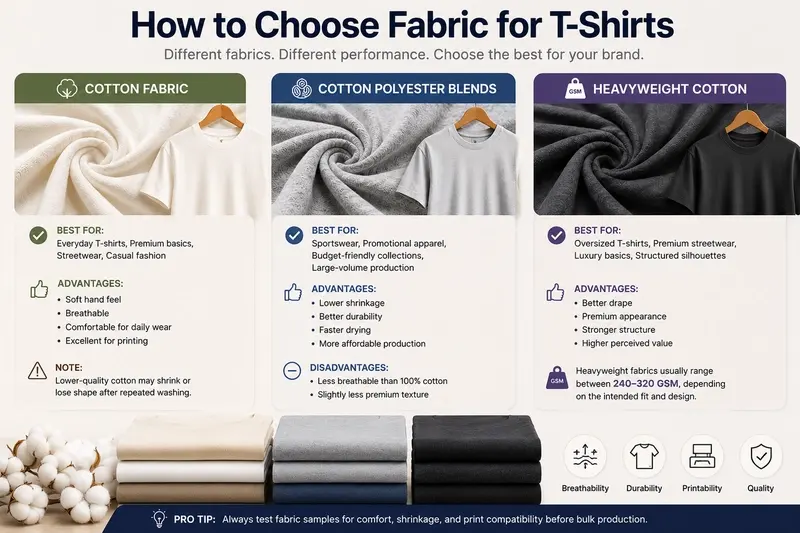
Cotton remains the most widely used T-shirt fabric because of its softness, breathability, and versatility.
Best for:
- Everyday T-shirts
- Premium basics
- Streetwear
- Casual fashion
Advantages:
- Soft hand feel
- Breathable
- Comfortable for daily wear
- Excellent for printing
However, lower-quality cotton may shrink or lose shape after repeated washing.
Cotton Polyester Blends
Cotton-poly blends combine the softness of cotton with the durability of polyester.
Best for:
- Sportswear
- Promotional apparel
- Budget-friendly collections
- Large-volume production
Advantages:
- Lower shrinkage
- Better durability
- Faster drying
- More affordable production
Disadvantages:
- Less breathable than 100% cotton
- Slightly less premium texture
Heavyweight Cotton
Heavyweight cotton has become increasingly popular among modern fashion brands, especially in oversized and streetwear collections.
Best for:
- Oversized T-shirts
- Premium streetwear
- Luxury basics
- Structured silhouettes
Advantages:
- Better drape
- Premium appearance
- Stronger structure
- Higher perceived value
Heavyweight fabrics usually range between 240–320 GSM, depending on the intended fit and design.
How to Choose the Right GSM for T-Shirts
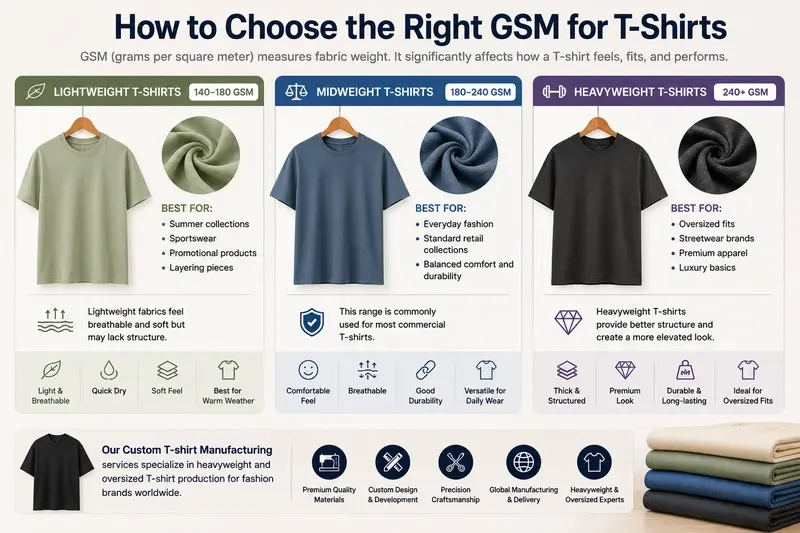
GSM (grams per square meter) measures fabric weight. It significantly affects how a T-shirt feels, fits, and performs.
Lightweight T-Shirts (140–180 GSM)
Best for:
- Summer collections
- Sportswear
- Promotional products
- Layering pieces
Lightweight fabrics feel breathable and soft but may lack structure.
Midweight T-Shirts (180–240 GSM)
Best for:
- Everyday fashion
- Standard retail collections
- Balanced comfort and durability
This range is commonly used for most commercial T-shirts.
Heavyweight T-Shirts (240+ GSM)
Best for:
- Oversized fits
- Streetwear brands
- Premium apparel
- Luxury basics
Heavyweight T-shirts provide better structure and create a more elevated appearance.
Our Custom T-shirt manufacturing services specialize in heavyweight and oversized T-shirt production for fashion brands worldwide.
Choose Fabric Based on Your Brand Positioning
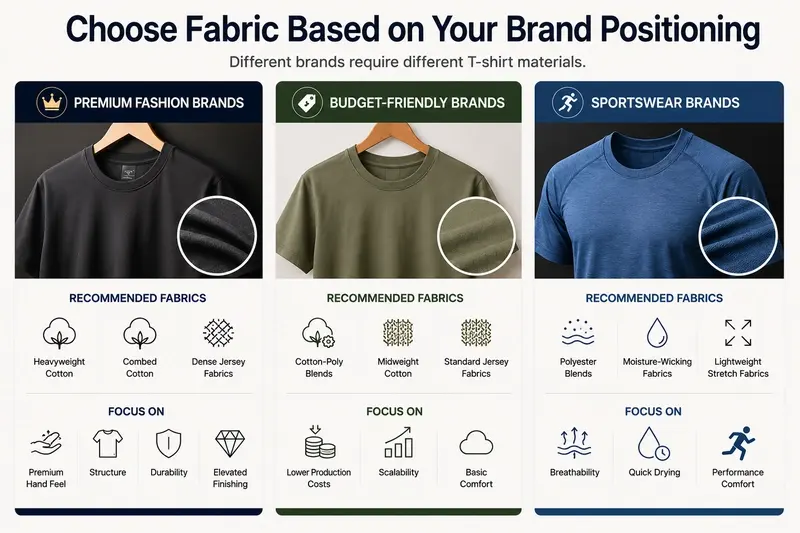
Different brands require different T-shirt materials.
Premium Fashion Brands
Recommended fabrics:
- Heavyweight cotton
- Combed cotton
- Dense jersey fabrics
Focus on:
- Premium hand feel
- Structure
- Durability
- Elevated finishing
Budget-Friendly Brands
Recommended fabrics:
- Cotton-poly blends
- Midweight cotton
- Standard jersey fabrics
Focus on:
- Lower production costs
- Scalability
- Basic comfort
Sportswear Brands
Recommended fabrics:
- Polyester blends
- Moisture-wicking fabrics
- Lightweight stretch fabrics
Focus on:
- Breathability
- Quick drying
- Performance comfort
How Fabric Affects Printing Quality
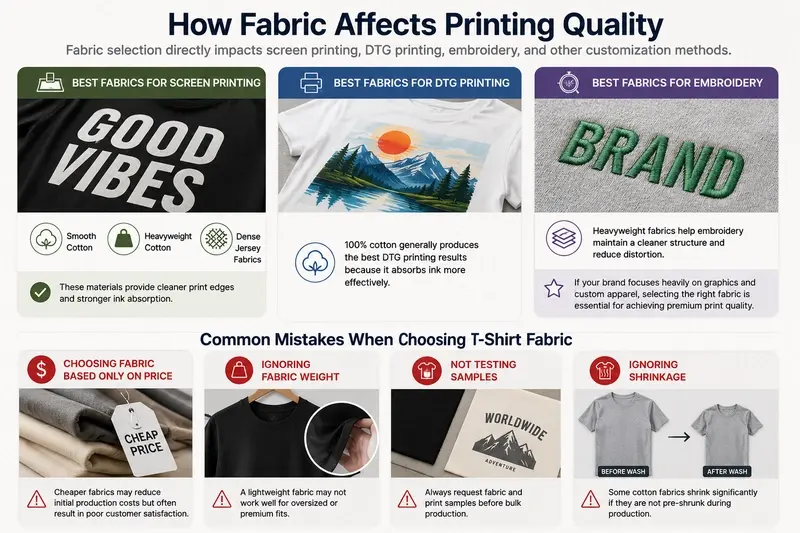
Fabric selection directly impacts screen printing, DTG printing, embroidery, and other customization methods.
Best Fabrics for Screen Printing
- Smooth cotton
- Heavyweight cotton
- Dense jersey fabrics
These materials provide cleaner print edges and stronger ink absorption.
Best Fabrics for DTG Printing
100% cotton generally produces the best DTG printing results because it absorbs ink more effectively.
Best Fabrics for Embroidery
Heavyweight fabrics help embroidery maintain a cleaner structure and reduce distortion.
If your brand focuses heavily on graphics and custom apparel, selecting the right fabric is essential for achieving premium print quality.
Common Mistakes When Choosing T-Shirt Fabric
Choosing Fabric Based Only on Price
Cheaper fabrics may reduce initial production costs but often result in poor customer satisfaction.
Ignoring Fabric Weight
A lightweight fabric may not work well for oversized or premium fits.
Not Testing Samples
Always request fabric and print samples before bulk production.
Ignoring Shrinkage
Some cotton fabrics shrink significantly if they are not pre-shrunk during production.
How to Create a Premium T-Shirt Feel
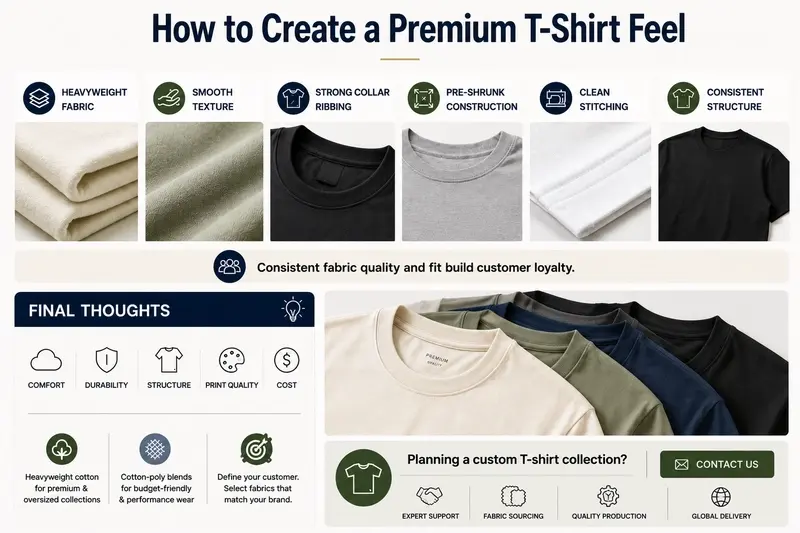
Premium T-shirts are usually defined by fabric quality rather than complicated designs.
Key elements include:
- Heavyweight fabric
- Smooth texture
- Strong collar ribbing
- Pre-shrunk construction
- Clean stitching
- Consistent garment structure
Many successful clothing brands build customer loyalty through consistent fabric quality and fit.
Final Thoughts
Choosing the right fabric for T-shirts requires balancing comfort, durability, structure, printing quality, and production cost.
For premium and oversized collections, heavyweight cotton is often the best option because it creates better structure and a higher perceived value. For budget-friendly or performance apparel, cotton-poly blends may offer a more practical solution.
The best approach is to first define your target customer and product positioning, then select fabrics that align with your brand goals.
If you’re planning a custom T-shirt collection, feel free to Contact Us for professional apparel manufacturing and fabric sourcing support.
FAQs
What is the best fabric for T-shirts?
Cotton is one of the best fabrics for T-shirts because it is soft, breathable, and comfortable. Heavyweight cotton is especially popular for premium and oversized styles.
What GSM is best for T-shirts?
Most standard T-shirts use 180–240 GSM fabrics, while premium oversized T-shirts often use 240+ GSM heavyweight fabrics.
Is heavyweight cotton good for oversized T-shirts?
Yes. Heavyweight cotton provides better structure and drape, making it ideal for oversized and streetwear T-shirts.
Which fabric is best for screen printing?
Smooth cotton and heavyweight cotton fabrics are excellent for screen printing because they provide better ink absorption and cleaner print results.
How do I choose fabric for my clothing brand?
Start by defining your target market, pricing, and product positioning. Then choose fabrics based on comfort, GSM, durability, and customization requirements.
Share With
Related Articles


Hot Products