How to Choose Fabric for Dresses
Choosing the right fabric for dresses is one of the most important decisions in apparel development. Fabric directly affects how a dress looks, feels, moves, and performs during wear. The same dress design can create completely different results depending on the material used.
For fashion brands, dress fabric selection also impacts product positioning, production cost, customer satisfaction, and long-term brand perception. Lightweight fabrics can create elegant movement and softness, while structured fabrics provide shape and a more premium silhouette.
Whether you’re developing casual dresses, luxury fashion pieces, summer collections, or formal garments, understanding fabric characteristics is essential for creating successful products.
Our OEM Fashion Manufacturer services help global clothing brands source high-quality dress fabrics and develop custom apparel collections with professional production support.
Why Fabric Selection Matters for Dresses
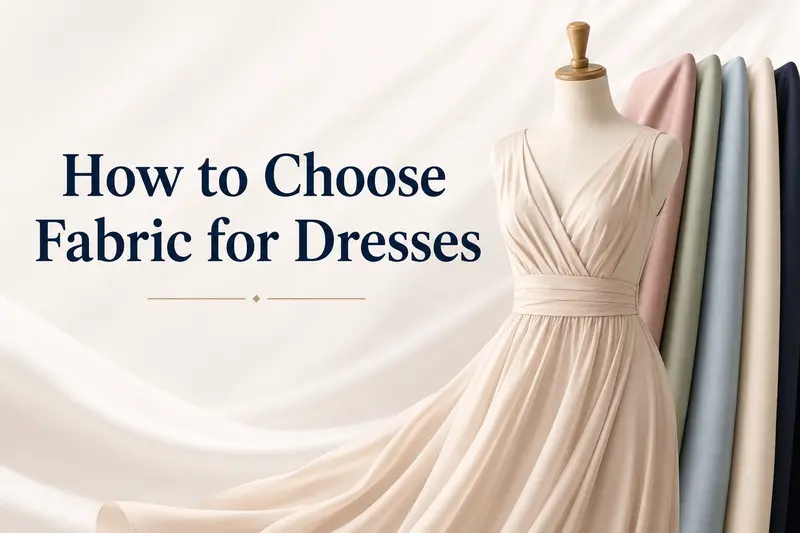
Unlike some garments that focus mainly on durability or structure, dresses rely heavily on drape, movement, comfort, and texture. Fabric influences how the garment flows on the body and how customers emotionally respond to the product.
The right dress fabric affects:
- Garment drape
- Softness and comfort
- Breathability
- Structure and silhouette
- Wrinkle resistance
- Stretch and flexibility
- Product appearance
- Seasonal wearability
For example, flowing chiffon creates a soft and elegant appearance, while structured cotton fabrics provide more shape and everyday practicality.
Poor fabric selection can lead to:
- Weak garment shape
- Excessive wrinkling
- Transparency issues
- Poor fit retention
- Uncomfortable wear
- Reduced product value
This is why fabric choice is one of the most critical parts of dress development.
Understand the Most Common Dress Fabrics
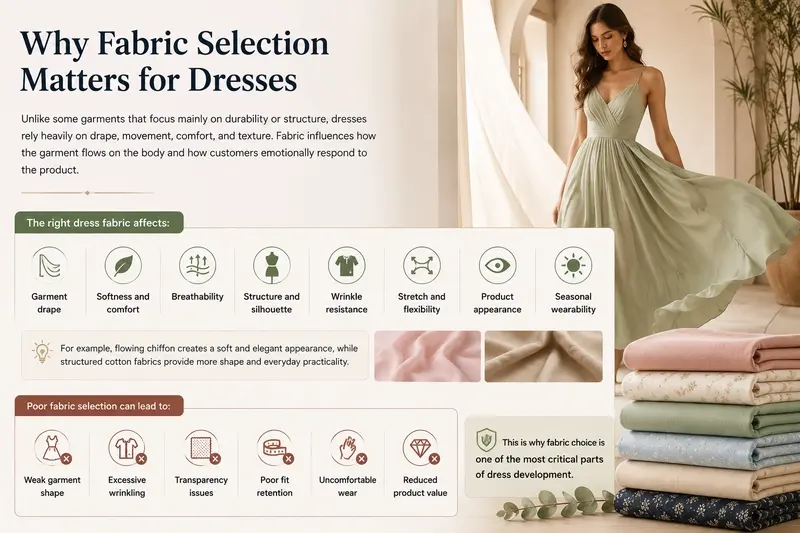
Different fabrics create very different styles and customer experiences.
Cotton Fabric
Cotton is one of the most versatile dress materials because it combines softness, breathability, and comfort.
Best for:
- Casual dresses
- Summer collections
- Everyday fashion
- Minimalist styles
Advantages:
- Breathable
- Soft texture
- Comfortable for daily wear
- Easy maintenance
Cotton dresses are especially popular in warm-weather markets because they feel lightweight and natural on the skin.
However, lightweight cotton fabrics may wrinkle more easily than synthetic materials.
Linen Fabric
Linen is highly valued for its breathable texture and natural, premium appearance.
Best for:
- Resort wear
- Summer dresses
- Relaxed fashion collections
- Premium minimalist brands
Advantages:
- Excellent airflow
- Lightweight comfort
- Natural texture
- Elevated appearance
Linen naturally wrinkles, but many fashion brands intentionally use this texture as part of the garment’s aesthetic.
Polyester Fabric
Polyester remains widely used in dress manufacturing because of its durability and wrinkle resistance.
Best for:
- Fashion dresses
- Commercial apparel
- Occasion wear
- Budget-friendly collections
Advantages:
- Wrinkle resistance
- Better durability
- Lower maintenance
- Strong color retention
Polyester fabrics are often blended with other fibers to improve softness and comfort.
Chiffon Fabric
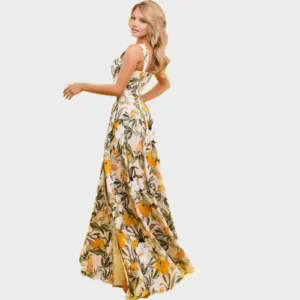
Chiffon is a lightweight fabric known for its elegant drape and flowing movement.
Best for:
- Evening dresses
- Formalwear
- Layered garments
- Feminine silhouettes
Advantages:
- Soft movement
- Lightweight feel
- Elegant appearance
Because chiffon is semi-transparent, it is commonly layered or lined during production.
Satin Fabric
Satin fabrics are valued for their smooth and glossy surface.
Best for:
- Luxury dresses
- Eveningwear
- Formal collections
Advantages:
- Elegant shine
- Smooth texture
- Premium visual effect
Satin is often used in higher-end fashion collections because it creates a luxurious appearance.
How to Choose Fabric Based on Dress Style
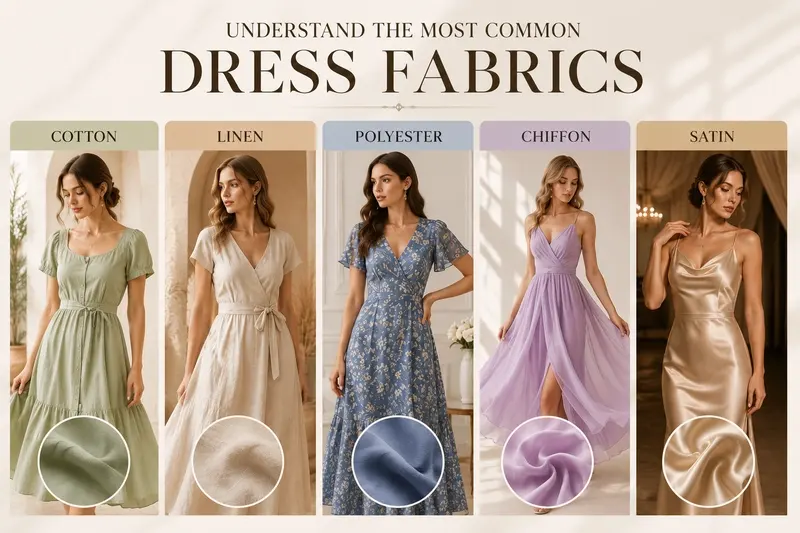
Different dress designs require different fabric characteristics.
Casual Dresses
Recommended fabrics:
- Cotton
- Jersey fabrics
- Linen blends
Focus on:
- Comfort
- Breathability
- Easy movement
- Daily wearability
Formal and Evening Dresses
Recommended fabrics:
- Satin
- Chiffon
- Silk blends
Focus on:
- Elegant drape
- Smooth texture
- Premium appearance
Structured Fashion Dresses
Recommended fabrics:
- Midweight cotton
- Ponte fabrics
- Structured woven fabrics
Focus on:
- Shape retention
- Strong silhouette
- Premium construction
Summer Dresses
Recommended fabrics:
- Lightweight cotton
- Linen
- Rayon blends
Focus on:
- Airflow
- Lightweight comfort
- Soft drape
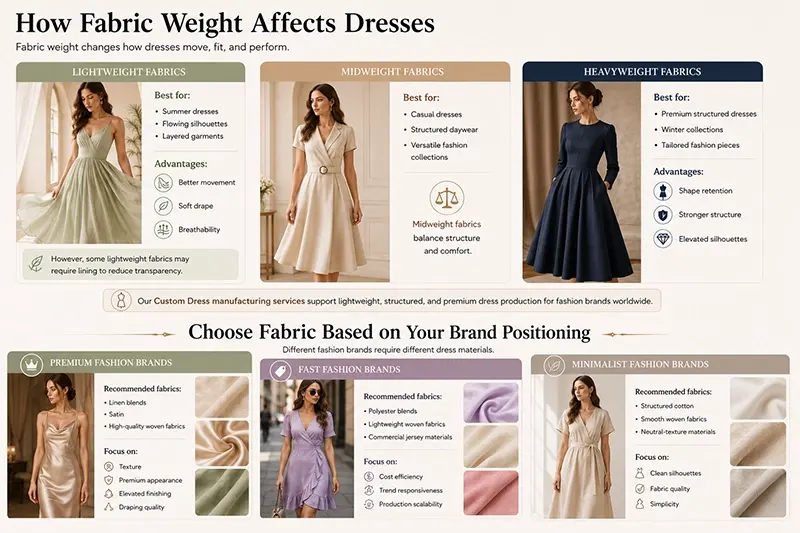
How Fabric Weight Affects Dresses
Fabric weight changes how dresses move, fit, and perform.
Lightweight Fabrics
Best for:
- Summer dresses
- Flowing silhouettes
- Layered garments
Advantages:
- Better movement
- Soft drape
- Breathability
However, some lightweight fabrics may require lining to reduce transparency.
Midweight Fabrics
Best for:
- Casual dresses
- Structured daywear
- Versatile fashion collections
Midweight fabrics balance structure and comfort.
Heavyweight Fabrics
Best for:
- Premium structured dresses
- Winter collections
- Tailored fashion pieces
Heavier fabrics create stronger shape retention and more elevated silhouettes.
Our Custom Dress manufacturing services support lightweight, structured, and premium dress production for fashion brands worldwide.
Choose Fabric Based on Your Brand Positioning
Different fashion brands require different dress materials.
Premium Fashion Brands
Recommended fabrics:
- Linen blends
- Satin
- High-quality woven fabrics
Focus on:
- Texture
- Premium appearance
- Elevated finishing
- Draping quality
Fast Fashion Brands
Recommended fabrics:
- Polyester blends
- Lightweight woven fabrics
- Commercial jersey materials
Focus on:
- Cost efficiency
- Trend responsiveness
- Production scalability
Minimalist Fashion Brands
Recommended fabrics:
- Structured cotton
- Smooth woven fabrics
- Neutral-texture materials
Focus on:
- Clean silhouettes
- Fabric quality
- Simplicity
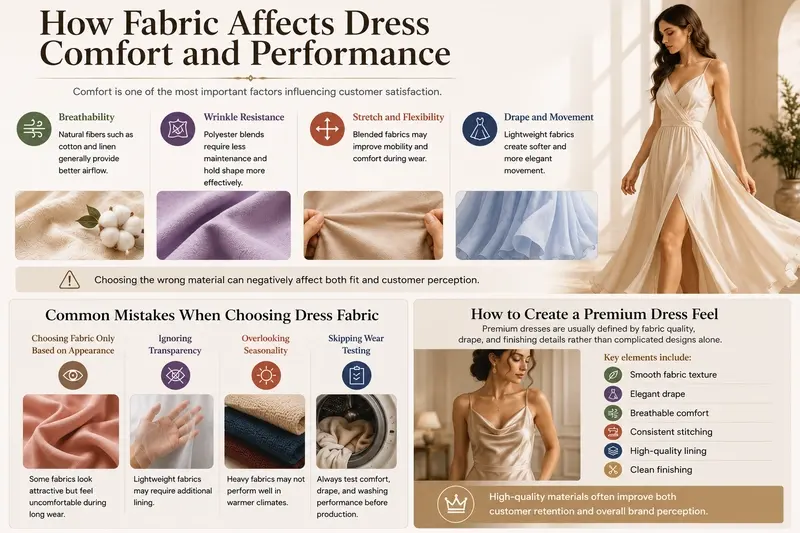
How Fabric Affects Dress Comfort and Performance
Comfort is one of the most important factors influencing customer satisfaction.
Breathability
Natural fibers such as cotton and linen generally provide better airflow.
Wrinkle Resistance
Polyester blends require less maintenance and hold shape more effectively.
Stretch and Flexibility
Blended fabrics may improve mobility and comfort during wear.
Drape and Movement
Lightweight fabrics create softer and more elegant movement.
Choosing the wrong material can negatively affect both fit and customer perception.
Common Mistakes When Choosing Dress Fabric
Choosing Fabric Only Based on Appearance
Some fabrics look attractive but feel uncomfortable during long wear.
Ignoring Transparency
Lightweight fabrics may require additional lining.
Overlooking Seasonality
Heavy fabrics may not perform well in warmer climates.
Skipping Wear Testing
Always test comfort, drape, and washing performance before production.
How to Create a Premium Dress Feel
Premium dresses are usually defined by fabric quality, drape, and finishing details rather than complicated designs alone.
Key elements include:
- Smooth fabric texture
- Elegant drape
- Breathable comfort
- Consistent stitching
- High-quality lining
- Clean finishing
High-quality materials often improve both customer retention and overall brand perception.
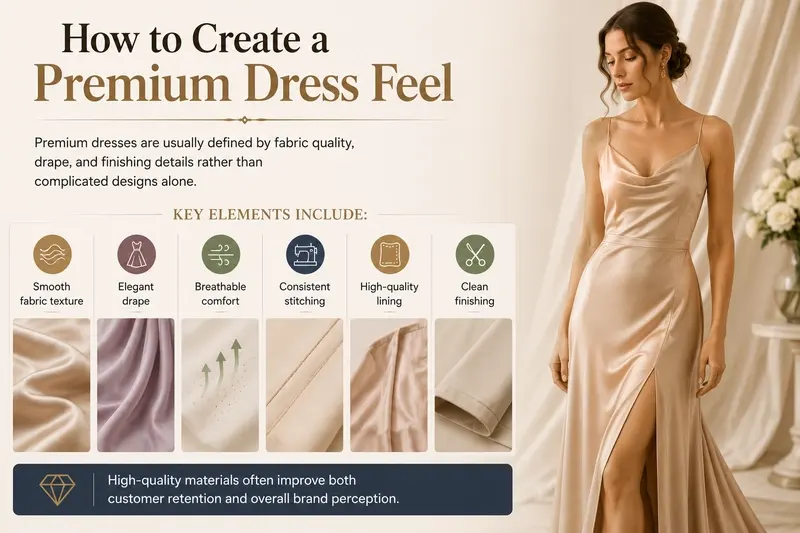
How to Create a Premium Dress Feel
Premium dresses are usually defined by fabric quality, drape, and finishing details rather than complicated designs alone.
Key elements include:
- Smooth fabric texture
- Elegant drape
- Breathable comfort
- Consistent stitching
- High-quality lining
- Clean finishing
High-quality materials often improve both customer retention and overall brand perception.
Final Thoughts
Choosing the right fabric for dresses requires balancing comfort, drape, breathability, structure, and production cost.
For premium and elegant dresses, satin, chiffon, and high-quality woven fabrics are often the best choices because they create elevated texture and movement. For casual and summer collections, cotton and linen fabrics provide breathable comfort and everyday practicality.
The best approach is to first define your target customer and dress style, then select fabrics that align with your brand positioning and product goals.
If you’re planning a custom dress collection, feel free to Contact Us for professional apparel manufacturing and fabric sourcing support.
FAQs
What is the best fabric for dresses?
The best dress fabric depends on the dress style. Cotton is ideal for casual dresses, while satin and chiffon are commonly used for formal wear and luxury fashion.
What fabric is best for summer dresses?
Cotton and linen are excellent for summer dresses because they provide strong breathability and lightweight comfort.
Is polyester good for dresses?
Yes. Polyester is durable, wrinkle-resistant, and commonly used for commercial fashion dresses and occasion wear.
Why is fabric drape important for dresses?
Fabric drape affects how a dress moves and fits on the body. Softer fabrics create more elegant and flowing silhouettes.
How do I choose fabric for my dress brand?
Start by defining your target market, dress style, and seasonal needs. Then choose fabrics based on comfort, drape, breathability, and product positioning.
Share With
Related Articles





Hot Products