
How We Inspect Fabric Before Hoodie Production?
Fabric quality plays a critical role in the final performance of a hoodie. Even with skilled production teams and advanced manufacturing equipment, poor-quality fabric can lead to color inconsistencies, shrinkage issues, garment defects, and customer complaints.
For this reason, fabric inspection is one of the first quality control procedures performed before hoodie production begins.
At OEM Fashion, every fabric batch is inspected before entering production to help ensure consistency, reduce manufacturing risks, and maintain quality throughout the entire production process.
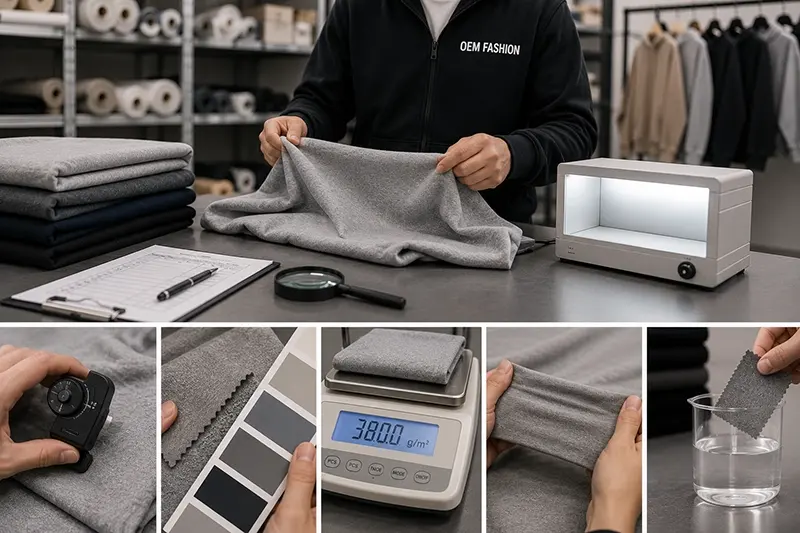
Why Fabric Inspection Matters for Hoodies
Compared with lightweight garments, hoodies typically use heavier fabrics such as fleece, French terry, cotton-poly blends, and heavyweight cotton materials.
These fabrics often undergo additional treatments, including:
- Dyeing
- Brushing
- Washing
- Enzyme treatments
- Special finishing processes
Each of these processes can affect the appearance, performance, and stability of the fabric.
Without proper inspection, issues may not be discovered until production has already started. At that stage, correcting problems becomes more expensive and can delay production schedules.
Fabric inspection becomes even more important when brands require custom dyeing, specialty finishes, or unique material specifications through our Fabric Customization services.
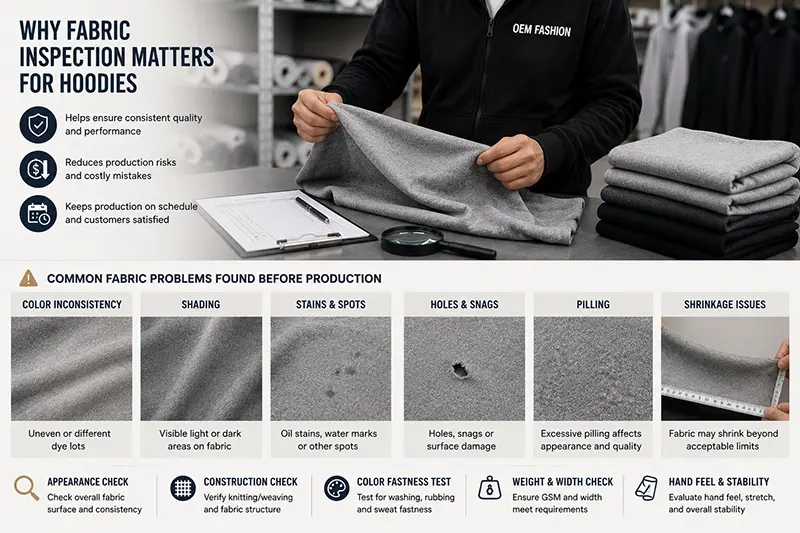
Common Fabric Problems Found Before Production
One of the primary goals of fabric inspection is identifying issues before cutting and sewing begins.
Some of the most common problems include:
Appearance Defects
- Fabric holes
- Yarn irregularities
- Weaving defects
- Surface contamination
- Oil stains
- Fabric damage
Color Issues
- Shade variation
- Uneven dyeing
- Color inconsistencies between rolls
- Poor color matching
Performance Problems
- Excessive shrinkage
- Fabric distortion
- Poor stretch recovery
- Weight inconsistencies
- Surface instability
Detecting these issues early helps prevent larger quality problems later in production.
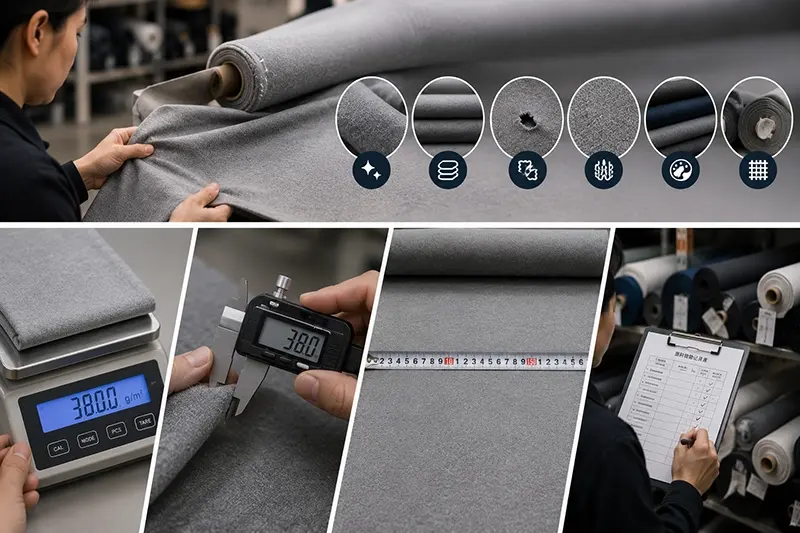
Inspecting Fabric Appearance and Surface Quality
The first stage of inspection focuses on the overall appearance of the fabric.
Inspectors carefully review each fabric roll for visible defects that could affect the finished garment.
Inspection points include:
- Surface cleanliness
- Fabric consistency
- Visible damage
- Knitting or weaving defects
- Color appearance
- Pattern consistency
For hoodie production, maintaining a clean and consistent fabric surface is essential because defects become highly visible after cutting, sewing, and garment finishing.
When producing premium fleece fabrics, even minor surface imperfections can affect the final appearance of a Custom Fleece Hoodie and reduce perceived product quality.
Checking Fabric Weight and Width
Fabric weight and width directly influence hoodie fit, comfort, and production efficiency.
During inspection, our team verifies:
- Fabric GSM
- Fabric width
- Roll-to-roll consistency
- Material specifications
- Production tolerances
For heavyweight hoodies, even small GSM variations can affect garment drape, warmth, and overall product positioning.
Consistent fabric specifications help ensure all garments within the same production run maintain a uniform appearance and fit.
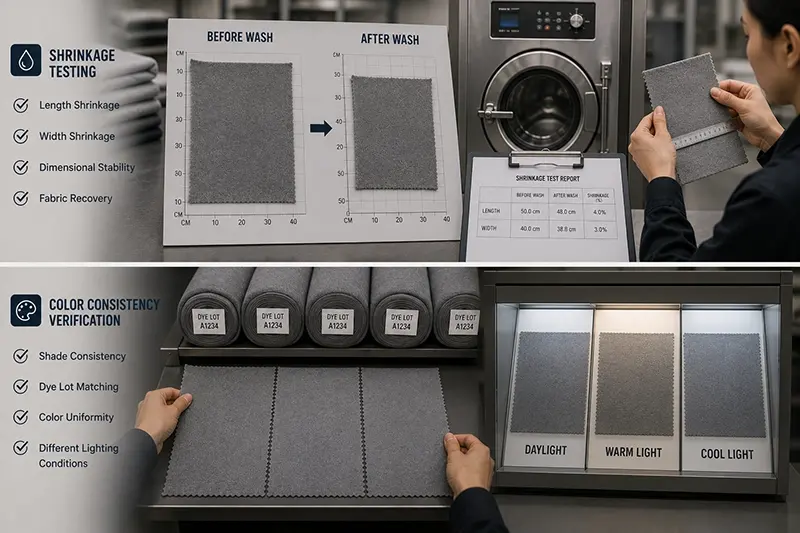
Shrinkage Testing Before Hoodie Production
Shrinkage testing is one of the most important inspections performed before production begins.
Because hoodies are frequently washed by consumers, manufacturers must understand how fabrics behave after laundering.
Testing helps evaluate:
- Length shrinkage
- Width shrinkage
- Dimensional stability
- Fabric recovery
The results are used during pattern development and production planning to ensure finished garments maintain accurate sizing after washing.
Without shrinkage testing, garments may not meet size specifications once they reach customers.
Color Consistency Verification
Color consistency is essential for maintaining a professional appearance across an entire production run.
Inspectors evaluate:
- Shade consistency
- Dye lot matching
- Color uniformity
- Fabric appearance under different lighting conditions
Even slight shade differences between fabric rolls can become noticeable when garment panels are assembled.
By verifying color consistency before production begins, manufacturers can avoid costly rework and improve overall garment quality.
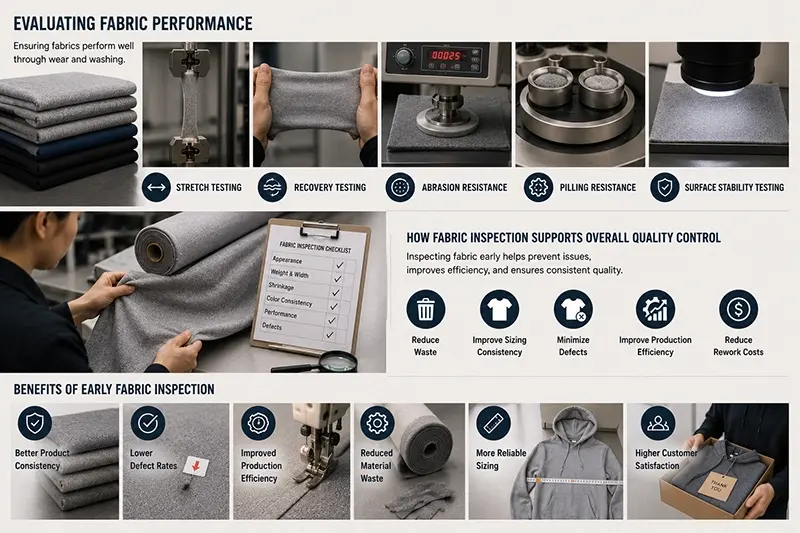
Evaluating Fabric Performance
Appearance alone is not enough.
Fabric performance must also be evaluated to ensure the material can withstand normal wear and washing conditions.
Depending on the fabric type, inspections may include:
- Stretch testing
- Recovery testing
- Abrasion resistance
- Pilling resistance
- Surface stability testing
These evaluations help ensure the fabric performs as expected throughout the garment’s lifecycle.
For hoodie products, durability and long-term appearance retention often play a major role in customer satisfaction.
How Fabric Inspection Supports Overall Quality Control
Fabric inspection is not an isolated process. It serves as the foundation for every stage that follows.
By identifying issues before cutting begins, manufacturers can:
- Reduce production waste
- Improve sizing consistency
- Minimize garment defects
- Improve production efficiency
- Reduce rework costs
Many of the quality issues discovered during final inspections can often be traced back to fabric-related problems that could have been identified earlier.
This is why fabric inspection remains one of the most important quality control procedures in apparel manufacturing.
Benefits of Early Fabric Inspection
Performing inspections before production begins provides significant advantages for both manufacturers and apparel brands.
Key benefits include:
- Better product consistency
- Lower defect rates
- Improved production efficiency
- Reduced material waste
- More reliable sizing
- Higher customer satisfaction
For growing apparel brands, these benefits contribute directly to stronger product quality and improved customer trust.
Conclusion
Fabric inspection is one of the most important steps in hoodie manufacturing.
By evaluating fabric appearance, weight, color consistency, shrinkage performance, and material stability before production begins, manufacturers can identify potential issues early and reduce quality risks throughout the production process.
A strong inspection process helps improve consistency, reduce defects, and create better products for end customers.
Contact us today to learn how our quality control procedures help ensure reliable hoodie production and consistent garment quality.
FAQs
Why is fabric inspection important before hoodie production?
Fabric inspection helps identify defects, color inconsistencies, shrinkage issues, and performance problems before production begins, reducing quality risks and production delays.
What fabric defects are commonly found during inspection?
Common defects include holes, weaving faults, dyeing inconsistencies, stains, fabric damage, and weight variations.
How is fabric shrinkage tested?
Fabric samples are washed and measured to determine dimensional changes after laundering. The results help manufacturers adjust patterns and production specifications.
Why is GSM important for hoodies?
GSM affects the weight, thickness, warmth, comfort, and overall positioning of a hoodie. Consistent GSM helps maintain product quality across production runs.
Can fabric inspection reduce production defects?
Yes. Identifying issues before cutting and sewing begins helps prevent defects from affecting large quantities of garments and improves overall production efficiency.
Share With
Related Articles


Hot Products