How to Choose Fabric for Tracksuits
Tracksuits are no longer limited to gyms and sports teams. Today, they are widely used in athleisure, streetwear, travel apparel, and lifestyle fashion. As consumer expectations continue to evolve, fabric selection has become one of the most important factors in tracksuit development.
The right material influences how a tracksuit feels during movement, how it performs throughout the day, and how customers perceive its overall quality. Brands working with experienced OEM Fashion partners often spend considerable time evaluating fabrics because performance, comfort, and durability all begin with material selection.
Whether you’re developing activewear collections, premium tracksuits, or casual athleisure products, understanding fabric characteristics will help you create garments that perform well and stand out in a competitive market.
Why Fabric Matters More for Pants Than Most Garments
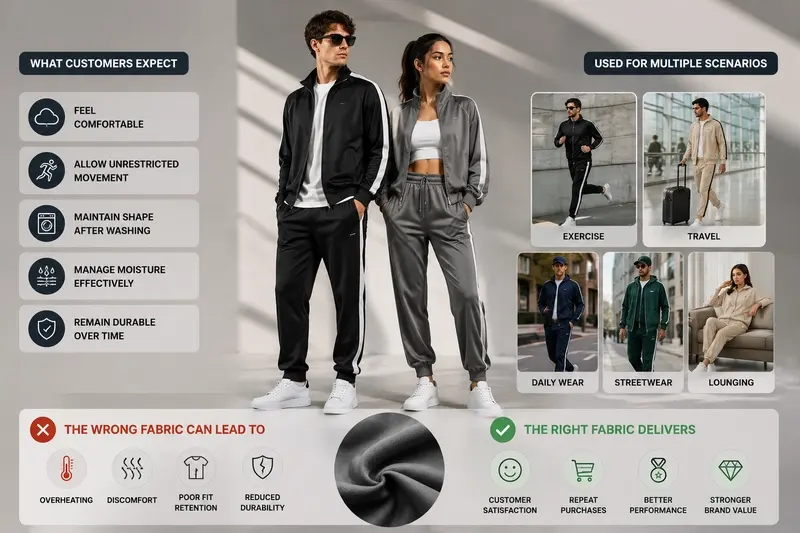
Unlike a T-shirt or dress, pants must handle constant movement throughout the day.
Fabric affects:
- Mobility
- Stretch
- Shape retention
- Durability
- Breathability
- Wrinkle resistance
- Comfort
For example, a customer may wear the same pair of pants for eight to ten hours per day. If the fabric lacks flexibility or breathability, comfort quickly becomes an issue.
Similarly, if the fabric loses shape after several washes, customers often perceive the garment as low quality, regardless of how good it looked initially.
This is why successful apparel brands pay close attention to fabric selection during product development.
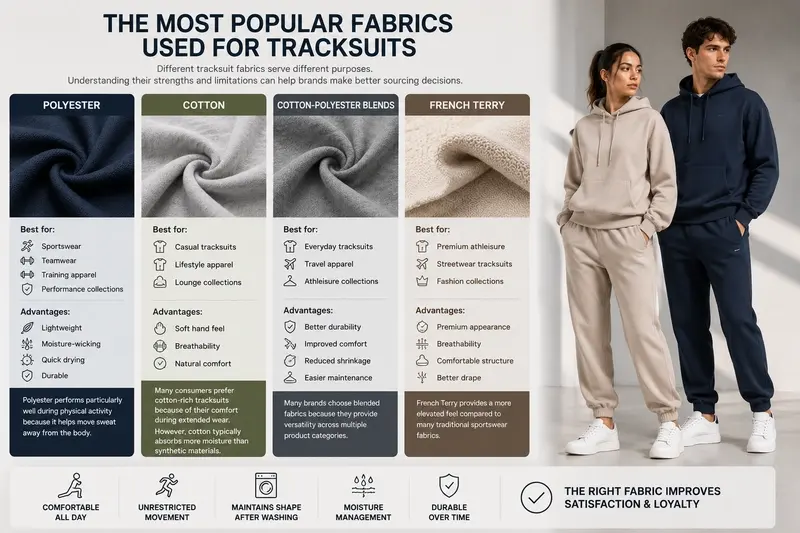
The Most Popular Fabrics Used for Tracksuits
Different tracksuit fabrics serve different purposes.
Understanding their strengths and limitations can help brands make better sourcing decisions.
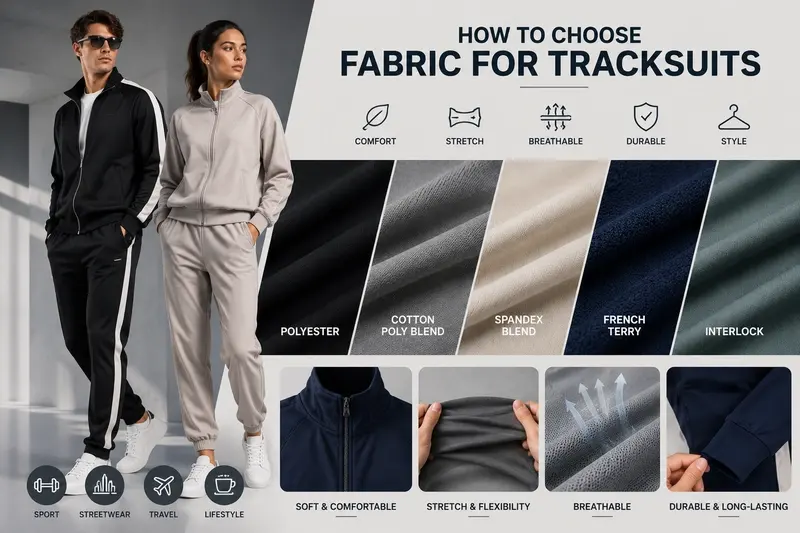
Polyester
Polyester remains one of the most common tracksuit materials in the global apparel industry.
Best for:
- Sportswear
- Teamwear
- Training apparel
- Performance collections
Advantages:
- Lightweight
- Moisture-wicking
- Quick drying
- Durable
Polyester performs particularly well during physical activity because it helps move sweat away from the body.
Cotton
Cotton provides a more natural and comfortable wearing experience.
Best for:
- Casual tracksuits
- Lifestyle apparel
- Lounge collections
Advantages:
- Soft hand feel
- Breathability
- Natural comfort
Many consumers prefer cotton-rich tracksuits because of their comfort during extended wear.
However, cotton typically absorbs more moisture than synthetic materials.
Cotton-Polyester Blends
Blended fabrics combine the strengths of both fibers.
Best for:
- Everyday tracksuits
- Travel apparel
- Athleisure collections
Advantages:
- Better durability
- Improved comfort
- Reduced shrinkage
- Easier maintenance
Many brands choose blended fabrics because they provide versatility across multiple product categories.
French Terry
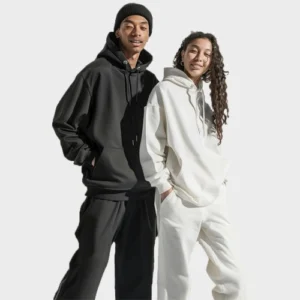
French Terry has become one of the most popular fabrics for premium tracksuits.
Best for:
- Premium athleisure
- Streetwear tracksuits
- Fashion collections
Advantages:
- Premium appearance
- Breathability
- Comfortable structure
- Better drape
French Terry provides a more elevated feel compared to many traditional sportswear fabrics.
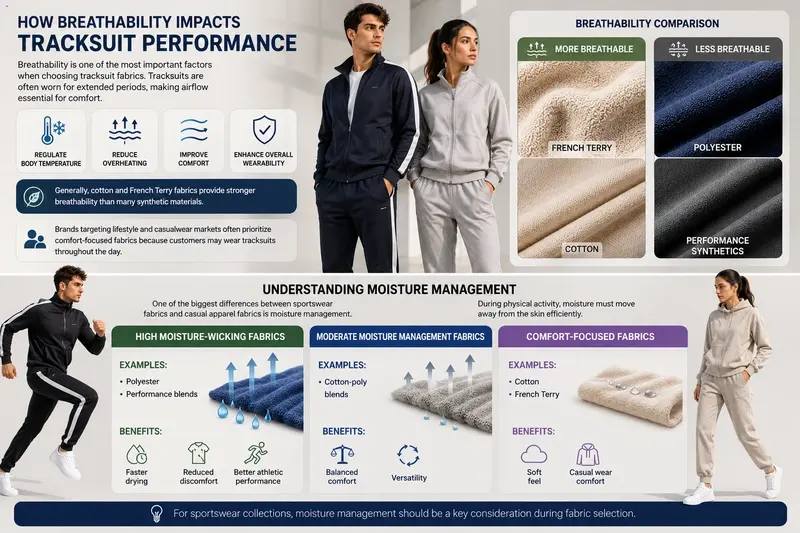
How Breathability Impacts Tracksuit Performance
Breathability is one of the most important factors when choosing tracksuit fabrics.
Tracksuits are often worn for extended periods, making airflow essential for comfort.
Highly breathable fabrics help:
- Regulate body temperature
- Reduce overheating
- Improve comfort
- Enhance overall wearability
Generally, cotton and French Terry fabrics provide stronger breathability than many synthetic materials.
Brands targeting lifestyle and casualwear markets often prioritize comfort-focused fabrics because customers may wear tracksuits throughout the day.
Understanding Moisture Management
One of the biggest differences between sportswear fabrics and casual apparel fabrics is moisture management.
During physical activity, moisture must move away from the skin efficiently.
High Moisture-Wicking Fabrics
Examples:
- Polyester
- Performance blends
Benefits:
- Faster drying
- Reduced discomfort
- Better athletic performance
Moderate Moisture Management Fabrics
Examples:
- Cotton-poly blends
Benefits:
- Balanced comfort
- Versatility
Comfort-Focused Fabrics
Examples:
- Cotton
- French Terry
Benefits:
- Soft feel
- Casual wear comfort
For sportswear collections, moisture management should be a key consideration during fabric selection.
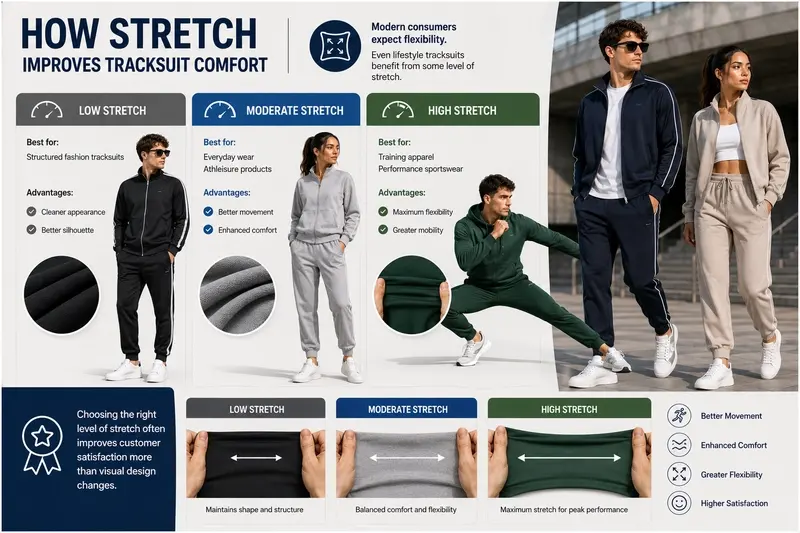
How Stretch Improves Tracksuit Comfort
Modern consumers expect flexibility.
Even lifestyle tracksuits benefit from some level of stretch.
Low Stretch
Best for:
- Structured fashion tracksuits
Advantages:
- Cleaner appearance
- Better silhouette
Moderate Stretch
Best for:
- Everyday wear
- Athleisure products
Advantages:
- Better movement
- Enhanced comfort
High Stretch
Best for:
- Training apparel
- Performance sportswear
Advantages:
- Maximum flexibility
- Greater mobility
Choosing the right level of stretch often improves customer satisfaction more than visual design changes.
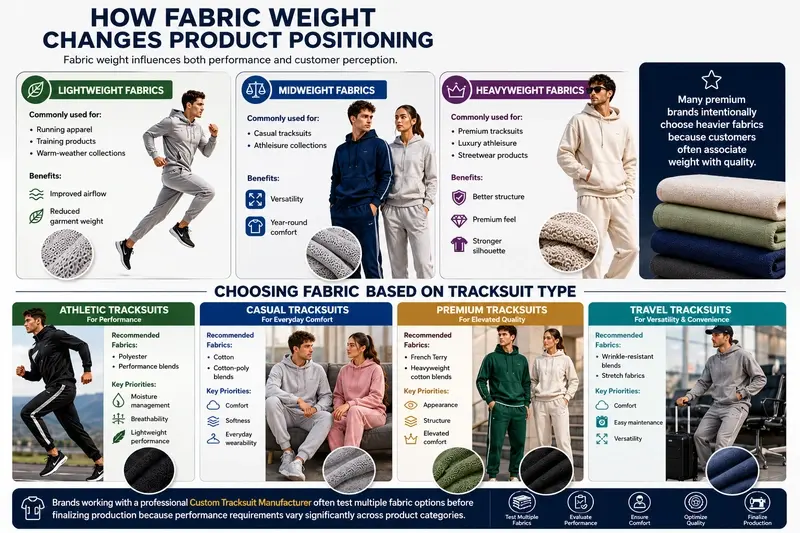
How Fabric Weight Changes Product Positioning
Fabric weight influences both performance and customer perception.
Lightweight Fabrics
Commonly used for:
- Running apparel
- Training products
- Warm-weather collections
Benefits:
- Improved airflow
- Reduced garment weight
Midweight Fabrics
Commonly used for:
- Casual tracksuits
- Athleisure collections
Benefits:
- Versatility
- Year-round comfort
Heavyweight Fabrics
Commonly used for:
- Premium tracksuits
- Luxury athleisure
- Streetwear products
Benefits:
- Better structure
- Premium feel
- Stronger silhouette
Many premium brands intentionally choose heavier fabrics because customers often associate weight with quality.
Choosing Fabric Based on Tracksuit Type
Athletic Tracksuits
Recommended fabrics:
- Polyester
- Performance blends
Key priorities:
- Moisture management
- Breathability
- Lightweight performance
Casual Tracksuits
Recommended fabrics:
- Cotton
- Cotton-poly blends
Key priorities:
- Comfort
- Softness
- Everyday wearability
Premium Tracksuits
Recommended fabrics:
- French Terry
- Heavyweight cotton blends
Key priorities:
- Appearance
- Structure
- Elevated comfort
Travel Tracksuits
Recommended fabrics:
- Wrinkle-resistant blends
- Stretch fabrics
Key priorities:
- Comfort
- Easy maintenance
- Versatility
Brands working with a professional Custom Tracksuit Manufacturer often test multiple fabric options before finalizing production because performance requirements vary significantly across product categories.
What Brands Should Test Before Production
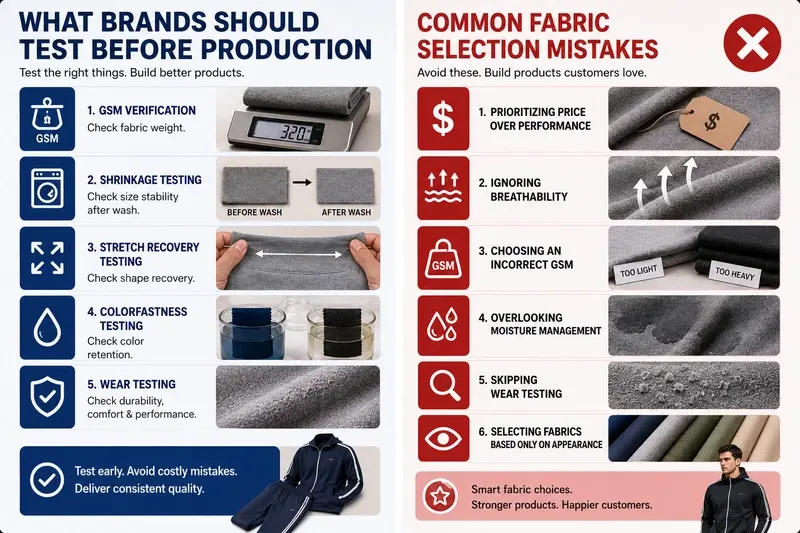
Before approving bulk production, several fabric characteristics should be evaluated.
Important tests include:
GSM Verification
Ensure fabric weight matches development specifications.
Shrinkage Testing
Measure dimensional stability after washing.
Stretch Recovery Testing
Evaluate whether fabrics return to their original shape.
Colorfastness Testing
Confirm resistance to fading.
Wear Testing
Assess comfort, breathability, and overall performance.
These evaluations can prevent costly production mistakes and improve product consistency.
Common Fabric Selection Mistakes
Many brands make similar mistakes during tracksuit development.
Common issues include:
- Prioritizing price over performance
- Ignoring breathability
- Choosing an incorrect GSM
- Overlooking moisture management
- Skipping wear testing
- Selecting fabrics based only on appearance
Avoiding these mistakes often leads to better products and stronger customer retention.
Final Thoughts
The best fabric for tracksuits depends on how the product will be used. Athletic collections often require moisture-wicking performance fabrics, while lifestyle and premium collections may benefit more from cotton-rich materials or French Terry.
By evaluating comfort, stretch, breathability, durability, and fabric weight early in the development process, brands can create tracksuits that better meet customer expectations.
If you’re planning a new tracksuit collection and need support with fabric sourcing or product development, feel free to Contact Us for professional assistance.
FAQs
What is the best fabric for tracksuits?
Polyester, cotton-poly blends, and French Terry are among the most commonly used tracksuit fabrics because they balance comfort and performance.
Is cotton or polyester better for tracksuits?
Cotton provides greater comfort, while polyester offers better moisture management and durability. The best choice depends on the intended use.
Why is French Terry popular for premium tracksuits?
French Terry provides better structure, breathability, and a more premium appearance than many traditional sportswear fabrics.
What GSM is best for tracksuits?
Most tracksuits use fabrics between 280 and 400 GSM, depending on whether the product is designed for sportswear, athleisure, or premium fashion.
What should brands test before producing tracksuits?
Brands should evaluate fabric weight, shrinkage, stretch recovery, durability, breathability, and colorfastness before approving production.
Share With
Related Articles





Hot Products