What Is DTF Printing? Complete Guide for Clothing Brands
OEM Fashion is a professional custom apparel manufacturer specializing in private label clothing, OEM/ODM production, and custom branding solutions for fashion brands worldwide.
As the apparel industry continues to evolve, brands are constantly looking for decoration methods that offer flexibility, high-quality results, and cost-effective production. One technology that has gained significant popularity in recent years is DTF printing.
DTF, or Direct-to-Film printing, allows clothing brands to create vibrant, detailed designs on a wide variety of fabrics without the setup requirements associated with traditional screen printing. Because of its versatility and efficiency, DTF printing has become a preferred option for many fashion brands, startup businesses, and custom apparel manufacturers.
If you’re considering custom apparel production, understanding how DTF printing works can help you determine whether it is the right solution for your products.
What Is DTF Printing?
DTF stands for Direct-to-Film printing.
Unlike traditional printing methods that apply ink directly onto fabric, DTF printing involves printing a design onto a specialized transfer film. The design is then transferred onto the garment using heat and pressure.
This process allows high-quality graphics to be applied to a wide range of materials while maintaining excellent color vibrancy and detail.
DTF printing is commonly used for:
- T-shirts
- Hoodies
- Sweatshirts
- Sportswear
- Activewear
- Promotional apparel
- Fashion collections
Its ability to work on different fabrics makes it one of the most flexible apparel decoration methods available today.
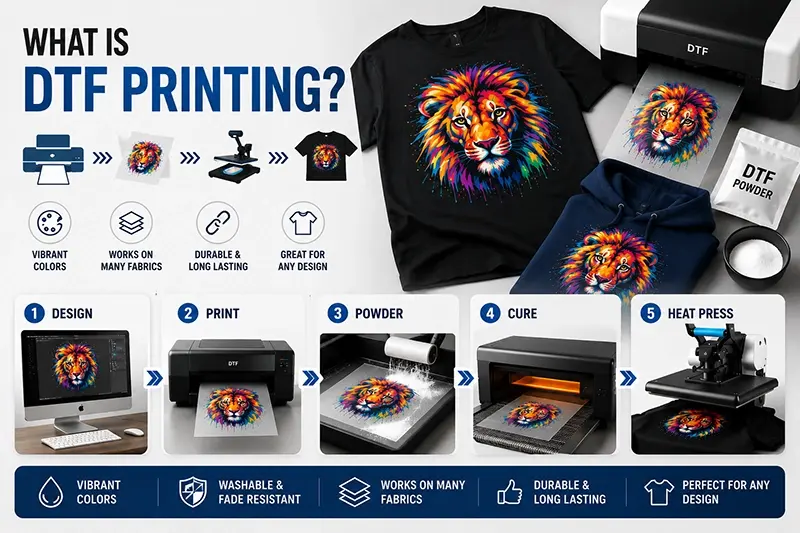
How Does DTF Printing Work?
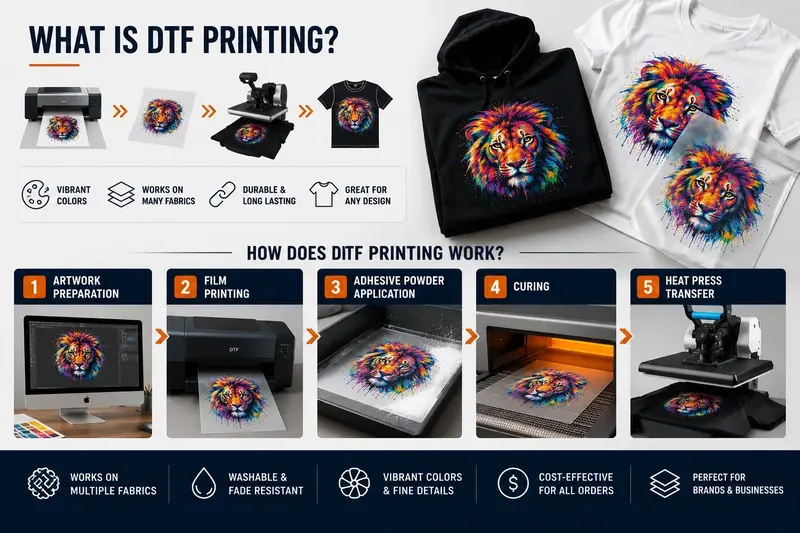
The DTF printing process consists of several stages that work together to create durable and vibrant graphics.
Step 1: Artwork Preparation
The design is created digitally and optimized for printing. High-resolution artwork helps ensure sharp details and accurate color reproduction.
Step 2: Film Printing
Special DTF inks are used to print the design onto a transfer film.
Unlike traditional screen printing, there is no need to create separate screens for each color.
Step 3: Adhesive Powder Application
A hot-melt adhesive powder is applied to the printed design while the ink is still wet.
This adhesive plays a critical role in helping the design bond securely to the garment.
Step 4: Curing
The adhesive powder is cured using controlled heat.
This step prepares the transfer for application onto fabric.
Step 5: Heat Press Transfer
The finished transfer is applied to the garment using a heat press.
Heat and pressure permanently bond the design to the fabric, creating a durable finished product.
Advantages of DTF Printing
DTF printing has become increasingly popular because it offers several important benefits.
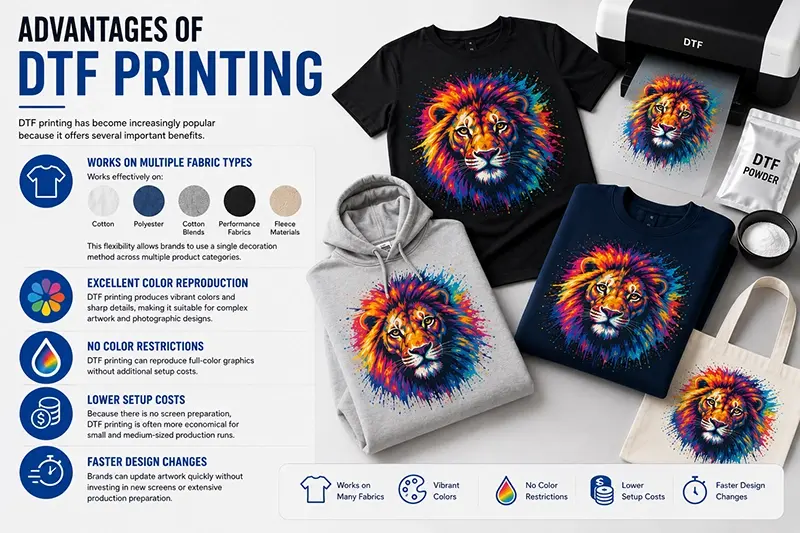
Works on Multiple Fabric Types
One of the biggest advantages of DTF printing is its compatibility with different materials.
It works effectively on:
- Cotton
- Polyester
- Cotton blends
- Performance fabrics
- Fleece materials
This flexibility allows brands to use a single decoration method across multiple product categories.
Excellent Color Reproduction
DTF printing produces vibrant colors and sharp details, making it suitable for complex artwork and photographic designs.
No Color Restrictions
Unlike screen printing, which requires separate screens for each color, DTF printing can reproduce full-color graphics without additional setup costs.
Lower Setup Costs
Because there is no screen preparation, DTF printing is often more economical for small and medium-sized production runs.
Faster Design Changes
Brands can update artwork quickly without investing in new screens or extensive production preparation.
Limitations of DTF Printing
Although DTF printing offers many advantages, it may not be the ideal solution for every project.
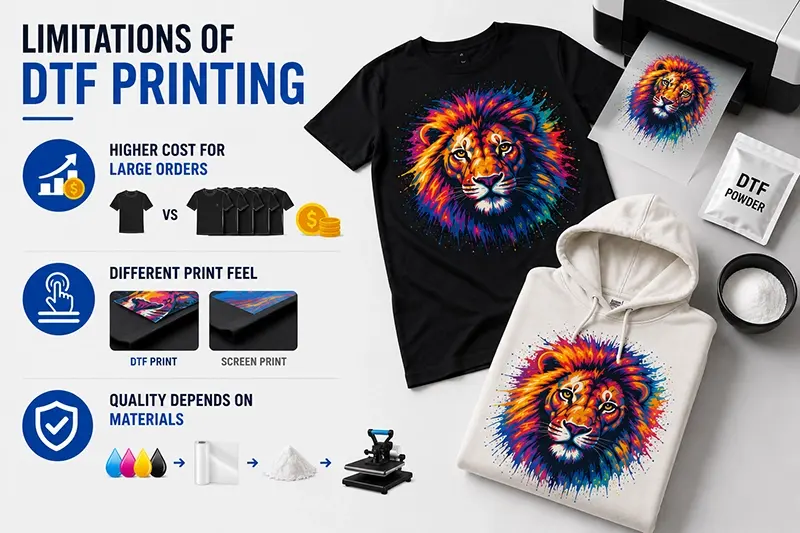
Higher Cost for Large Orders
For large-volume production, screen printing often provides a lower cost per unit.
Different Print Feel
Because the transfer sits on the surface of the fabric, some customers may notice a slightly different feel compared to certain screen printing techniques.
Quality Depends on Materials
The durability of DTF printing depends heavily on the quality of inks, films, adhesive powders, and application processes.
Working with an experienced manufacturer is essential to ensure consistent results.
When Should Clothing Brands Choose DTF Printing?
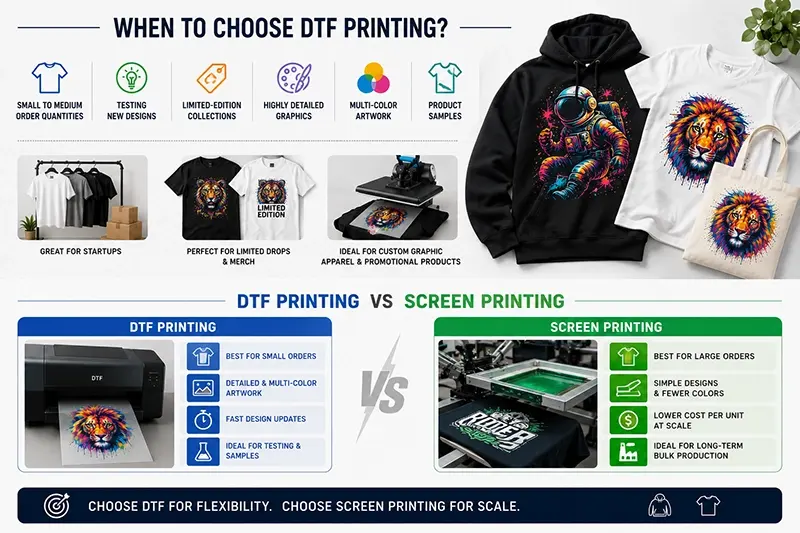
DTF printing is often the best option when:
- Producing small to medium order quantities
- Testing new designs
- Launching limited-edition collections
- Printing highly detailed graphics
- Creating multi-color artwork
- Developing product samples
Many startup clothing brands choose DTF printing during the early stages of development because it allows them to test products without committing to large production runs.
DTF printing is widely used by T-shirt manufacturers producing graphic apparel and promotional products.
Many hoodie manufacturers also use DTF printing for seasonal collections, influencer merchandise, and limited-edition product launches.
DTF Printing vs Screen Printing
DTF printing and screen printing are two of the most popular decoration methods in the apparel industry.
While both produce high-quality results, they serve different purposes.
DTF Printing
Best for:
- Small orders
- Detailed graphics
- Multi-color artwork
- Product testing
- Faster design updates
Screen Printing
Best for:
- Large production runs
- Simple designs
- Long-term bulk manufacturing
- Lower unit costs at scale
The right choice depends on your artwork, budget, order quantity, and production objectives.
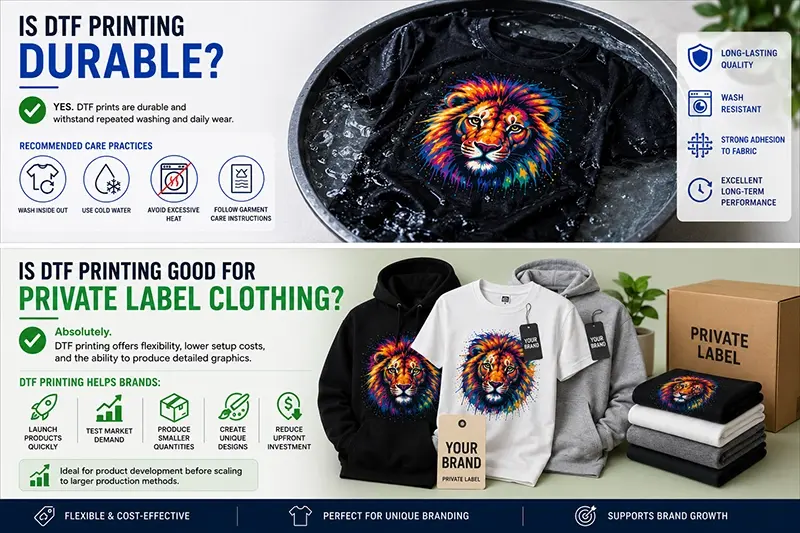
Is DTF Printing Durable?
One of the most common questions clothing brands ask is whether DTF printing lasts.
The answer is yes.
When high-quality materials and proper production processes are used, DTF prints can withstand repeated washing and daily wear.
Proper care helps maintain print quality for an extended period.
Recommended care practices include:
- Washing garments inside out
- Using cold water
- Avoiding excessive heat during drying
- Following garment care instructions
When produced correctly, DTF printing can provide excellent long-term performance.
Is DTF Printing Good for Private Label Clothing?
Absolutely.
DTF printing has become a valuable solution for private label apparel brands because it offers flexibility, lower setup costs, and the ability to produce detailed graphics.
It allows brands to:
- Launch products quickly
- Test market demand
- Produce smaller quantities
- Create unique designs
- Reduce upfront investment
Many successful apparel brands use DTF printing during product development before scaling certain designs to larger production methods.
Screen Printing vs Other Printing Methods
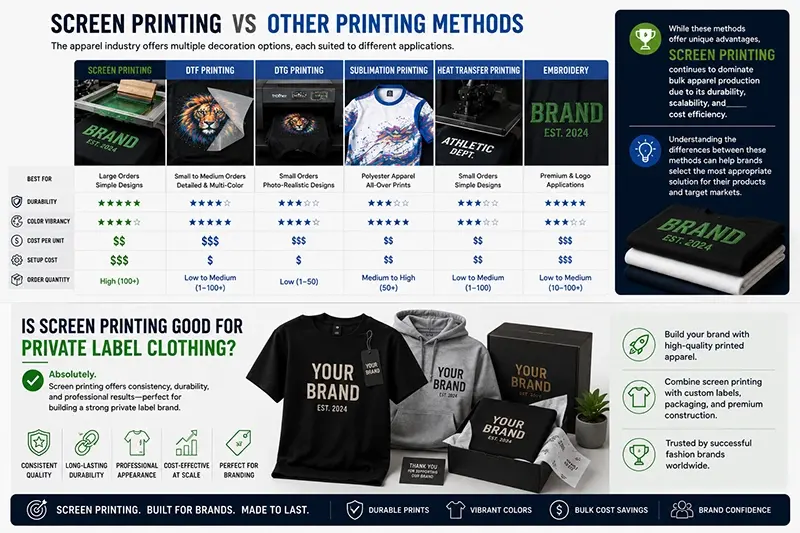
The apparel industry offers multiple decoration options, each suited to different applications.
Popular alternatives include:
- DTF Printing
- DTG Printing
- Sublimation Printing
- Heat Transfer Printing
- Embroidery
While these methods offer unique advantages, screen printing continues to dominate bulk apparel production due to its durability, scalability, and cost efficiency.
Understanding the differences between these methods can help brands select the most appropriate solution for their products and target markets.
Is Screen Printing Good for Private Label Clothing?
Absolutely.
Screen printing is one of the most commonly used decoration methods for private label apparel because it offers consistency, durability, and professional results.
When combined with custom labels, branded packaging, and premium garment construction, screen printing helps create products that strengthen brand identity and improve perceived value.
Many successful fashion brands continue to rely on screen printing as a core part of their product development strategy.
Conclusion
DTF printing has rapidly become one of the most popular apparel decoration technologies available today. Its ability to produce detailed graphics, vibrant colors, and high-quality results across multiple fabric types makes it an attractive option for clothing brands of all sizes.
Whether you’re launching a startup fashion brand, testing new products, or producing limited-edition collections, DTF printing offers a flexible and efficient solution that can help bring your designs to life.
Understanding both its advantages and limitations will help you determine whether it is the right decoration method for your next apparel project.
Ready to Develop Custom Printed Apparel?
Choosing the right decoration method is essential for achieving the quality, appearance, and production efficiency your brand requires.
Our team works with clothing brands around the world to develop custom apparel solutions tailored to their unique needs and product goals.
👉 Contact Us today to discuss your project and receive a personalized quotation.
FAQs
What does DTF stand for?
DTF stands for Direct-to-Film printing, a process that transfers designs from a printed film onto garments using heat and pressure.
What fabrics can DTF printing be used on?
DTF printing works on cotton, polyester, cotton blends, fleece, activewear fabrics, and many other textile materials.
Is DTF printing durable?
Yes. High-quality DTF prints can withstand repeated washing and daily wear when properly produced and cared for.
Is DTF printing suitable for small orders?
Yes. Because there are no screen setup costs, DTF printing is often more economical for small and medium-sized production runs.
Is DTF printing better than screen printing?
It depends on the project. DTF printing is generally better for detailed artwork and smaller quantities, while screen printing is often more cost-effective for large-volume orders.
Share With
Related Articles
Hot Products