How to Choose Fabric for Pants
Fabric selection plays a bigger role in pants development than many clothing brands realize. While fit and design often receive the most attention, the fabric ultimately determines how comfortable, durable, and functional the garment will be.
A pair of pants is subjected to more movement and friction than most clothing items. Sitting, walking, stretching, and repeated washing all place stress on the fabric. Because of this, selecting the right material is critical for creating products that customers enjoy wearing and continue purchasing.
Brands working with experienced OEM Fashion partners often evaluate fabric performance before finalizing garment development because material choice directly impacts both product quality and long-term customer satisfaction.
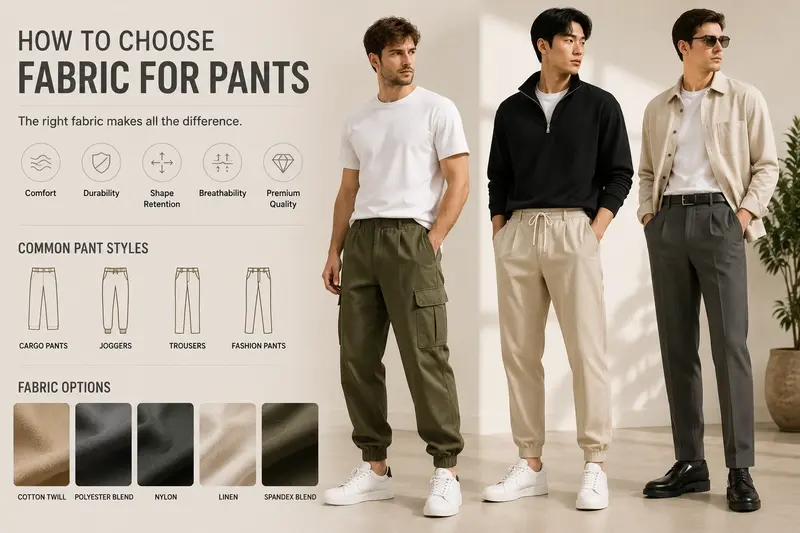
Why Fabric Matters More for Pants Than Most Garments
Unlike a T-shirt or dress, pants must handle constant movement throughout the day.
Fabric affects:
- Mobility
- Stretch
- Shape retention
- Durability
- Breathability
- Wrinkle resistance
- Comfort
For example, a customer may wear the same pair of pants for eight to ten hours per day. If the fabric lacks flexibility or breathability, comfort quickly becomes an issue.
Similarly, if the fabric loses shape after several washes, customers often perceive the garment as low quality, regardless of how good it looked initially.
This is why successful apparel brands pay close attention to fabric selection during product development.
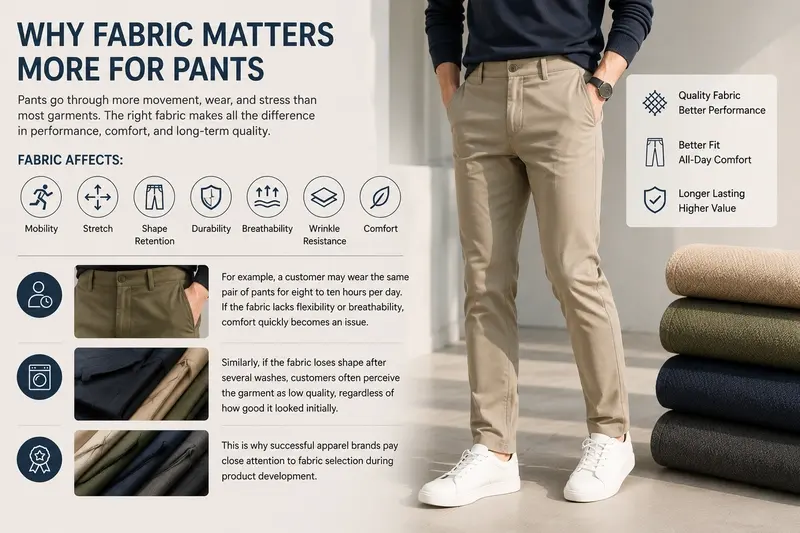
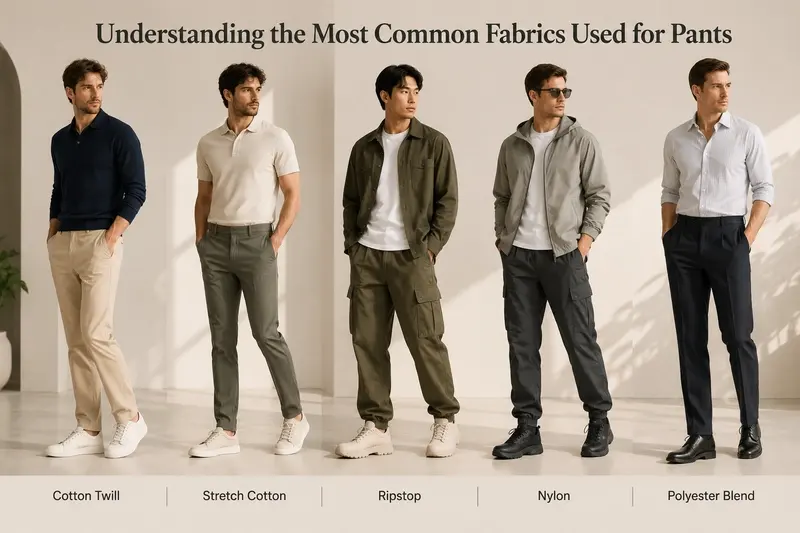
Understanding the Most Common Fabrics Used for Pants
Different fabrics serve different purposes. The best material depends on the intended product category and target customer.
Cotton Twill
Cotton twill is one of the most popular fabrics for casual and workwear pants.
The distinctive diagonal weave improves durability while maintaining comfort.
Best for:
- Chinos
- Casual trousers
- Workwear
- Uniforms
Advantages:
- Durable
- Comfortable
- Breathable
- Easy to maintain
Cotton twill offers a balance between everyday comfort and long-term durability, making it one of the safest choices for many clothing brands.
Stretch Cotton
Modern consumers increasingly expect comfort and mobility in everyday apparel.
Stretch cotton combines cotton with elastane or spandex fibers to provide greater flexibility.
Best for:
- Slim-fit trousers
- Fashion pants
- Everyday casualwear
Advantages:
- Better mobility
- Improved comfort
- Shape retention
- Reduced restriction
Stretch cotton has become particularly popular among contemporary fashion brands because it combines comfort with a clean silhouette.
Ripstop Fabric
Ripstop fabrics are engineered with reinforced yarn patterns that help prevent tearing.
Best for:
- Cargo pants
- Utility apparel
- Outdoor products
Advantages:
- High durability
- Tear resistance
- Lightweight performance
Many brands developing cargo or utility-inspired collections choose ripstop fabrics because they provide both functionality and visual appeal.
Nylon Fabrics
Nylon fabrics are commonly used in technical and outdoor apparel.
Best for:
- Cargo pants
- Hiking apparel
- Travel pants
- Performance collections
Advantages:
- Lightweight
- Abrasion resistant
- Quick drying
- Weather resistant
As utility fashion continues growing in popularity, nylon has become an increasingly common choice for modern bottoms.
Polyester Blends
Polyester blends remain popular because they provide strong durability and lower maintenance requirements.
Best for:
- Corporate apparel
- Uniform pants
- Budget-friendly collections
Advantages:
- Wrinkle resistance
- Color retention
- Cost efficiency
- Long-lasting performance
While polyester may not offer the same natural feel as cotton, it performs well in many commercial applications.
How Fabric Weight Changes the Look and Feel of Pants
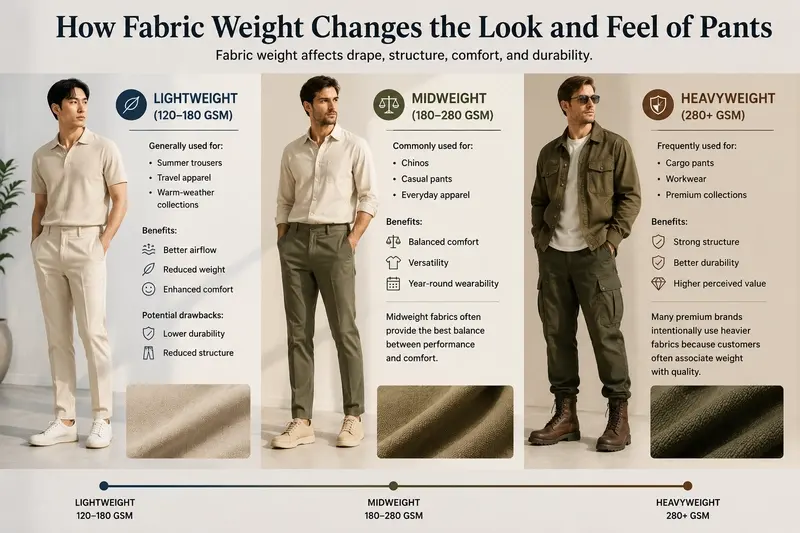
Many brands focus heavily on fabric composition while ignoring GSM and overall fabric weight.
However, weight significantly affects how pants look, feel, and perform.
Lightweight Fabrics
Generally used for:
- Summer trousers
- Travel apparel
- Warm-weather collections
Benefits:
- Better airflow
- Reduced weight
- Enhanced comfort
Potential drawbacks:
- Lower durability
- Reduced structure
Midweight Fabrics
Commonly used for:
- Chinos
- Casual pants
- Everyday apparel
Benefits:
- Balanced comfort
- Versatility
- Year-round wearability
Midweight fabrics often provide the best balance between performance and comfort.
Heavyweight Fabrics
Frequently used for:
- Cargo pants
- Workwear
- Premium collections
Benefits:
- Strong structure
- Better durability
- Higher perceived value
Many premium brands intentionally use heavier fabrics because customers often associate weight with quality.
How Stretch Influences Customer Satisfaction
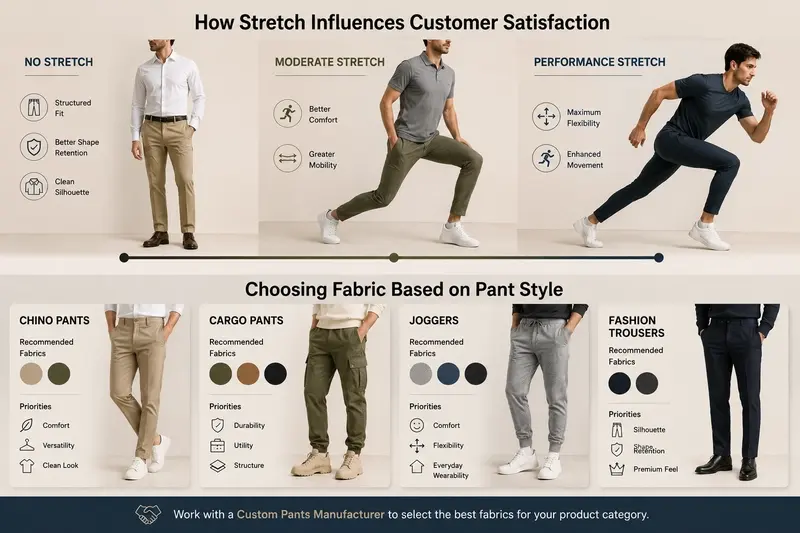
Comfort has become one of the most important purchasing factors for modern consumers.
Even fashionable pants can disappoint customers if movement feels restricted.
No Stretch
Best for:
- Traditional workwear
- Vintage styles
- Structured trousers
Benefits:
- Clean silhouette
- Better shape retention
Moderate Stretch
Best for:
- Daily wear
- Contemporary fashion
- Slim-fit designs
Benefits:
- Better comfort
- Greater mobility
This category represents one of the most popular options in modern apparel.
Performance Stretch
Best for:
- Activewear-inspired pants
- Travel apparel
- Technical collections
Benefits:
- Maximum flexibility
- Enhanced movement
The right amount of stretch often improves customer satisfaction more than many visual design features.
Choosing Fabric Based on Pant Style
Chino Pants
Recommended fabrics:
- Cotton twill
- Stretch twill
Priorities:
- Comfort
- Versatility
- Clean appearance
Cargo Pants
Recommended fabrics:
- Ripstop
- Heavyweight cotton
- Nylon blends
Priorities:
- Durability
- Utility
- Structure
Joggers
Recommended fabrics:
- French Terry
- Cotton blends
- Performance knits
Priorities:
- Comfort
- Flexibility
- Everyday wearability
Fashion Trousers
Recommended fabrics:
- Stretch woven fabrics
- Structured cotton blends
Priorities:
- Silhouette
- Shape retention
- Premium feel
Brands developing new collections often work with a Custom Pants Manufacturer to evaluate which fabrics best match the intended product category.
How Fabric Impacts Production Costs
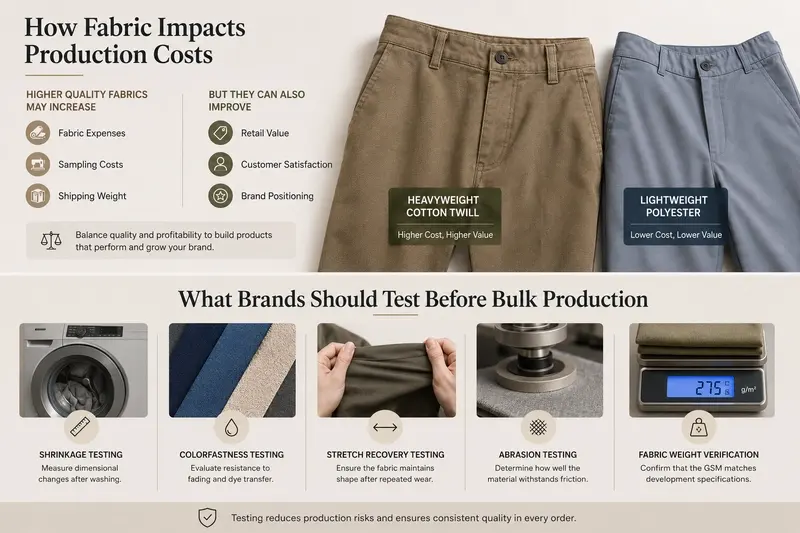
Fabric is often the largest cost component in garment production.
Higher-quality materials generally increase:
- Fabric expenses
- Sampling costs
- Shipping weight
However, they may also improve:
- Retail value
- Customer satisfaction
- Brand positioning
For example, a heavyweight cotton twill pant may cost more to produce than a lightweight polyester alternative, but it may also command a higher selling price and create a stronger customer experience.
The goal should always be to balance quality and profitability.
What Brands Should Test Before Bulk Production
Before approving production, brands should carefully evaluate fabric performance.
Important tests include:
Shrinkage Testing
Measure dimensional changes after washing.
Colorfastness Testing
Evaluate resistance to fading and dye transfer.
Stretch Recovery Testing
Ensure the fabric maintains shape after repeated wear.
Abrasion Testing
Determine how well the material withstands friction.
Fabric Weight Verification
Confirm that the GSM matches development specifications.
Testing helps reduce production risks and improve product consistency.
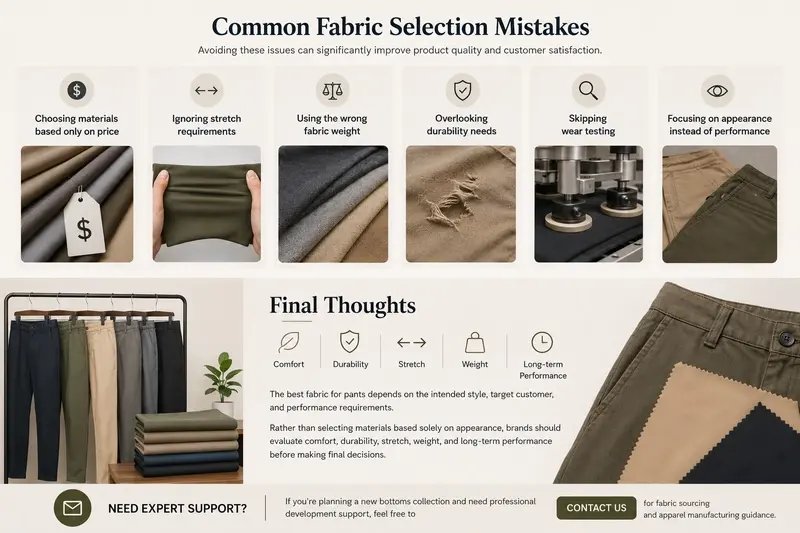
Common Fabric Selection Mistakes
Common mistakes include:
- Choosing materials based only on price
- Ignoring stretch requirements
- Using the wrong fabric weight
- Overlooking durability needs
- Skipping wear testing
- Focusing on appearance instead of performance
Avoiding these issues can significantly improve product quality and customer satisfaction.
Final Thoughts
The best fabric for pants depends on the intended style, target customer, and performance requirements.
Rather than selecting materials based solely on appearance, brands should evaluate comfort, durability, stretch, weight, and long-term performance before making final decisions.
If you’re planning a new bottoms collection and need professional development support, feel free to Contact Us for fabric sourcing and apparel manufacturing guidance.
FAQs
What is the best fabric for pants?
Cotton twill is one of the most versatile fabrics for pants because it balances durability, comfort, and versatility.
Is stretch fabric better for pants?
For many modern styles, yes. Moderate stretch improves mobility and comfort while maintaining a clean appearance.
What fabric is best for cargo pants?
Ripstop fabrics, heavyweight cotton, and nylon blends are commonly used because they provide durability and structure.
How does fabric weight affect pants?
Heavier fabrics generally provide more durability and structure, while lighter fabrics improve breathability and comfort.
What should brands test before production?
Brands should test shrinkage, colorfastness, stretch recovery, abrasion resistance, and fabric weight before approving bulk production.
Share With
Related Articles

Hot Products