Garment Quality Control Checklist: Complete Guide for Apparel Brands
Maintaining consistent product quality is one of the biggest challenges in apparel manufacturing. Even small defects can lead to customer complaints, product returns, delayed launches, and increased production costs.
For clothing brands, a structured garment quality control checklist provides a practical way to evaluate products throughout the manufacturing process and ensure every garment meets approved specifications before shipment.
At OEM Fashion, quality control is integrated into every stage of production to help brands reduce defects, improve consistency, and protect their reputation in competitive markets.
What Is a Garment Quality Control Checklist?
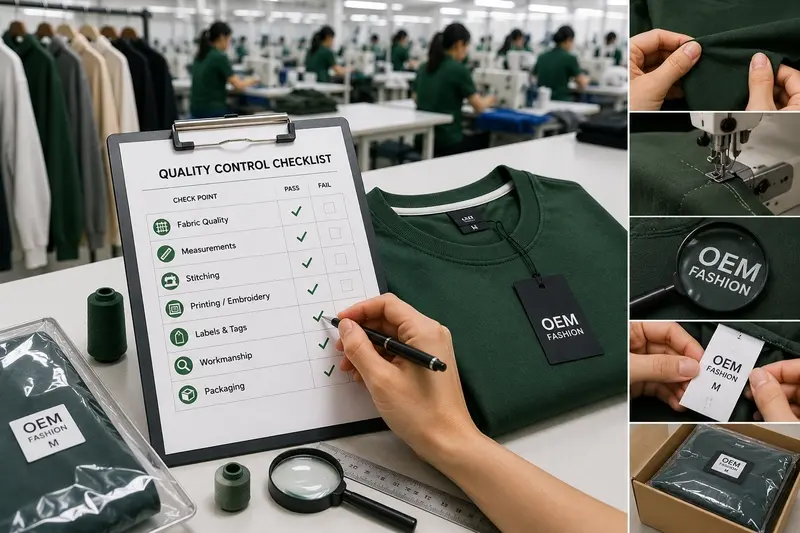
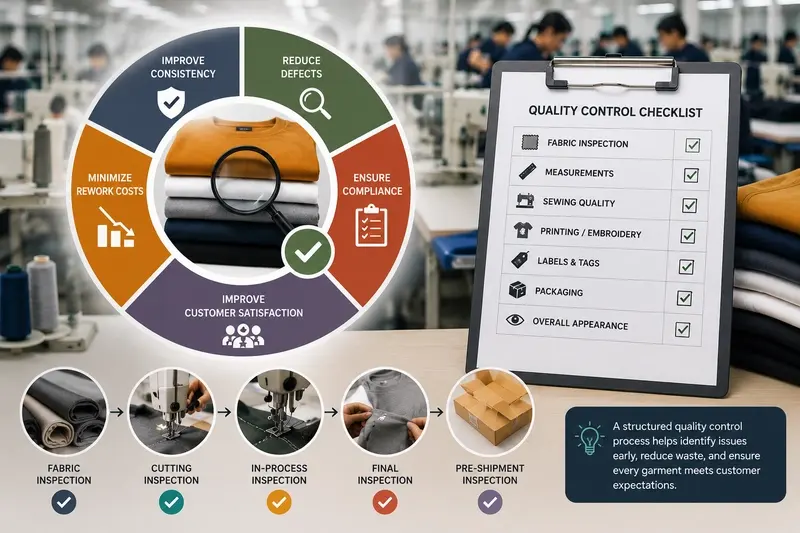
A garment quality control checklist is a standardized set of inspection criteria used to evaluate apparel products during production.
Rather than relying solely on a final inspection, manufacturers use quality control checkpoints throughout the manufacturing process to identify issues before they affect larger production quantities.
A well-designed checklist helps:
- Improve product consistency
- Reduce production defects
- Minimize rework costs
- Ensure compliance with customer requirements
- Improve customer satisfaction
While a checklist provides a practical framework for inspections, it is only one part of a complete quality management system. For a broader overview of how inspections are integrated throughout production, see our guide on How We Ensure Garment Quality.
Why Quality Control Checklists Matter
Quality issues can occur at almost any stage of apparel manufacturing.
Fabric defects, cutting inaccuracies, sewing mistakes, decoration problems, and packaging errors can all affect the final product.
Without a structured inspection process, small issues may go unnoticed until products reach customers.
A garment quality control checklist helps manufacturers identify and correct problems early, reducing waste and improving overall production efficiency.
Fabric Inspection Checklist
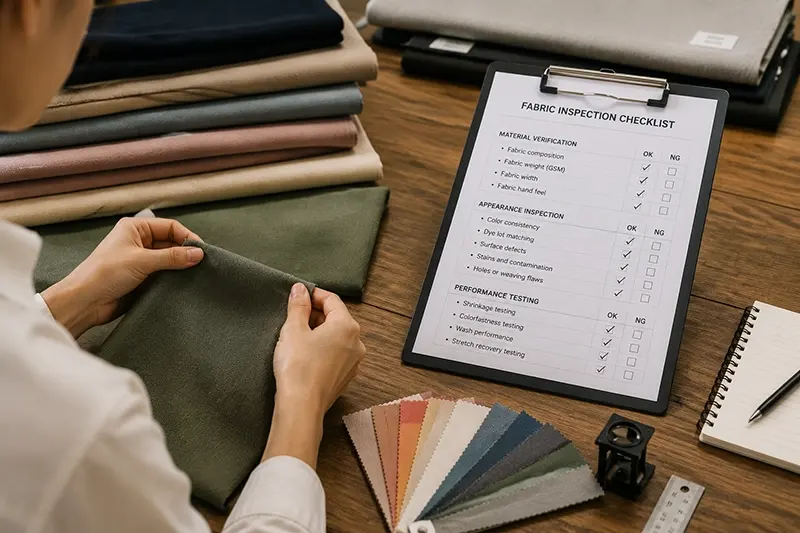
Quality starts with the fabric.
Before production begins, inspectors should verify that all materials meet approved specifications.
Key inspection points include:
Material Verification
- Fabric composition
- Fabric weight (GSM)
- Fabric width
- Fabric hand feel
Appearance Inspection
- Color consistency
- Dye lot matching
- Surface defects
- Stains and contamination
- Holes or weaving flaws
Performance Testing
- Shrinkage testing
- Colorfastness testing
- Wash performance
- Stretch recovery testing
These inspections are especially important for brands developing custom fabrics through our Fabric Customization services.
Cutting Inspection Checklist
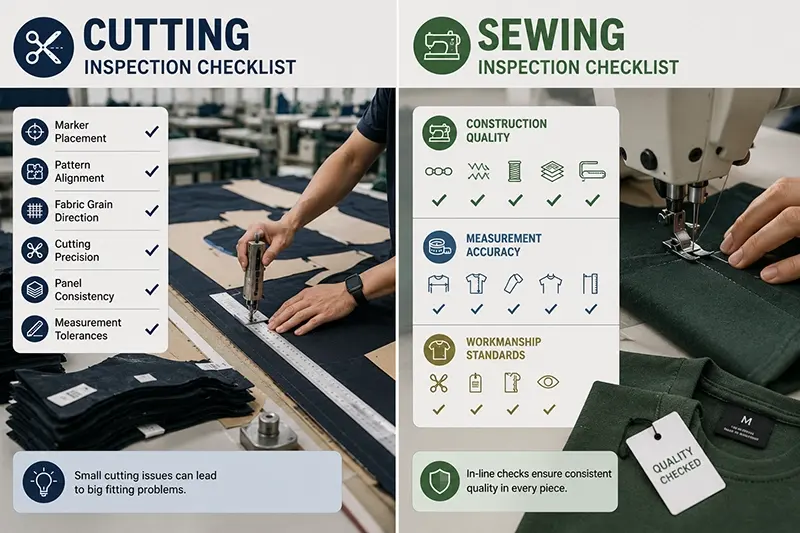
Accurate cutting is essential for maintaining size consistency and proper garment construction.
Inspectors should verify:
- Marker placement accuracy
- Pattern alignment
- Fabric grain direction
- Cutting precision
- Panel consistency
- Measurement tolerances
Even minor cutting errors can create significant fitting and sizing problems during production.
Sewing Inspection Checklist
During Apparel Manufacturing, sewing quality directly affects garment durability, fit, and overall appearance.
Inspectors monitor:
Construction Quality
- Seam strength
- Stitch consistency
- Thread tension
- Reinforcement points
- Edge finishing
Measurement Accuracy
- Chest width
- Body length
- Sleeve length
- Shoulder width
- Size tolerances
Workmanship Standards
- Thread trimming
- Label placement
- Pattern matching
- Overall appearance
Regular in-line inspections help identify issues before they affect larger production quantities.
This level of quality control is particularly important when producing garments through a Custom T-Shirt Manufacturer, where consistency across every piece is critical.
Printing and Embroidery Inspection Checklist
For custom apparel projects, decoration quality is just as important as garment construction.
Through our Customized Craftsmanship solutions, apparel brands can incorporate various customization methods, including screen printing, embroidery, puff printing, silicone printing, and heat transfer graphics.
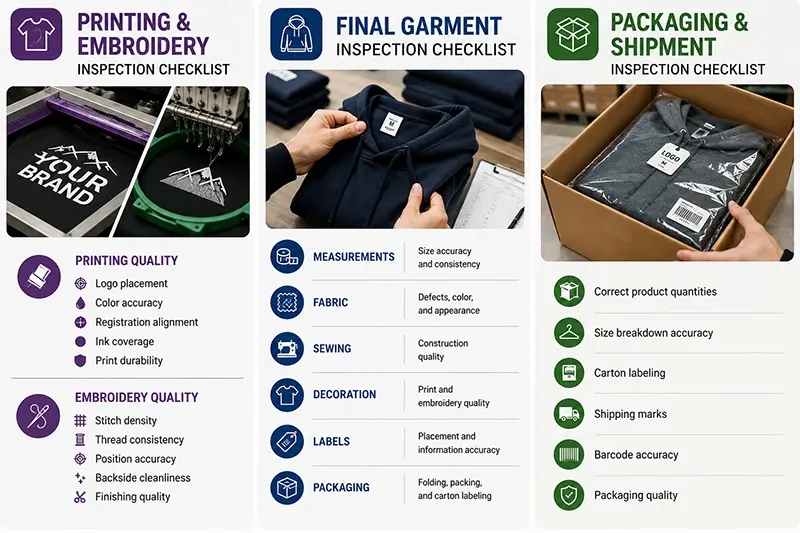
Inspectors should verify:
Printing Quality
- Logo placement
- Color accuracy
- Registration alignment
- Ink coverage
- Print durability
Embroidery Quality
- Stitch density
- Thread consistency
- Position accuracy
- Backside cleanliness
- Finishing quality
All decoration elements should match approved samples and branding requirements before products proceed to final inspection.
Final Garment Inspection Checklist
Before shipment, every garment should undergo a comprehensive final inspection.
This final review helps ensure products meet approved specifications and customer expectations.
| Inspection Area | What to Verify |
|---|---|
| Measurements | Size accuracy and consistency |
| Fabric | Defects, color, and appearance |
| Sewing | Construction quality |
| Decoration | Print and embroidery quality |
| Labels | Placement and information accuracy |
| Packaging | Folding, packing, and carton labeling |
Inspectors should also verify:
- Product appearance
- Cleanliness
- Branding accuracy
- Quantity accuracy
- Packaging requirements
Final inspections are especially important for products manufactured by a Custom Hoodie Manufacturer, where multiple garment components must meet the same quality standards before shipment.
Packaging and Shipment Inspection Checklist
Quality control should continue through the packing process.
Inspectors verify:
- Correct product quantities
- Size breakdown accuracy
- Carton labeling
- Shipping marks
- Barcode accuracy
- Packaging quality
Additional shipment verification procedures are conducted through our Global Shipping services to help ensure products arrive safely and accurately.
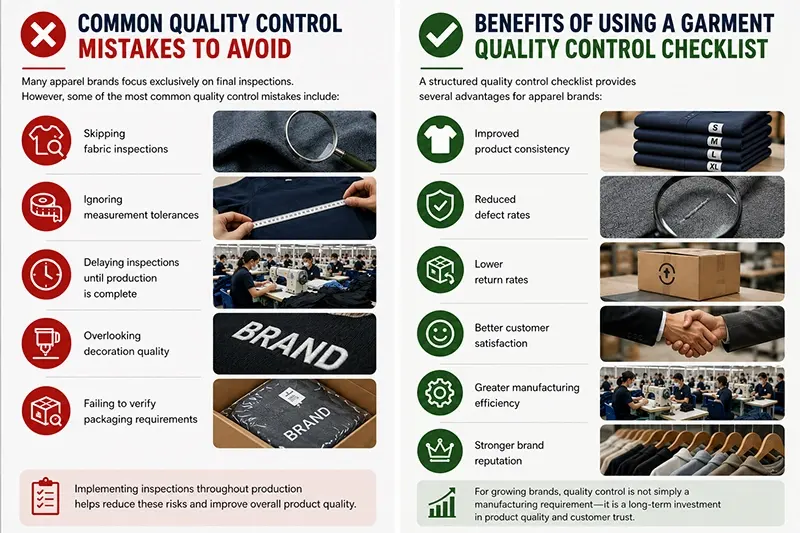
Common Quality Control Mistakes to Avoid
Many apparel brands focus exclusively on final inspections.
However, some of the most common quality control mistakes include:
- Skipping fabric inspections
- Ignoring measurement tolerances
- Delaying inspections until production is complete
- Overlooking decoration quality
- Failing to verify packaging requirements
Implementing inspections throughout production helps reduce these risks and improve overall product quality.
Benefits of Using a Garment Quality Control Checklist
A structured quality control checklist provides several advantages for apparel brands:
- Improved product consistency
- Reduced defect rates
- Lower return rates
- Better customer satisfaction
- Greater manufacturing efficiency
- Stronger brand reputation
For growing brands, quality control is not simply a manufacturing requirement—it is a long-term investment in product quality and customer trust.
Conclusion
A garment quality control checklist provides a practical framework for maintaining consistency throughout the manufacturing process.
By inspecting materials, construction, decoration, and packaging at every stage, apparel brands can reduce defects, improve efficiency, and deliver higher-quality products to their customers.
Contact us today to learn how our quality control procedures help ensure reliable apparel manufacturing and consistent production standards.
FAQs
What is a garment quality control checklist?
A garment quality control checklist is a document used to evaluate apparel quality during different stages of production, including fabric inspection, sewing, decoration, packaging, and final inspection.
When should garment inspections be performed?
Inspections should be conducted throughout production, including before cutting, during sewing, after decoration, and before shipment.
Why is fabric inspection important?
Fabric inspection helps identify defects, color inconsistencies, and performance issues before production begins, reducing waste and preventing costly manufacturing problems.
What should be included in a final garment inspection?
Final inspections should evaluate measurements, construction quality, fabric appearance, decoration quality, labels, and packaging.
How can quality control reduce product returns?
By identifying and correcting defects before shipment, quality control helps ensure customers receive products that meet expectations, reducing complaints and returns.
Share With
Related Articles



Hot Products