Best Fabric Weight for Hoodies: 280 GSM vs 350 GSM vs 420 GSM
For most clothing brands, 350 GSM is a practical starting point for an everyday hoodie, while 420 GSM is better suited to heavyweight, oversized, or structured streetwear styles. 280 GSM works well when you want a lighter hoodie for layering, mild weather, or a softer silhouette.
However, GSM alone does not determine whether a hoodie is premium or durable. Fabric composition, knit construction, finishing, fit, and whether the interior is loopback or brushed can significantly change how the finished garment feels and performs.
When developing custom hoodies with OEM Fashion, the better approach is to start with the intended product—then choose a fabric weight that supports its fit, season, hand feel, decoration, and target market.
What Does GSM Mean for a Hoodie?
GSM means grams per square meter. It measures the weight of the fabric rather than providing a direct quality grade.
For this comparison:
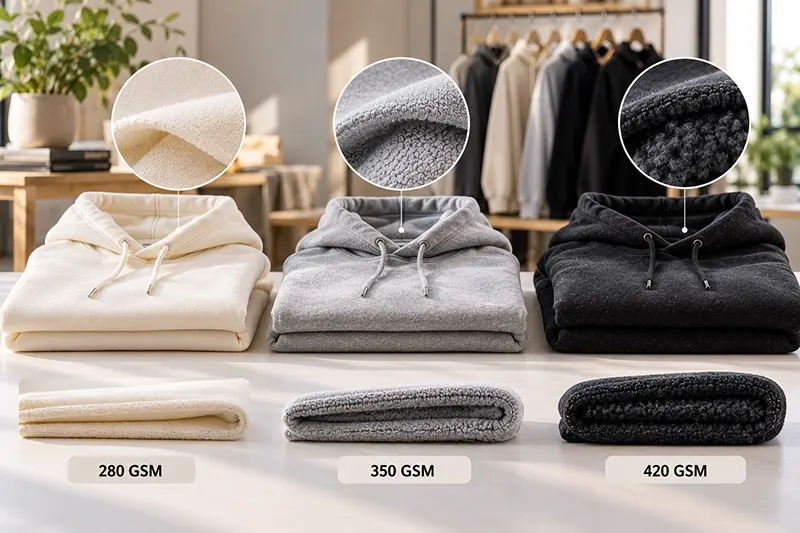
- 280 GSM — lighter and easier to layer
- 350 GSM — balanced midweight
- 420 GSM — heavier and more substantial
A higher GSM means more fabric weight per square meter, but it does not automatically mean better quality.
For example, two 350 GSM fabrics can produce very different hoodies if one is a dense cotton French Terry and the other is a softer brushed cotton-polyester fleece.
The final result can also change according to:
- Fiber composition
- Yarn quality
- Knit density
- Brushing
- Shrinkage control
- Washing and finishing
- Rib construction
Brands should therefore treat GSM as one part of the fabric specification, not the complete specification.
280 GSM: Best for Lightweight and Transitional Hoodies
A 280 GSM fabric is useful when the hoodie should feel lighter and less bulky.
It can work particularly well for:
- Spring and early autumn collections
- Mild or warmer markets
- Layering pieces
- Lightweight casual hoodies
- Softer silhouettes
- Brands that want to reduce finished garment weight
A 280 GSM hoodie usually has less body than a heavyweight version. That can be an advantage when the design is intended to drape naturally rather than maintain a rigid, boxy silhouette.
The limitation appears when a brand wants a very substantial oversized streetwear look.
Dropped shoulders, wide sleeves, a large hood, and a boxy body may require more fabric structure. In that situation, 280 GSM can still be used, but the finished appearance may be softer than expected.
So the question should not be:
“Is 280 GSM too light?”
It should be:
“Does 280 GSM create the silhouette and wearing experience intended for this hoodie?”

350 GSM: A Balanced Starting Point for Many Brands
350 GSM sits between lightweight and true heavyweight hoodie fabrics.
For many brands, this makes it a useful starting point because it can provide enough body for a hoodie without making the garment unnecessarily heavy.
It is suitable for many:
- Everyday hoodies
- Pullover hoodies
- Zip-up hoodies
- Relaxed fits
- Streetwear basics
- Autumn collections
- Multi-season products
The advantage of 350 GSM is flexibility.
A regular-fit hoodie can feel substantial without becoming overly bulky, while a relaxed hoodie can maintain a cleaner silhouette than many lighter fabrics.
Brands developing several hoodie styles can explore the broader manufacturing options on our Custom Hoodie Manufacturer page, including fabric, fit, decoration, labels, trims, and private-label development.
350 GSM should still not be treated as a universal answer. A soft brushed 350 GSM fleece and a compact 350 GSM French Terry will not create identical garments.
The intended hand feel and construction still need to be confirmed during sampling.
420 GSM: Best for Heavyweight and Structured Hoodies
420 GSM becomes more relevant when fabric weight is intentionally part of the product experience.
It is particularly useful for hoodies designed around:
- Heavyweight streetwear
- Boxy silhouettes
- Oversized proportions
- Strong dropped shoulders
- Substantial hand feel
- Cooler-season collections
The additional fabric weight can help support a more pronounced silhouette, especially when combined with an appropriate pattern and fabric construction.
This makes 420 GSM a strong option when developing a Custom Oversized Hoodie where the design requires the garment to sit away from the body rather than collapse into a soft drape.
But heavier is not automatically better.
A 420 GSM hoodie may be unnecessary for a warm-climate collection or a product intended primarily for indoor layering. The additional fabric weight can also increase the finished garment weight and affect packing and freight.
The fabric should support the product concept rather than becoming the product concept by itself.
| Fabric Weight | General Weight Feel | Typical Season Direction | Silhouette Direction | Useful Starting Point For | Confirm During Development |
|---|---|---|---|---|---|
| 280 GSM | Lighter | Mild / Transitional | Softer, easier drape | Layering and lightweight hoodies | Structure, opacity, shrinkage |
| 350 GSM | Midweight | Multi-season / Cooler transitional weather | Balanced structure and drape | Everyday and relaxed hoodies | Hand feel, construction, fit |
| 420 GSM | Heavyweight | Cooler weather | Stronger, more substantial silhouette | Oversized and heavyweight hoodies | Comfort, bulk, rib strength, shrinkage |
This comparison is about weight and product direction, not quality ranking.
A well-developed 280 GSM hoodie can be more appropriate for its intended market than a poorly specified 420 GSM hoodie.
Choose Hoodie GSM According to the Fit
Fabric weight becomes much easier to select when the intended silhouette is already clear.
Regular-fit hoodies generally do not require extreme fabric weight to maintain their shape. A lighter or midweight construction may provide enough body while remaining comfortable for everyday wear.
Relaxed-fit hoodies often benefit from a middle ground where the material has enough weight to create a clean fall without making the garment overly rigid.
Oversized and boxy hoodies may benefit from heavier fabric when the design requires stronger shoulder lines, wider sleeves, or a silhouette that stands away from the body.
But the pattern still matters.
Simply replacing a 280 GSM fabric with 420 GSM does not automatically turn a standard hoodie into a well-proportioned heavyweight streetwear hoodie. Body width, shoulder drop, sleeve volume, hood size, rib tension, and garment length all need to work with the selected material.
French Terry vs Fleece: The Same GSM Can Feel Different
GSM becomes even more useful when it is considered together with fabric construction.
French Terry normally has a smooth outer face with visible loops on the inside. Because the interior remains unbrushed, it can provide a cleaner, less plush wearing experience.
It is useful for brands looking for:
- Breathability
- Loopback interior
- Clean surface
- Structured casualwear
- Transitional-season hoodies
Brushed fleece has a raised, soft interior created through brushing. At a comparable composition and GSM, this construction generally feels warmer and more insulating because the raised interior traps more air.
It is useful for:
- Autumn and winter collections
- Soft interior hand feel
- Warm hoodies
- Comfortable casualwear
For brands specifically developing this type of product, our Custom Fleece Hoodie page covers fleece hoodie development in more detail.
Therefore, “420 GSM” is still not a complete fabric specification.
A 420 GSM French Terry and a 420 GSM brushed fleece may have the same nominal fabric weight while producing noticeably different wearing experiences.

How GSM Affects Printing and Embroidery
The decoration method should also be considered before approving the fabric.
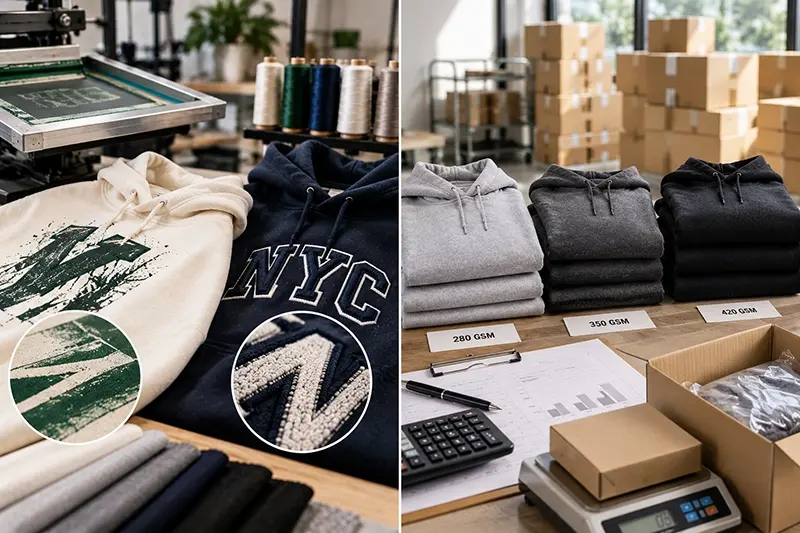
Screen printing, puff printing, embroidery, appliqué, and other techniques interact differently with fabric surfaces and garment structures.
A smooth and stable outer face generally provides a better foundation for many printing techniques.
For embroidery, fabric stability becomes particularly important when the artwork is:
- Large
- Dense
- Multi-layered
- Positioned across areas that naturally stretch
However, this does not mean embroidery automatically requires 420 GSM.
A suitable 350 GSM fabric with the correct construction and embroidery backing may perform better than a poorly selected heavier fabric.
During Fabric Customization, GSM should therefore be reviewed together with composition, surface, stretch, finishing, and the intended decoration process.
How Does Fabric Weight Affect Production Cost?
Increasing GSM generally increases the amount of material contained in the garment.
For the same hoodie pattern and comparable fabric construction, moving from a lighter to a heavier material can affect:
- Fabric consumption by weight
- Finished garment weight
- Material cost
- Packing weight
- Carton weight
- International freight
That does not mean brands should automatically select a lighter fabric to reduce cost.
If a brand is selling a heavyweight streetwear hoodie, reducing the fabric weight too aggressively may change the product experience customers expect.
The better decision is to match the fabric specification to the target product and retail positioning.
A lighter hoodie should feel intentionally lightweight—not like a heavyweight product that was reduced purely to save cost.
Which GSM Should Your Brand Choose?
A simple selection framework can make the decision easier.
Choose around 280 GSM when:
- You want a lighter hoodie
- The product is intended for layering
- Your market has relatively mild weather
- A softer silhouette suits the design
- Lower finished garment weight is important
Choose around 350 GSM when:
- You want a versatile everyday hoodie
- You are developing your first core hoodie
- You need a balance between weight and wearability
- The fit is regular or relaxed
- The collection is not specifically positioned as heavyweight
Choose around 420 GSM when:
- You are intentionally developing a heavyweight hoodie
- Oversized or boxy proportions are important
- The fabric needs more physical presence
- The collection targets cooler conditions
- Substantial garment weight is part of the intended customer experience
These numbers should be treated as development starting points rather than rigid rules.
What Should You Confirm Before Approving Hoodie Fabric?
Before approving bulk fabric, confirm more than the GSM shown on a specification sheet.
Check:
- Fiber composition
- Finished fabric GSM
- Knit construction
- Surface appearance
- Interior finish
- Hand feel
- Stretch and recovery
- Shrinkage after washing
- Color and shade
- Rib compatibility
- Printing or embroidery performance
Physical swatches are useful for narrowing down the material, but the final decision should ideally be made after evaluating a complete sample.
Once the fabric becomes a hoodie, you can see how it affects the shoulders, hood, sleeves, cuffs, hem, body width, and overall drape.
This is especially important when moving from a lighter fabric to 420 GSM, because the same pattern can behave differently when the fabric weight and structure change.

Final Thoughts
There is no single GSM that makes the best hoodie for every brand.
280 GSM is useful for lighter, transitional products. 350 GSM provides a versatile middle ground for many everyday hoodies. 420 GSM is better suited when heavyweight structure and a substantial silhouette are intentional parts of the design.
The final decision should consider GSM together with fabric construction, composition, fit, climate, decoration, and the intended customer experience.
If you already have a hoodie design, reference garment, tech pack, or target fabric weight, Contact Us to discuss fabric options and sample development before bulk production.
FAQs
Is 280 GSM good for hoodies?
Yes, but it is best for lightweight and casual hoodies rather than premium streetwear.
Is 350 GSM good for hoodies?
Yes, 350 GSM is a balanced option suitable for most everyday hoodie collections.
Is 420 GSM too heavy for hoodies?
Not for premium streetwear. 420 GSM is widely used for high-end oversized hoodies.
What GSM do luxury hoodies use?
Most luxury hoodies use fabrics between 380–500 GSM, depending on design and structure requirements.
Which GSM is best for oversized hoodies?
420 GSM is generally preferred because it provides better structure and silhouette definition.
Share With
Related Articles





Hot Products