What Is Embroidery? Complete Guide for Clothing Brands
OEM Fashion is a professional custom apparel manufacturer specializing in private label clothing, OEM/ODM production, and custom branding solutions for fashion brands worldwide.
When it comes to premium apparel decoration, embroidery remains one of the most trusted and recognizable techniques in the fashion industry. Unlike printed graphics, embroidery creates designs using stitched threads, giving garments a textured and high-end appearance.
From luxury fashion brands to streetwear labels and corporate apparel suppliers, embroidery is widely used to enhance product quality, strengthen brand identity, and create long-lasting designs.
If you’re developing a clothing collection, understanding embroidery can help you determine whether it is the right decoration method for your products.
What Is Embroidery?
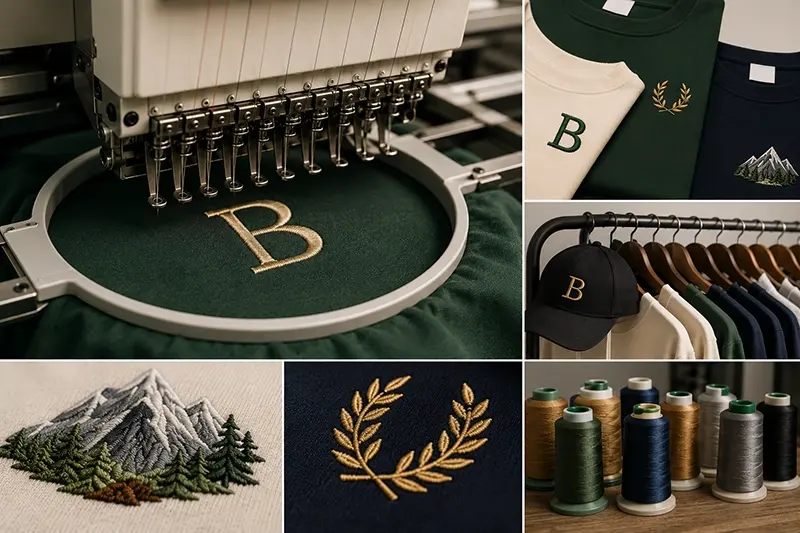
Embroidery is a decoration technique that uses threads stitched directly onto fabric to create logos, text, patterns, and artwork.
Modern embroidery is typically produced using computerized embroidery machines that precisely stitch designs according to digital files.
Embroidery is commonly used on:
- Hoodies
- Jackets
- Polo shirts
- Sweatshirts
- Tracksuits
- Caps
- Workwear
Because stitched designs become part of the garment itself, embroidery is known for its durability and premium appearance.
How Does Embroidery Work?
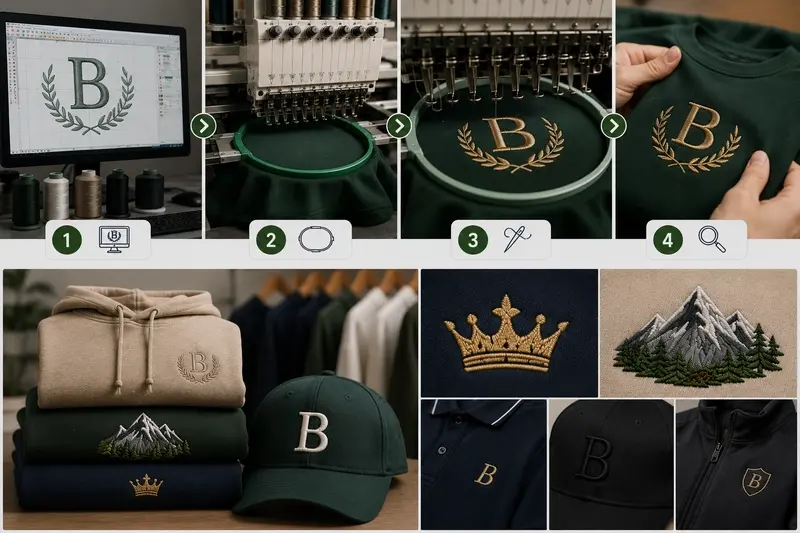
The embroidery process involves several stages.
Step 1: Digitizing the Artwork
Before embroidery can begin, the artwork must be converted into a digital embroidery file.
This process determines:
- Stitch type
- Stitch direction
- Stitch density
- Thread colors
Step 2: Machine Setup
The garment is secured within an embroidery hoop to keep the fabric stable during stitching.
Thread colors and embroidery files are loaded into the embroidery machine.
Step 3: Stitching
The machine automatically stitches the design onto the garment according to the digitized file.
Depending on the complexity of the design, this process can take several minutes to complete.
Step 4: Finishing and Inspection
After stitching is complete, excess backing materials are removed, and the garment undergoes quality inspection.
Advantages of Embroidery
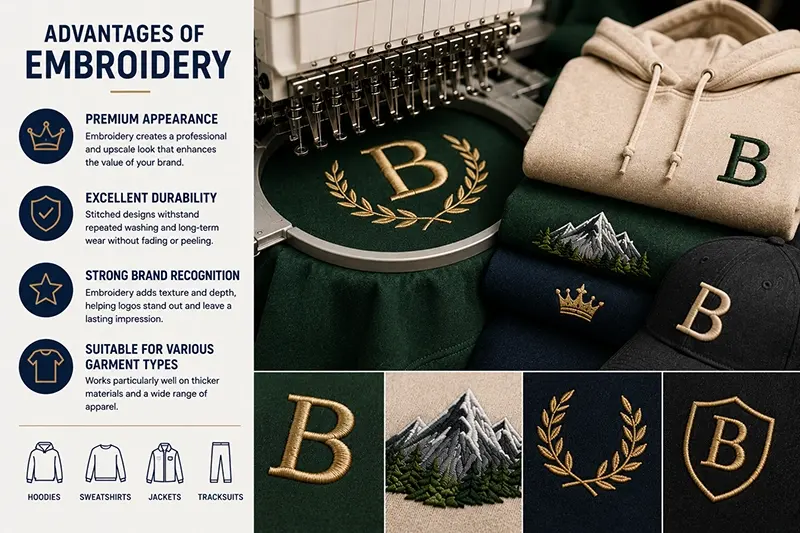
Embroidery continues to be a preferred decoration method because it offers several important benefits.
Premium Appearance
Embroidery immediately creates a more professional and upscale look compared to many printing methods.
This is one reason luxury and corporate apparel brands frequently choose embroidery for logos.
Excellent Durability
Stitched designs can withstand repeated washing and long-term wear without significant fading.
Strong Brand Recognition
Embroidery adds texture and depth that helps logos stand out on garments.
Suitable for Various Garment Types
Embroidery works particularly well on thicker materials such as:
- Hoodies
- Sweatshirts
- Jackets
- Tracksuits
Limitations of Embroidery
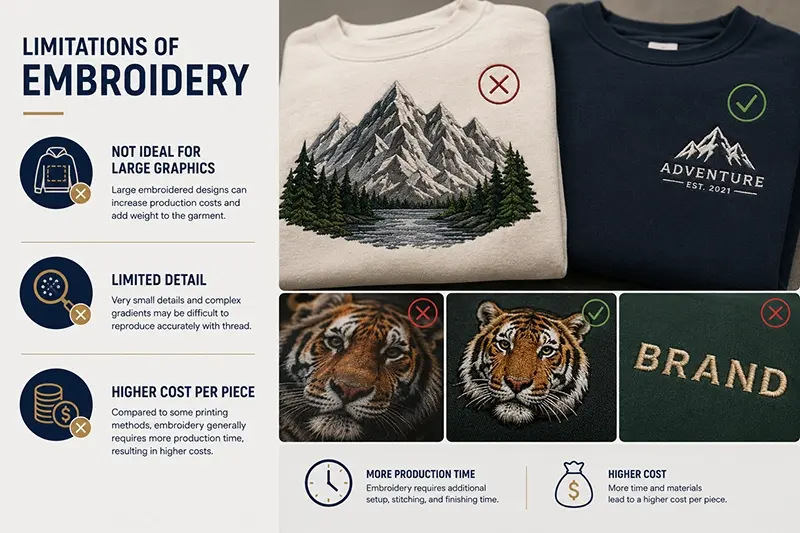
Although embroidery offers many advantages, it may not be suitable for every design.
Not Ideal for Large Graphics
Large embroidered designs can increase production costs and add weight to the garment.
Limited Detail
Very small details and complex gradients may be difficult to reproduce accurately with thread.
Higher Cost Per Piece
Compared to some printing methods, embroidery generally requires more production time, resulting in higher costs.
Common Types of Embroidery
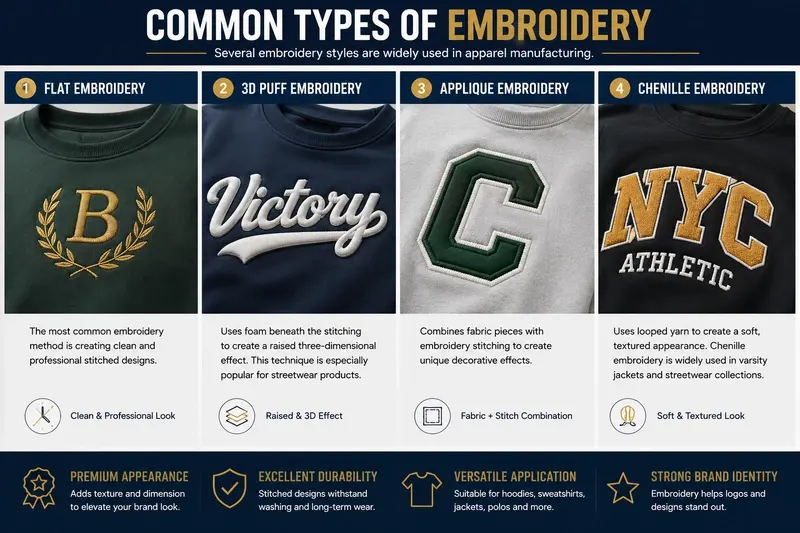
Several embroidery styles are widely used in apparel manufacturing.
Flat Embroidery
The most common embroidery method is creating clean and professional stitched designs.
3D Puff Embroidery
Uses foam beneath the stitching to create a raised three-dimensional effect.
This technique is especially popular for caps and streetwear products.
Applique Embroidery
Combines fabric pieces with embroidery stitching to create unique decorative effects.
Chenille Embroidery
Uses looped yarn to create a soft, textured appearance.
Chenille embroidery is widely used in varsity jackets and streetwear collections.
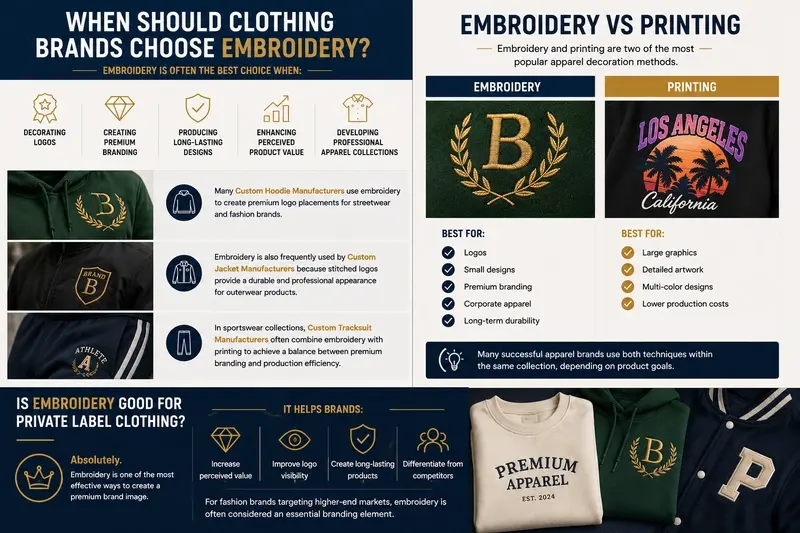
When Should Clothing Brands Choose Embroidery?
Embroidery is often the best choice when:
- Decorating logos
- Creating premium branding
- Producing long-lasting designs
- Enhancing perceived product value
- Developing professional apparel collections
Many Custom Hoodie Manufacturers use embroidery to create premium logo placements for streetwear and fashion brands.
Embroidery is also frequently used by Custom Jacket Manufacturers because stitched logos provide a durable and professional appearance for outerwear products.
In sportswear collections, Custom Tracksuit Manufacturers often combine embroidery with printing to achieve a balance between premium branding and production efficiency.
Embroidery vs Printing
Embroidery and printing are two of the most popular apparel decoration methods.
Embroidery
Best for:
- Logos
- Small designs
- Premium branding
- Corporate apparel
- Long-term durability
Printing
Best for:
- Large graphics
- Detailed artwork
- Multi-color designs
- Lower production costs
Many successful apparel brands use both techniques within the same collection, depending on product goals.
Is Embroidery Good for Private Label Clothing?
Absolutely.
Embroidery is one of the most effective ways to create a premium brand image.
It helps brands:
- Increase perceived value
- Improve logo visibility
- Create long-lasting products
- Differentiate from competitors
For fashion brands targeting higher-end markets, embroidery is often considered an essential branding element.
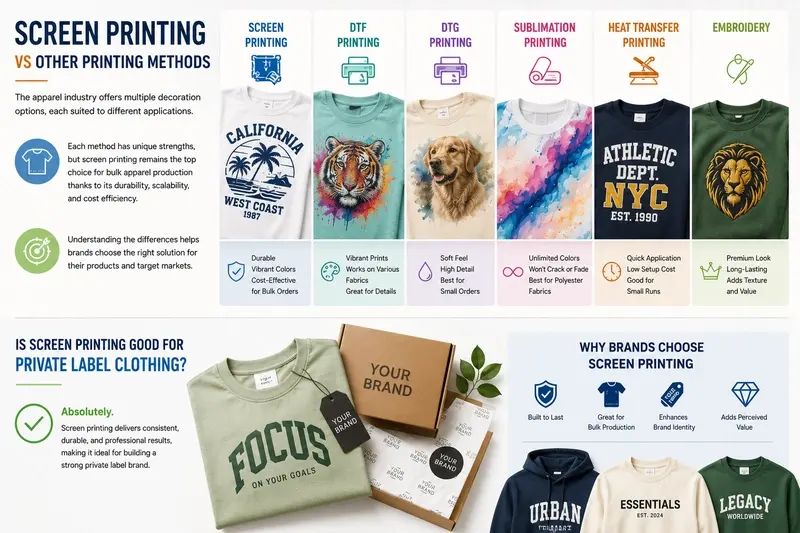
Screen Printing vs Other Printing Methods
The apparel industry offers multiple decoration options, each suited to different applications.
Popular alternatives include:
- DTF Printing
- DTG Printing
- Sublimation Printing
- Heat Transfer Printing
- Embroidery
While these methods offer unique advantages, screen printing continues to dominate bulk apparel production due to its durability, scalability, and cost efficiency.
Understanding the differences between these methods can help brands select the most appropriate solution for their products and target markets.
Is Screen Printing Good for Private Label Clothing?
Absolutely.
Screen printing is one of the most commonly used decoration methods for private label apparel because it offers consistency, durability, and professional results.
When combined with custom labels, branded packaging, and premium garment construction, screen printing helps create products that strengthen brand identity and improve perceived value.
Many successful fashion brands continue to rely on screen printing as a core part of their product development strategy.
Conclusion
Embroidery remains one of the most respected apparel decoration methods in the fashion industry. Its premium appearance, durability, and ability to enhance brand recognition make it an excellent choice for clothing brands seeking long-term value.
Whether you’re producing hoodies, jackets, tracksuits, or corporate apparel, embroidery can help elevate your products and strengthen your brand identity.
Ready to Develop Custom Embroidered Apparel?
Choosing the right decoration method can significantly impact your product quality and brand perception.
Our team helps clothing brands develop premium embroidered garments, from sampling and digitizing artwork to bulk production and private label manufacturing.
👉 Contact Us today to discuss your project and receive a personalized quotation.
FAQs
What is embroidery in apparel?
Embroidery is a decoration technique that uses stitched threads to create logos, text, and artwork directly on garments.
Is embroidery more durable than printing?
In many cases, yes. Embroidery is highly durable and can withstand repeated washing without fading.
What garments are best for embroidery?
Embroidery works particularly well on hoodies, jackets, sweatshirts, tracksuits, polo shirts, and caps.
Is embroidery expensive?
Embroidery generally costs more than printing because it requires specialized equipment and production time.
Is embroidery suitable for private label clothing?
Yes. Embroidery is widely used by private label brands because it enhances product quality, brand recognition, and perceived value.
Share With
Related Articles
Hot Products