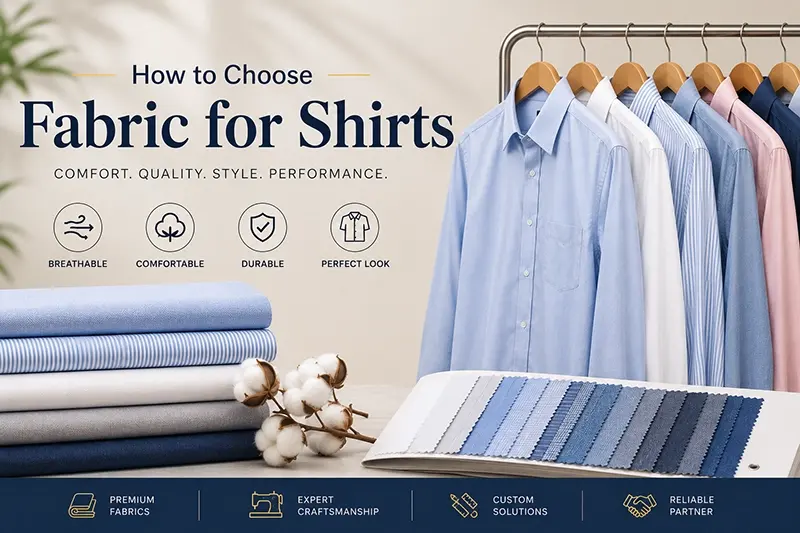
How to Choose Fabric for Shirts
Choosing the right fabric for shirts is essential for creating garments that balance comfort, appearance, durability, and functionality. Shirt fabric directly affects breathability, texture, drape, wrinkle resistance, and overall customer experience.
Whether you’re developing casual shirts, formal dress shirts, oversized fashion shirts, or lightweight summer collections, selecting the correct fabric is one of the most important steps in apparel development.
Today’s consumers pay close attention to how shirts feel and perform during everyday wear. A high-quality fabric can improve product perception, customer satisfaction, and long-term brand value.
Our OEM Fashion Manufacturer services support clothing brands with professional fabric sourcing, sampling, and custom shirt production solutions.
Why Fabric Selection Matters for Shirts
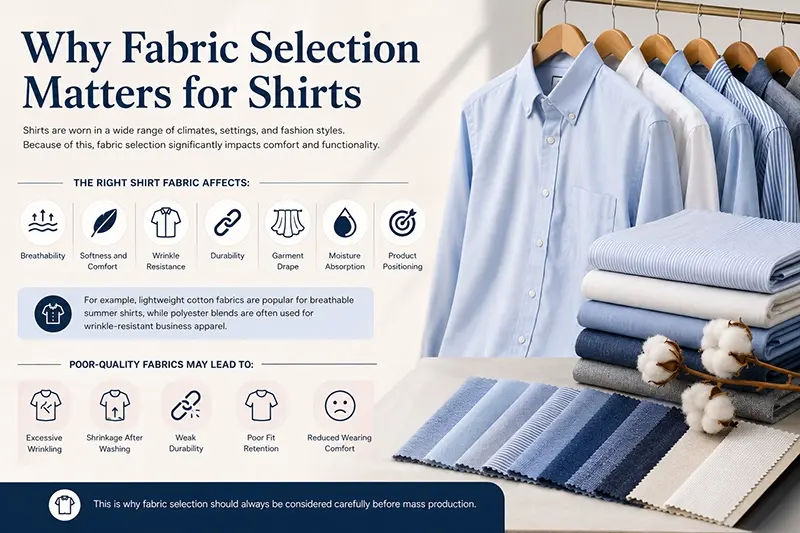
Shirts are worn in a wide range of climates, settings, and fashion styles. Because of this, fabric selection significantly impacts comfort and functionality.
The right shirt fabric affects:
- Breathability
- Softness and comfort
- Wrinkle resistance
- Durability
- Garment drape
- Moisture absorption
- Product positioning
For example, lightweight cotton fabrics are popular for breathable summer shirts, while polyester blends are often used for wrinkle-resistant business apparel.
Poor-quality fabrics may lead to:
- Excessive wrinkling
- Shrinkage after washing
- Weak durability
- Poor fit retention
- Reduced wearing comfort
This is why fabric selection should always be considered carefully before mass production.
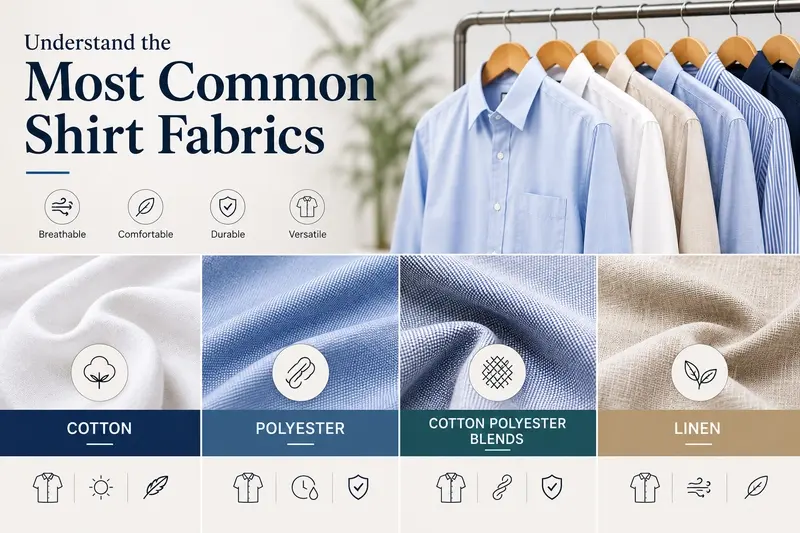
Understand the Most Common Shirt Fabrics
Different shirt materials create very different product experiences.
Cotton Fabric
Cotton remains one of the most widely used fabrics for shirts because of its softness, breathability, and versatility.
Best for:
- Casual shirts
- Dress shirts
- Summer collections
- Everyday fashion
Advantages:
- Comfortable feel
- Good breathability
- Soft texture
- Strong moisture absorption
Cotton shirts are especially popular in warmer climates because they feel cooler and more breathable during daily wear.
Polyester Fabric
Polyester is commonly used for performance and wrinkle-resistant shirts.
Best for:
- Uniform shirts
- Business shirts
- Sportswear
- Budget-friendly apparel
Advantages:
- Wrinkle resistance
- Strong durability
- Faster drying
- Lower maintenance
However, polyester fabrics may feel less breathable than natural cotton fabrics.
Cotton Polyester Blends
Cotton-poly blends combine natural comfort with improved durability.
Best for:
- Daily casualwear
- Affordable fashion
- Commercial uniform production
Advantages:
- Better wrinkle resistance
- Lower shrinkage
- Balanced comfort
- More durable construction
These fabrics are commonly used in large-scale shirt manufacturing because they balance performance and affordability.
Linen Fabric
Linen is known for its lightweight texture and strong breathability.
Best for:
- Summer shirts
- Resort wear
- Relaxed fashion collections
Advantages:
- Excellent airflow
- Lightweight comfort
- Natural premium texture
Linen fabrics naturally wrinkle more easily, but many fashion brands consider this part of the fabric’s aesthetic appeal.
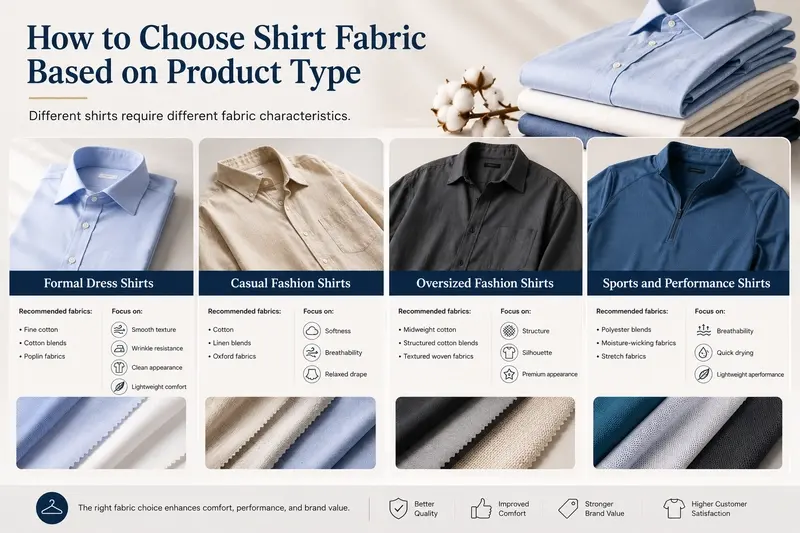
How to Choose Shirt Fabric Based on Product Type
Different shirts require different fabric characteristics.
Formal Dress Shirts
Recommended fabrics:
- Fine cotton
- Cotton blends
- Poplin fabrics
Focus on:
- Smooth texture
- Wrinkle resistance
- Clean appearance
- Lightweight comfort
Casual Fashion Shirts
Recommended fabrics:
- Cotton
- Linen blends
- Oxford fabrics
Focus on:
- Softness
- Breathability
- Relaxed drape
Oversized Fashion Shirts
Recommended fabrics:
- Midweight cotton
- Structured cotton blends
- Textured woven fabrics
Focus on:
- Structure
- Silhouette
- Premium appearance
Sports and Performance Shirts
Recommended fabrics:
- Polyester blends
- Moisture-wicking fabrics
- Stretch fabrics
Focus on:
- Breathability
- Quick drying
- Lightweight performance
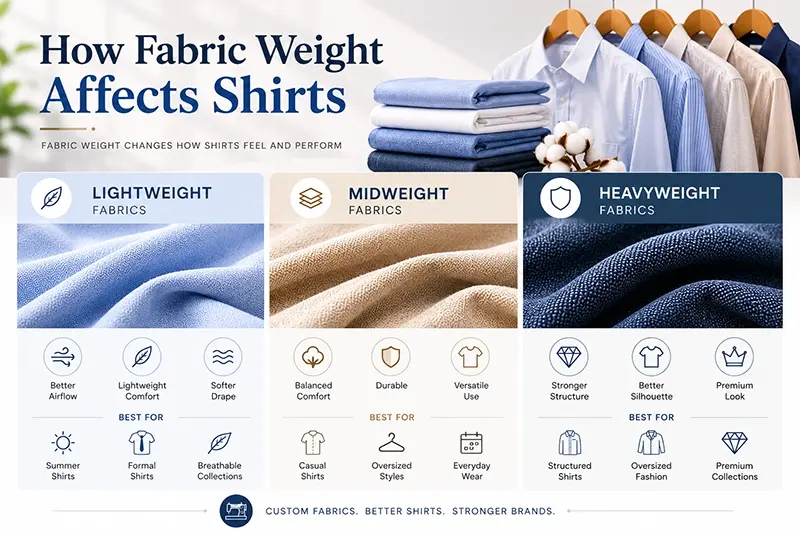
How Fabric Weight Affects Shirts
Fabric weight changes how shirts feel and perform.
Lightweight Fabrics
Best for:
- Summer shirts
- Formal dress shirts
- Breathable collections
Advantages:
- Better airflow
- Lightweight comfort
- Softer drape
Midweight Fabrics
Best for:
- Casual fashion shirts
- Oversized styles
- Everyday wear
These fabrics balance durability and comfort.
Heavyweight Fabrics
Best for:
- Structured shirts
- Oversized fashion
- Premium collections
Heavier fabrics create stronger silhouettes and a more premium appearance.
Our Custom Shirt manufacturing services support a wide range of shirt fabrics for fashion brands worldwide.
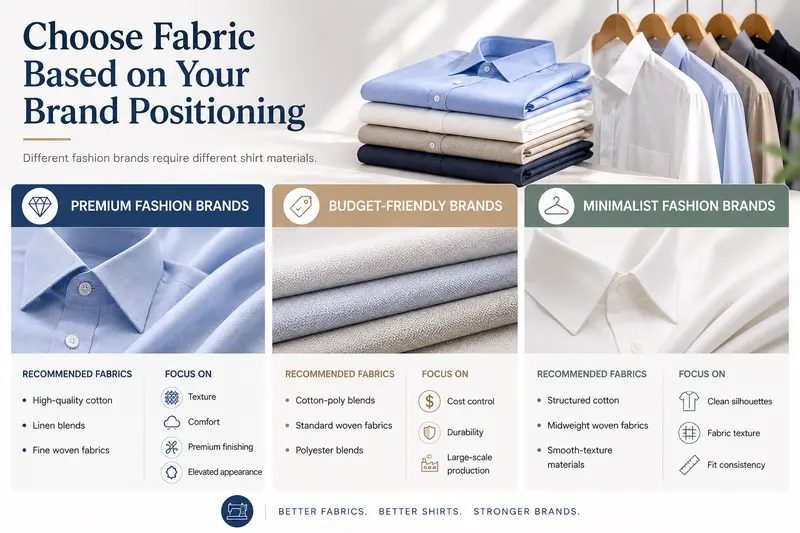
Choose Fabric Based on Your Brand Positioning
Different fashion brands require different shirt materials.
Premium Fashion Brands
Recommended fabrics:
- High-quality cotton
- Linen blends
- Fine woven fabrics
Focus on:
- Texture
- Comfort
- Premium finishing
- Elevated appearance
Budget-Friendly Brands
Recommended fabrics:
- Cotton-poly blends
- Standard woven fabrics
- Polyester blends
Focus on:
- Cost control
- Durability
- Large-scale production
Minimalist Fashion Brands
Recommended fabrics:
- Structured cotton
- Midweight woven fabrics
- Smooth-texture materials
Focus on:
- Clean silhouettes
- Fabric texture
- Fit consistency
How Fabric Affects Shirt Comfort and Performance
Fabric choice directly impacts long-term wearing comfort.
Breathability
Cotton and linen fabrics provide better airflow than many synthetic materials.
Wrinkle Resistance
Polyester blends generally wrinkle less and require lower maintenance.
Durability
Blended fabrics usually provide stronger wear resistance.
Moisture Management
Performance fabrics improve comfort during active use or warm weather.
Selecting the wrong material can negatively affect both product quality and customer satisfaction.
Common Mistakes When Choosing Shirt Fabric
Choosing Fabric Only Based on Appearance
Some fabrics may look attractive but perform poorly during daily wear.
Ignoring Climate Needs
Heavy fabrics may feel uncomfortable in warm-weather markets.
Overlooking Shrinkage
Natural fabrics may shrink if not properly pre-treated.
Skipping Fabric Testing
Always test fabric softness, durability, and washing performance before production.
Choosing Fabric Only Based on Appearance
Some fabrics may look attractive but perform poorly during daily wear.
Ignoring Climate Needs
Heavy fabrics may feel uncomfortable in warm-weather markets.
Overlooking Shrinkage
Natural fabrics may shrink if not properly pre-treated.
Skipping Fabric Testing
Always test fabric softness, durability, and washing performance before production.
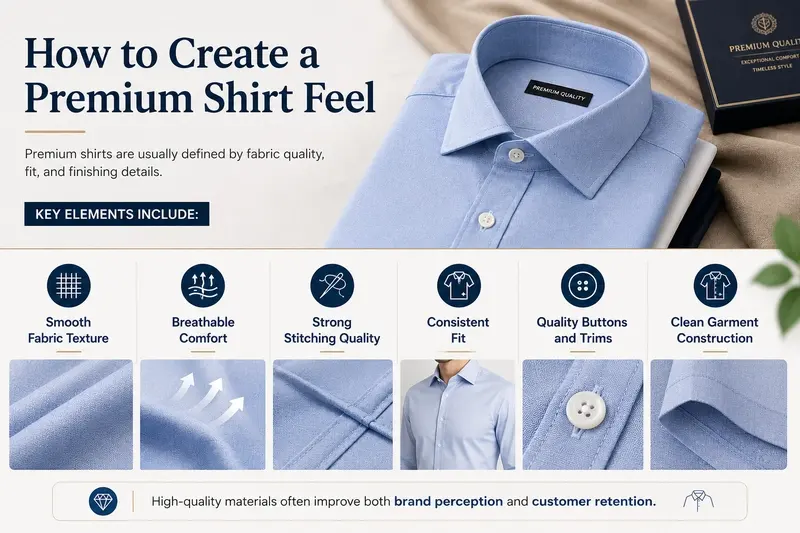
How to Create a Premium Shirt Feel
Premium shirts are usually defined by fabric quality, fit, and finishing details.
Key elements include:
- Smooth fabric texture
- Breathable comfort
- Strong stitching quality
- Consistent fit
- Quality buttons and trims
- Clean garment construction
High-quality materials often improve both brand perception and customer retention.
Final Thoughts
Choosing the right fabric for shirts requires balancing comfort, breathability, durability, appearance, and production cost.
For premium fashion shirts, high-quality cotton and linen blends are often the best choices because they provide natural comfort and elevated texture. For affordable or performance-focused products, polyester blends may offer more practical durability and lower maintenance.
The best approach is first to define your target customer and product purpose, then select fabrics that align with your brand goals.
If you’re planning a custom shirt collection, feel free to Contact Us for professional shirt manufacturing and fabric sourcing support.
FAQs
What is the best fabric for shirts?
Cotton is one of the best shirt fabrics because it is breathable, soft, and comfortable for everyday wear.
Is cotton or polyester better for shirts?
Cotton is generally more breathable and comfortable, while polyester provides better wrinkle resistance and durability.
What fabric is best for summer shirts?
Lightweight cotton and linen fabrics are excellent for summer shirts because they provide strong breathability and airflow.
Are cotton-poly blends good for shirts?
Yes. Cotton-poly blends balance softness, durability, wrinkle resistance, and affordability.
How do I choose fabric for my shirt brand?
Start by identifying your target market, climate, and product positioning. Then choose fabrics based on comfort, breathability, durability, and design goals.
Share With
Related Articles



Hot Products