What Is Puff Printing? Complete Guide for Clothing Brands
OEM Fashion is a professional custom apparel manufacturer specializing in private label clothing, OEM/ODM production, and custom branding solutions for fashion brands worldwide.
In recent years, puff printing has become one of the most popular decoration techniques in the fashion industry, especially among streetwear, sportswear, and premium casualwear brands. Unlike traditional flat printing methods, puff printing creates a raised three-dimensional effect that adds texture, depth, and visual impact to apparel.
As consumers increasingly seek unique products and premium finishes, many clothing brands are incorporating puff printing into their collections to create distinctive designs that stand out in competitive markets.
Understanding how puff printing works and when to use it can help brands make better product development decisions and achieve stronger visual branding.
What Is Puff Printing?
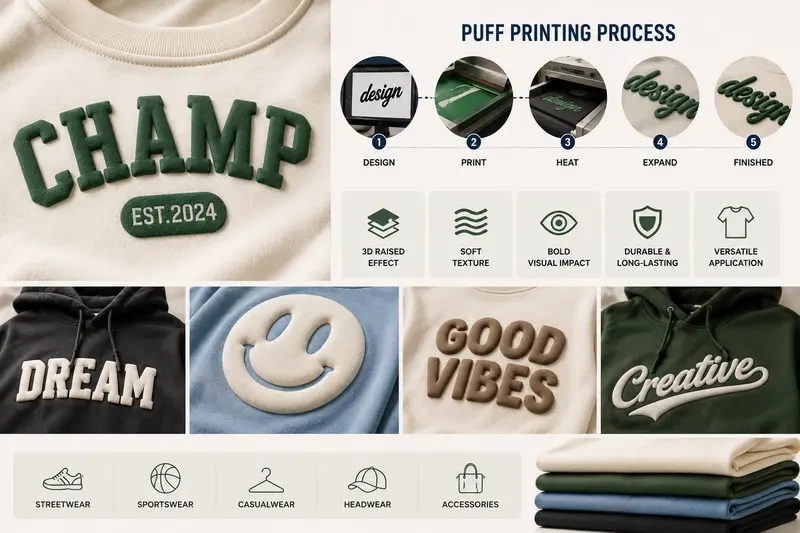
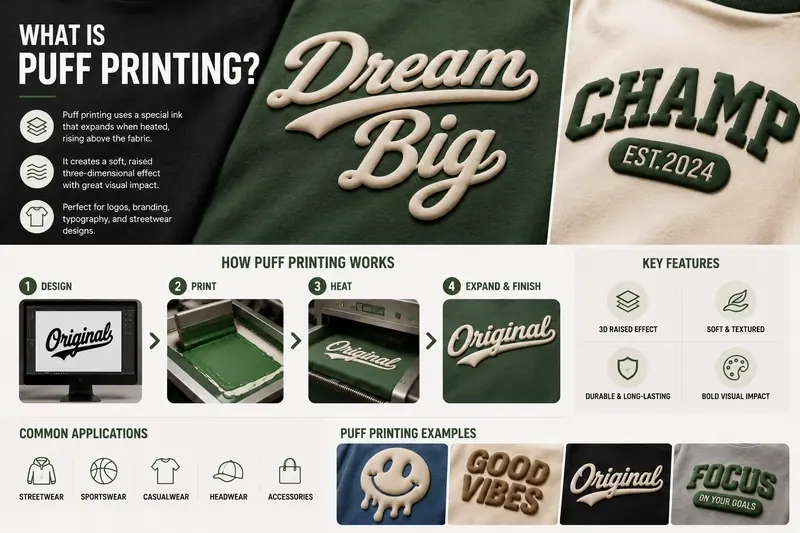
Puff printing is a specialty screen-printing technique that uses a puff additive mixed into the ink.
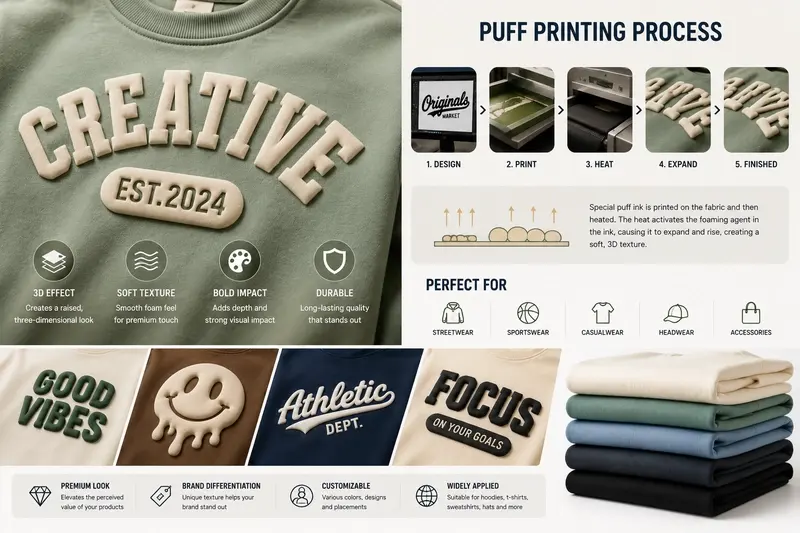
When exposed to high curing temperatures, the additive expands, causing the printed area to rise above the fabric surface. The result is a soft, elevated design that creates a three-dimensional appearance.
Unlike embroidery, which uses stitched threads to create texture, puff printing achieves a raised effect through ink expansion while maintaining the flexibility of printed graphics.
Puff printing is commonly used for:
- Logos
- Brand names
- Typography
- Graphic artwork
- Streetwear designs
- Sportswear branding
Its unique appearance has made it a signature decoration method for many contemporary fashion brands.
How Does Puff Printing Work?
The puff printing process is based on traditional screen printing but incorporates specialized ink formulations.
Step 1: Artwork Preparation
Designs are prepared specifically for puff printing.
Bold shapes and solid graphics generally produce the best results because very fine details may become distorted during expansion.
Step 2: Screen Printing Application
The puff ink mixture is printed onto the garment using standard screen printing equipment.
Ink thickness is carefully controlled to achieve the desired expansion effect.
Step 3: Heat Curing
During curing, the puff additive reacts to heat and expands.
This expansion creates the raised three-dimensional texture associated with puff printing.
Step 4: Quality Inspection
The final print is inspected for:
- Consistent expansion
- Surface smoothness
- Color accuracy
- Adhesion durability
Proper process control is essential for achieving high-quality puff prints.
Why Is Puff Printing Popular?
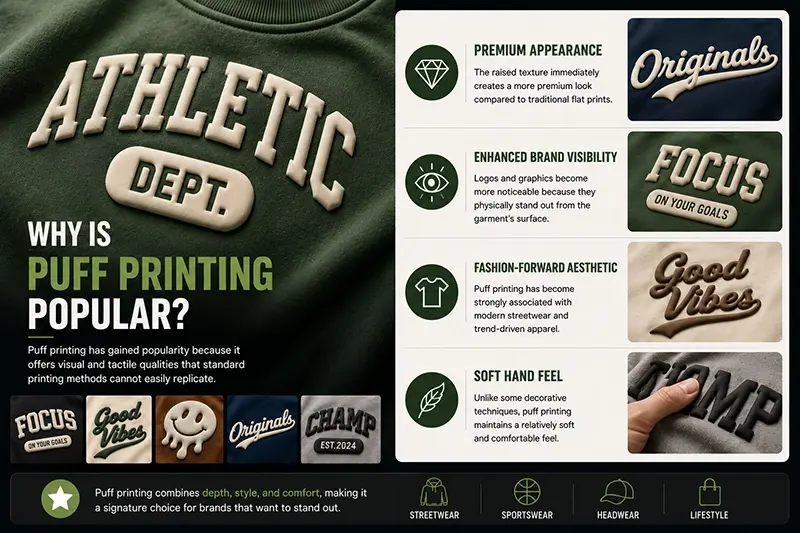
Puff printing has gained popularity because it offers visual and tactile qualities that standard printing methods cannot easily replicate.
Premium Appearance
The raised texture immediately creates a more premium look compared to traditional flat prints.
Enhanced Brand Visibility
Logos and graphics become more noticeable because they physically stand out from the garment’s surface.
Fashion-Forward Aesthetic
Puff printing has become strongly associated with modern streetwear and trend-driven apparel.
Soft Hand Feel
Unlike some decorative techniques, puff printing maintains a relatively soft and comfortable feel.
Advantages of Puff Printing
Creates Three-Dimensional Effects
The primary advantage of puff printing is its ability to create depth and texture without additional materials.
Lightweight Decoration
Compared to embroidery, puff printing generally adds less weight to the garment.
Cost-Effective Branding
For medium and large production runs, puff printing can often be more economical than complex embroidery applications.
Excellent for Bold Graphics
Large logos, typography, and graphic elements work exceptionally well with puff printing.
Limitations of Puff Printing
While puff printing offers many benefits, there are some design and production considerations.
Not Suitable for Fine Details
Very thin lines and highly detailed artwork may lose clarity after expansion.
Color Variation Risks
Improper curing temperatures can affect the final appearance and consistency of the print.
Fabric Compatibility Matters
The quality of puff printing can vary depending on garment construction and fabric composition.
Working with an experienced manufacturer helps minimize these risks.
Best Fabrics for Puff Printing
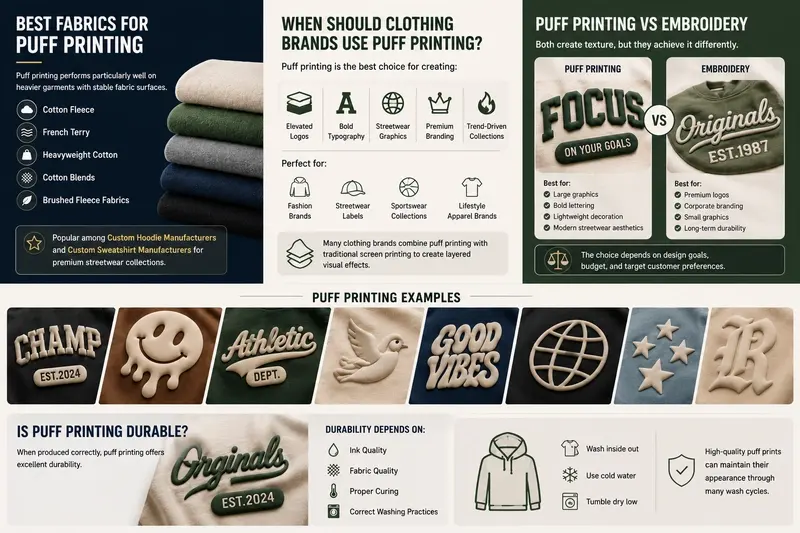
Puff printing performs particularly well on heavier garments with stable fabric surfaces.
Popular options include:
- Cotton fleece
- French terry
- Heavyweight cotton
- Cotton blends
- Brushed fleece fabrics
Because of these characteristics, puff printing is especially popular among Custom Hoodie Manufacturers developing premium streetwear collections.
Many Custom Sweatshirt Manufacturers also utilize puff printing to create fashion-focused seasonal products with a strong visual impact.
When Should Clothing Brands Use Puff Printing?
Puff printing is often the best choice when brands want to create:
- Elevated logos
- Bold typography
- Streetwear graphics
- Premium branding elements
- Trend-driven collections
It is particularly effective for:
- Fashion brands
- Streetwear labels
- Sportswear collections
- Lifestyle apparel brands
Many clothing brands combine puff printing with traditional screen printing to create layered visual effects.
Puff Printing vs Embroidery
Both puff printing and embroidery create texture, but they achieve it differently.
Puff Printing
Best for:
- Large graphics
- Bold lettering
- Lightweight decoration
- Modern streetwear aesthetics
Embroidery
Best for:
- Premium logos
- Corporate branding
- Small graphics
- Long-term durability
The choice depends on design goals, budget, and target customer preferences.
Is Puff Printing Durable?
When produced correctly, puff printing offers excellent durability.
However, durability depends on:
- Ink quality
- Fabric quality
- Proper curing
- Correct washing practices
To maximize longevity, garments should generally be washed inside out using cold water and moderate drying temperatures.
High-quality puff prints can maintain their appearance through many wash cycles.
Conclusion
Puff printing has become one of the most influential decoration methods in modern apparel manufacturing. Its ability to create raised graphics, enhance brand visibility, and deliver a premium fashion aesthetic makes it particularly attractive for streetwear and contemporary fashion brands.
For clothing companies seeking a distinctive alternative to traditional printing, puff printing offers an effective way to add depth, texture, and value to apparel collections.
Ready to Develop Custom Puff Print Apparel?
Whether you’re launching a new streetwear collection or upgrading your existing product line, selecting the right decoration method is critical to creating products that stand out.
Our team helps fashion brands develop custom apparel solutions that combine innovative decoration techniques with high-quality manufacturing standards.
👉 Contact Us today to discuss your project and receive a personalized quotation.
FAQs
What is puff printing?
Puff printing is a screen-printing technique that uses expanding ink additives to create raised three-dimensional graphics on garments.
Is puff printing durable?
Yes. High-quality puff printing can withstand repeated washing when produced using proper materials and curing processes.
What garments are best for puff printing?
Puff printing performs particularly well on hoodies, sweatshirts, fleece garments, and heavyweight cotton apparel.
Is puff printing more expensive than screen printing?
Puff printing generally costs slightly more than standard screen printing because of specialized inks and production requirements.
Is puff printing better than embroidery?
It depends on the design. Puff printing is ideal for bold graphics and streetwear aesthetics, while embroidery is often preferred for premium logos and corporate branding.
Share With
Related Articles



Hot Products