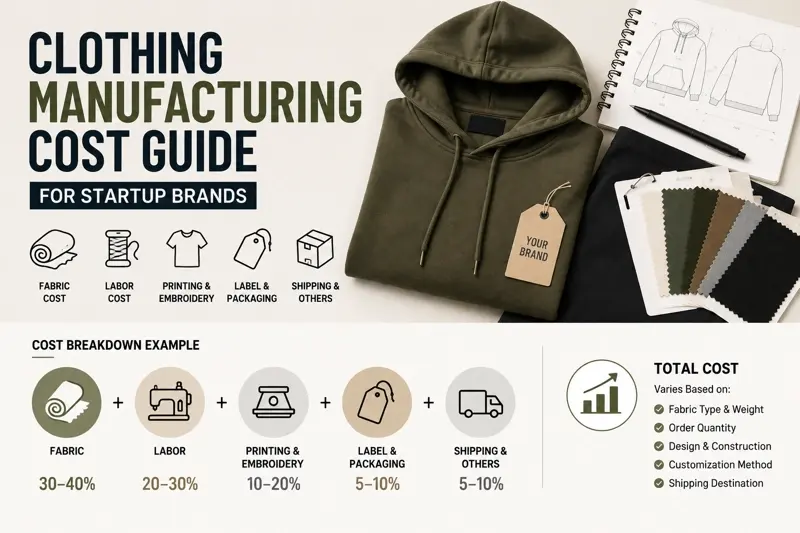
For many startup fashion brands, manufacturing costs can quickly become confusing during the early stages of product development.
Small decisions such as fabric selection, printing methods, packaging, and order quantities can dramatically affect the final production price.
Understanding how apparel pricing works helps brands plan collections more efficiently, reduce unnecessary expenses, and avoid costly production mistakes later.
Startup brands working with experienced manufacturers like OEM Fashion often have more flexibility when balancing product quality, customization, and production budgets.
Fabric Quality Has a Major Impact on Cost
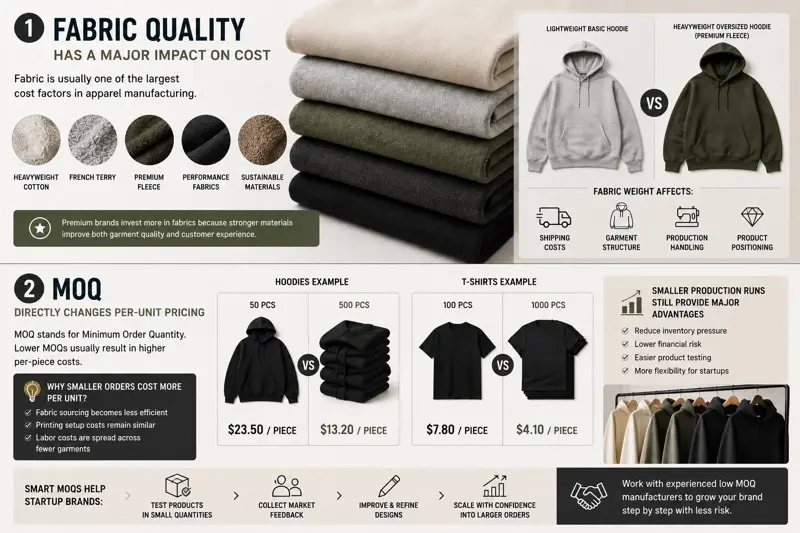
Fabric is usually one of the largest cost factors in apparel manufacturing.
Higher-quality materials naturally increase production pricing, especially when brands choose:
Heavyweight cotton
French terry
Premium fleece
Performance fabrics
Sustainable materials
For example, a heavyweight oversized hoodie made with premium fleece will cost significantly more than a lightweight basic hoodie because of the additional material, weight, and construction involved.
Fabric weight also affects:
Shipping costs
Garment structure
Production handling
Product positioning
Many premium fashion brands intentionally invest more in fabrics because stronger materials improve both garment quality and customer experience.
Brands developing oversized basics and heavyweight garments often work closely with experienced custom hoodie manufacturers to refine fabric weight, fit, and construction before final production begins.
MOQ Directly Changes Per-Unit Pricing
MOQ stands for Minimum Order Quantity.
Lower MOQs usually result in higher per-piece costs because smaller production runs reduce manufacturing efficiency.
For example:
50 hoodies cost more per unit than 500 hoodies
100 t-shirts cost more per unit than 1000 t-shirts
This happens because:
Fabric sourcing becomes less efficient
Printing setup costs remain similar
Labor costs are spread across fewer garments
However, smaller production runs still provide major advantages for startup brands because they reduce inventory pressure and financial risk.
Many growing brands prefer working with experienced low MOQ clothing manufacturers so they can test products before scaling into larger production orders.
Printing and Embroidery Add Manufacturing Costs
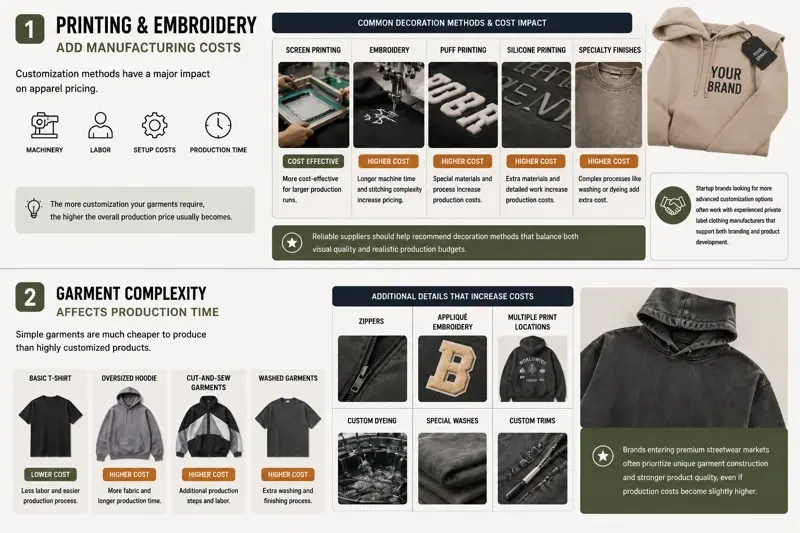
Customization methods have a major impact on apparel pricing.
Different decoration techniques require different:
Machinery
Labor
Setup costs
Production time
For example, screen printing is usually more cost-effective for larger production runs, while embroidery often increases pricing because of longer machine time and stitching complexity.
Puff printing, silicone printing, and specialty finishes can also increase production costs depending on the design complexity and garment type.
The more customization your garments require, the higher the overall production price usually becomes.
Reliable suppliers should help recommend decoration methods that balance both visual quality and realistic production budgets.
Startup brands looking for more advanced customization options often work with experienced private label clothing manufacturers that support both branding and product development.
Garment Complexity Affects Production Time
Simple garments are much cheaper to produce than highly customized products.
For example:
Basic t-shirts require less labor
Oversized hoodies require more fabric
Cut-and-sew garments require additional production steps
Washed garments require extra processing
Additional details that increase production costs may include:
Zippers
Appliqué embroidery
Multiple print locations
Custom dyeing
Special washes
Custom trims
Brands entering premium streetwear markets often prioritize unique garment construction and stronger product quality, even if production costs become slightly higher.
Cheap Manufacturing Is Not Always Better
Many startup brands focus only on finding the cheapest possible supplier.
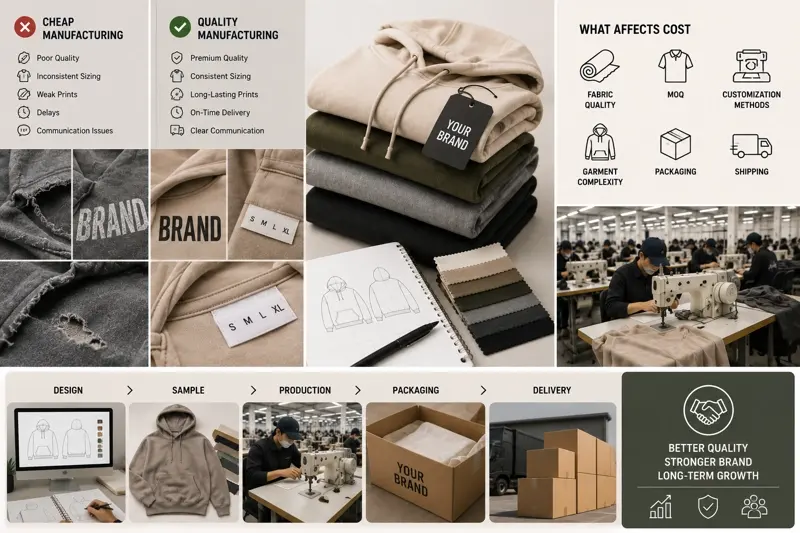
However, extremely low production pricing often creates larger problems later, including:
Poor garment quality
Weak printing durability
Inconsistent sizing
Delayed production
Communication problems
The cheapest supplier is rarely the best long-term manufacturing partner.
Reliable factories should help improve:
Product consistency
Production stability
Communication efficiency
Long-term scalability
Balancing product quality and realistic production costs is usually far more important than simply finding the lowest possible price.
Final Thoughts
Understanding clothing manufacturing costs is essential for startup fashion brands.
Production pricing depends on many different factors, including:
Fabric quality
MOQ
Customization methods
Garment complexity
Packaging
Shipping
Instead of focusing only on the cheapest production option, brands should prioritize quality, communication, and long-term manufacturing consistency.
Building strong products with reliable manufacturing support usually creates better long-term brand growth and customer retention.
If you are currently planning your next apparel collection, feel free to contact us to discuss production options and manufacturing solutions for your brand.
Frequently Asked Questions
What affects clothing manufacturing costs the most?
Fabric quality, MOQ, printing methods, garment complexity, and shipping are usually the biggest cost factors in apparel production.
Why do low MOQ orders cost more per piece?
Smaller production runs reduce manufacturing efficiency, making sourcing, labor, and setup costs more expensive per garment.
Does embroidery cost more than screen printing?
Yes. Embroidery usually costs more because it requires additional machine time and stitching complexity.
How can startup brands reduce manufacturing costs?
Brands can reduce costs by simplifying designs, starting with smaller collections, and avoiding unnecessary garment complexity.
Why is cheap manufacturing risky for fashion brands?
Extremely cheap production often leads to lower quality, inconsistent products, poor communication, and weaker customer satisfaction.