How to Start a Clothing Brand in 2026
Starting a clothing brand has never been more exciting. Social media platforms like TikTok and Instagram have created huge opportunities for startup fashion brands to grow quickly and build loyal communities around their products.
But launching a successful brand requires much more than simply printing logos on hoodies or t-shirts.
You need:
- A clear brand identity
- The right products
- Reliable manufacturing support
- Quality fabrics
- Professional sampling
- A strong production strategy
Whether you want to launch a streetwear label, oversized fashion brand, activewear collection, or private label apparel business, understanding the manufacturing process is essential for long-term success.
Start With a Clear Brand Identity
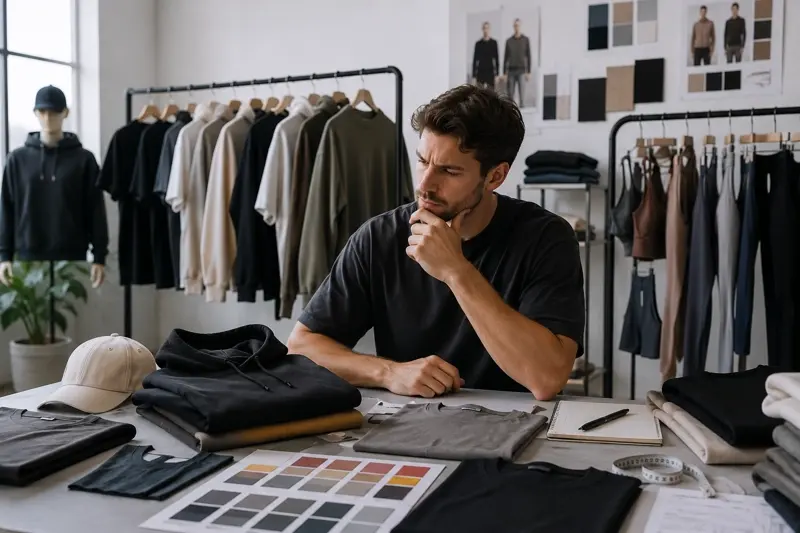
Before contacting manufacturers or designing products, you should clearly define your brand identity.
Your branding affects everything:
- Product direction
- Fabric choices
- Pricing
- Packaging
- Marketing style
- Customer targeting
Instead of trying to launch too many ideas at once, focus on building a clear visual identity first.
Popular fashion niches in 2026 include:
- Streetwear
- Oversized basics
- Activewear
- Minimalist fashion
- Sustainable apparel
- Premium casualwear
Many successful startup brands begin with only one or two products before expanding into larger collections.
Focus on a Small First Collection
One of the most common mistakes startup brands make is producing too many products too early.
Instead, start with a small collection that is easier to manage and test.
Popular beginner products include:
- Custom t-shirts
- Hoodies
- Sweatshirts
- Joggers
- Shorts
Oversized silhouettes and heavyweight cotton products continue to dominate modern streetwear trends in 2026.
Starting smaller helps reduce inventory pressure and lowers production risk during the early stages of your business.
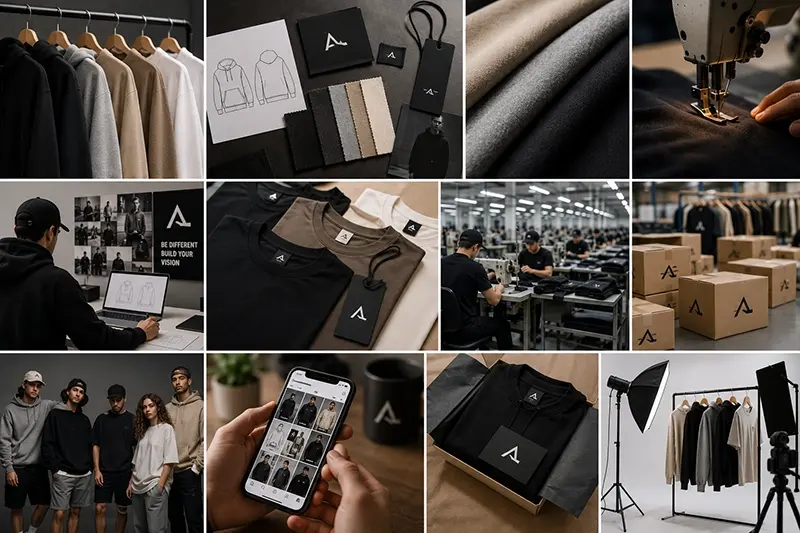
Choose the Right Clothing Manufacturer
Your manufacturer will directly affect:
- Product quality
- Delivery timelines
- Communication efficiency
- Customer satisfaction
A professional apparel manufacturer should provide:
- Stable quality control
- Sampling support
- Flexible MOQ options
- Clear communication
- Production transparency
When searching for a supplier, ask questions like:
- What fabrics do they specialize in?
- What customization methods are available?
- Can they support startup brands?
- What are the average production lead times?
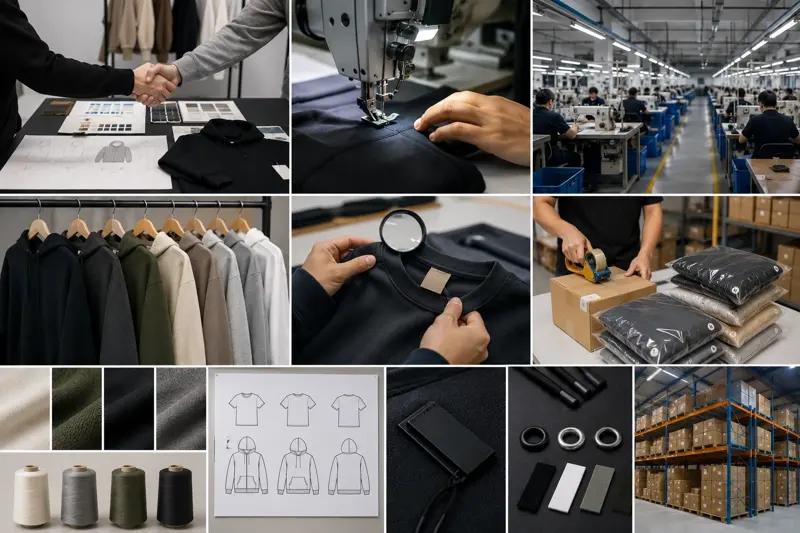
Working with an experienced custom clothing manufacturer can significantly improve product consistency and reduce production problems later.
Understand MOQ Before Production
MOQ means Minimum Order Quantity.
For startup brands, MOQ is usually one of the biggest concerns because ordering too much inventory too early creates financial pressure.
Fortunately, many manufacturers now offer lower MOQ production options for startup brands.
Typical startup MOQ ranges:
ProductCommon MOQ
T-Shirts 50–100 pcs
Hoodies 50–100 pcs
Sportswear 100–300 pcs
Jackets 100–200 pcs
Starting with smaller production quantities allows brands to test products before scaling into larger inventory orders.
Brands working with low MOQ clothing manufacturers usually have more flexibility during the product development stage.
Choose Fabrics Based on Your Brand Style
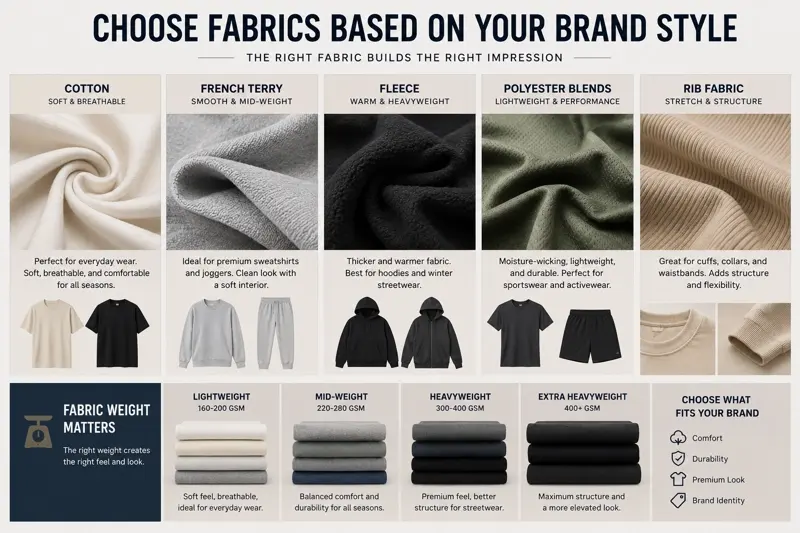
Fabric selection plays a major role in how customers experience your brand. The right fabric not only affects comfort and durability, but also influences how premium your products feel.
Cotton remains one of the most popular choices for modern streetwear because of its softness, breathability, and everyday comfort. Many startup brands prefer heavyweight cotton for oversized t-shirts and hoodies to create a more elevated look and structure.
For premium casualwear collections, French terry is often used in sweatshirts and joggers because it offers a cleaner silhouette with a soft mid-weight feel. It has become especially popular among minimalist and luxury-inspired streetwear brands.
Fleece fabrics are commonly chosen for winter apparel and heavyweight hoodies thanks to their warmth and thicker structure. Brands looking to create premium oversized garments often prefer fleece for its more substantial feel.
Performance-focused brands usually lean toward polyester blends because they provide lightweight comfort, flexibility, and moisture-wicking performance, making them ideal for activewear and sportswear collections.
Fabric weight also matters when developing your products. Lightweight fabrics create a softer everyday feel, while heavier fabrics usually create a more premium streetwear appearance.
Create a Professional Tech Pack
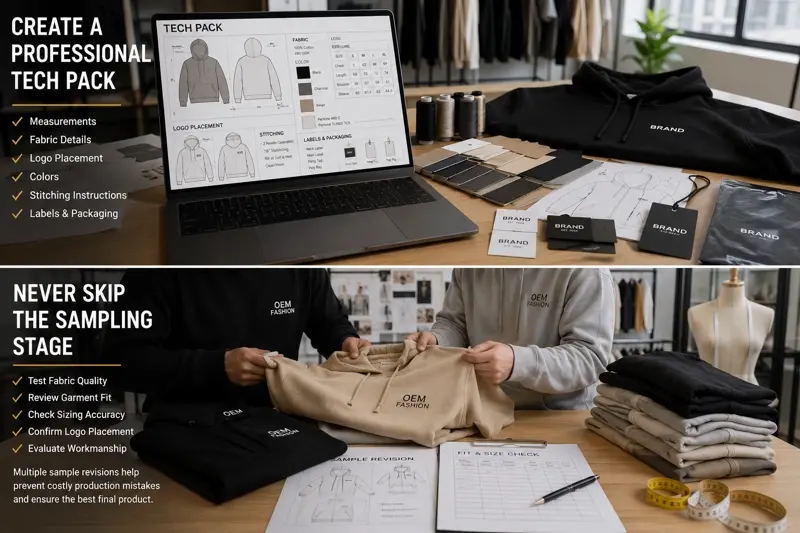
A tech pack acts as the blueprint for your product.
It helps manufacturers clearly understand:
- Measurements
- Fabric details
- Logo placement
- Colors
- Stitching instructions
- Labels and packaging
Without a tech pack, production mistakes become much more likely.
Even a simple tech pack can improve communication and reduce costly revisions later in production.
Professional startup brands usually use tech packs to maintain consistency across multiple production runs.
Never Skip the Sampling Stage
Sampling is one of the most important parts of apparel manufacturing.
A proper sample allows you to:
- Test fabric quality
- Review garment fit
- Check sizing accuracy
- Confirm logo placement
- Evaluate workmanship
Most successful brands go through multiple sample revisions before final production begins.
Although sampling increases upfront costs slightly, it helps prevent much larger production mistakes later.
Factories that provide professional sampling support are usually more reliable long-term manufacturing partners.
Choose the Right Printing and Embroidery Methods
Different customization methods can completely change the final appearance of your products.
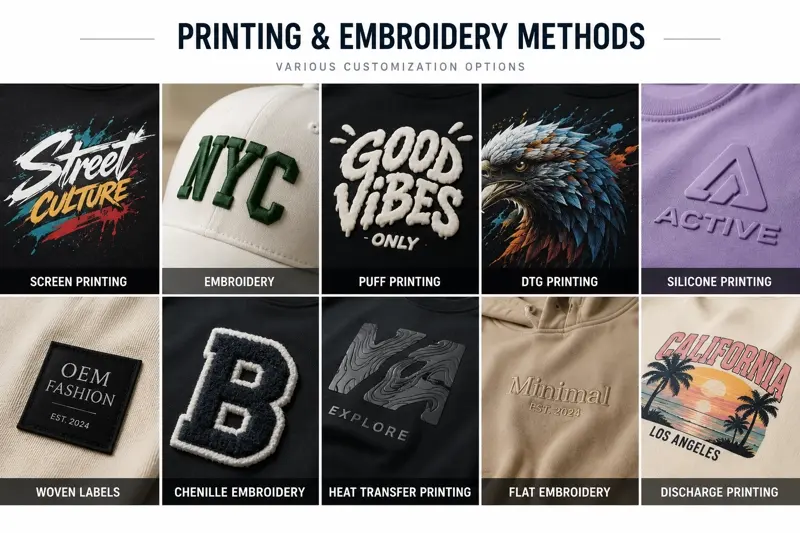
Screen printing continues to be one of the most widely used options for streetwear brands because it works well for bold graphics and large production runs. It’s especially popular for oversized graphic t-shirts and hoodies.
Embroidery creates a cleaner and more premium finish, making it a popular choice for minimalist logos, hoodies, caps, and luxury casualwear collections. Many brands use embroidery when they want a more elevated and long-lasting branding style.
Puff printing has become increasingly popular in modern streetwear because of its raised texture and trend-focused appearance. It adds extra depth to graphics and works especially well for bold logo designs.
For smaller orders or highly detailed artwork, DTG printing is often preferred because it allows for full-color graphics with greater design flexibility.
Sportswear and activewear brands often use silicone printing to achieve a more modern and performance-focused finish.
When choosing a customization method, it’s important to consider your overall brand positioning, fabric compatibility, and long-term product quality rather than focusing only on cost.
Plan Your Production Timeline Carefully
Many startup brands underestimate how long apparel production actually takes.
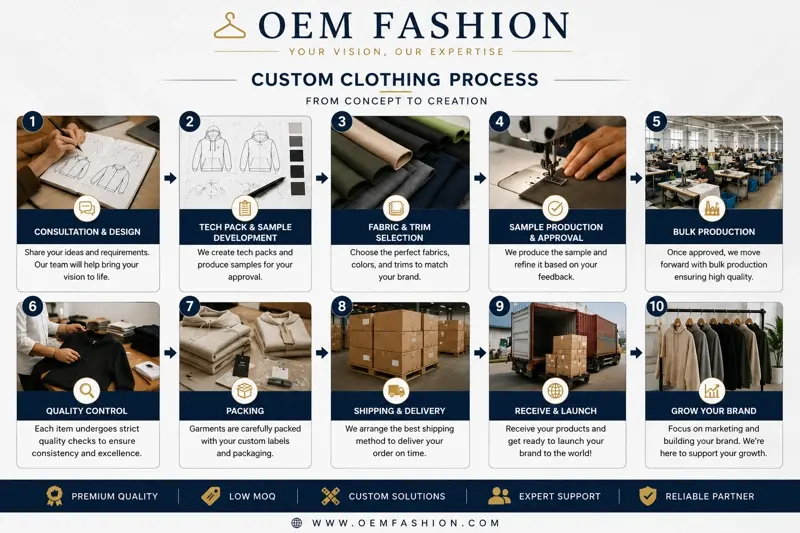
A typical timeline usually includes:
| Production Stage | Estimated Time |
|---|---|
| Tech Pack Preparation | 3–7 Days |
| Sampling | 7–14 Days |
| Sample Revisions | 5–10 Days |
| Bulk Production | 20–35 Days |
| Shipping | 7–30 Days |
Planning production schedules early is especially important before:
- Black Friday
- Christmas
- Summer collections
- Seasonal product launches
Working with experienced OEM clothing manufacturers can help reduce delays and improve production efficiency.
Avoid These Common Startup Mistakes
Many startup clothing brands fail because of avoidable mistakes during the early stages of production.
Ordering Too Much Inventory
Start with smaller quantities and test the market first.
Choosing the Cheapest Manufacturer
Extremely low prices often lead to poor quality and communication problems.
Ignoring Fabric Quality
Fabric quality directly affects customer satisfaction and repeat purchases.
Skipping Samples
Never move directly into bulk production without proper sample approval.
Weak Branding
Even high-quality products still require strong branding and marketing support.
Avoiding these mistakes can significantly improve your chances of building a successful clothing brand.
Final Thoughts
Starting a clothing brand in 2026 offers huge opportunities for entrepreneurs, but success depends on proper planning, quality products, and reliable manufacturing support.
Focusing on:
- Clear brand positioning
- High-quality fabrics
- Professional sampling
- Reliable production partners
- Consistent product quality
can help your brand grow more efficiently and reduce costly mistakes.
Whether you are building a streetwear label, sportswear collection, or private label fashion business, working with an experienced manufacturing partner can make the production process much smoother.
If you are currently planning your next apparel project, OEM Fashion can help support your brand with flexible, low MOQ manufacturing solutions and professional apparel production services.
Frequently Asked Questions
What is the best product to launch for a startup clothing brand?
Custom t-shirts and hoodies are usually the easiest and most popular products for startup brands because they are versatile and easier to manufacture.
Can I start a clothing brand with low MOQ production?
Yes. Many OEM clothing manufacturers now offer low MOQ services specifically designed for startup brands and small businesses.
How long does custom apparel production take?
Most apparel production projects take between 3 and 8 weeks, depending on product complexity, order quantity, and shipping method.
What fabric is best for streetwear clothing brands?
Heavyweight cotton and French terry fabrics are among the most popular choices for premium streetwear brands.
Why is sampling important before bulk production?
Sampling helps brands test fabric quality, fit, sizing, and overall workmanship before mass production begins, reducing costly production mistakes later.
Share With
Related Articles
Hot Products