38 Types of Jackets for Men That Sell Out
Walk into any menswear store, and you’ll find jackets for just about every occasion. There’s the denim jacket you reach for on a cool afternoon, the bomber that works with almost anything, and the winter parka you rely on when temperatures drop.
But with so many styles available, it’s not always easy to tell them apart. What’s the difference between a trucker and a denim jacket? Is a softshell the same as a rain jacket? And what makes a Harrington different from a bomber?
The answer usually comes down to fit, fabric, construction, and purpose.
For clothing brands, those differences matter just as much. Choosing the right jacket style is often the first step toward building a collection that makes sense for its customers.
At OEM Fashion, we help brands develop custom clothing, including jackets designed around their preferred materials, fits, and construction details.
In this guide, we’ll break down 38 types of jackets for men, covering where they came from, what makes them distinctive, and when they’re most useful.
What Are the Different Types of Jackets for Men?
| Category | Jacket Styles |
|---|---|
| Casual & Everyday | Denim, Trucker, Chore, Barn, Shirt, Harrington, Coach |
| Streetwear & Sports | Bomber, Varsity, Track, Windbreaker |
| Leather & Motorcycle | Leather, Biker, Cafe Racer, Motorcycle |
| Military & Utility | Field, Work, Utility, Anorak |
| Outdoor & Technical | Rain, Hardshell, Softshell, Fleece, Waxed, Ski, Snowboard |
| Winter & Insulated | Puffer, Quilted, Shearling, Parka |
| Tailored & Formal | Blazer, Sport Coat, Suit Jacket, Tuxedo, Peacoat, Duffle, Trench, Overcoat |
Casual & Everyday Jackets
These are the jackets that earn their place in a wardrobe through sheer versatility. They’re easy to layer, work with everyday clothes, and don’t require much thought when putting together an outfit.
1. Denim Jacket
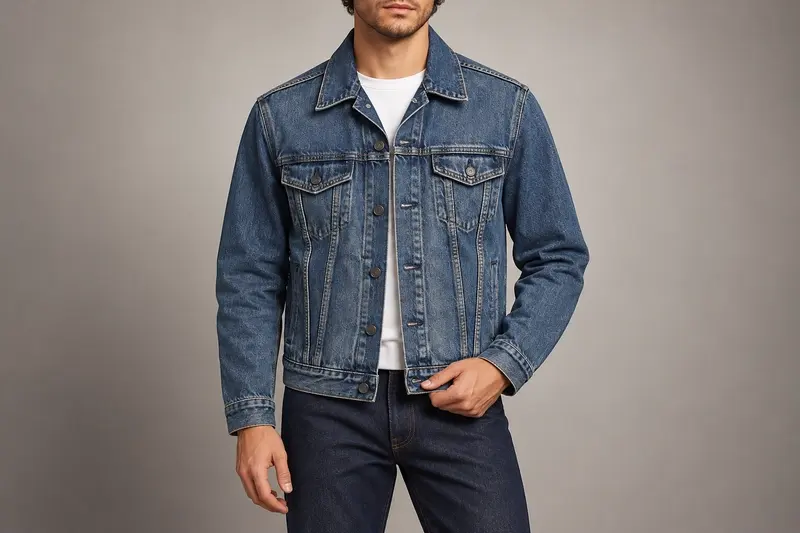
Few jackets have stayed relevant for as long as the denim jacket. Originally associated with workwear, it eventually became a staple of casual American style. Today, you’ll find everything from traditional blue denim to oversized, heavily washed streetwear versions.
A classic denim jacket has a sturdy denim body, button-front closure, structured seams, and chest pockets. Most sit around the waist, although longer and oversized cuts are also popular. The fabric’s wash makes a big difference: dark indigo looks cleaner and more polished, while faded or distressed denim gives the jacket a more relaxed, worn-in feel.
Denim jackets are particularly useful in spring and fall. Wear one over a plain T-shirt on a mild day, or add a hoodie underneath when it gets cooler.
For casualwear brands, the real opportunity lies in experimenting with washes, fits, and finishing details.
2. Trucker Jacket
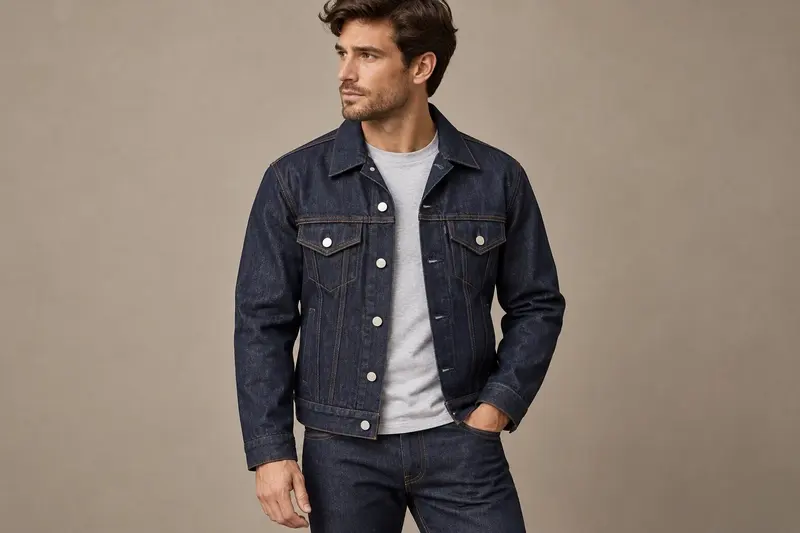
The trucker jacket is closely related to the denim jacket, but the two names aren’t interchangeable. A trucker refers to a particular cut, made famous by Levi’s Type III design.
The traditional trucker jacket has a short, fitted body, pointed chest-pocket flaps, distinctive V-shaped front seams, and adjustable waist tabs. It usually closes with metal buttons and sits at or just above the hips. Denim is the classic fabric, but corduroy, canvas, and other woven materials can give the same shape a different look.
That cropped, structured fit is what sets a trucker apart from more general denim jacket designs.
It works especially well with straight-leg jeans, chinos, and relaxed trousers. For brands building heritage-inspired collections, it’s one of the most recognizable silhouettes to start with.
Further Reading:Levi Strauss & Co. — Trucker or Non-Trucker?
3. Chore Jacket
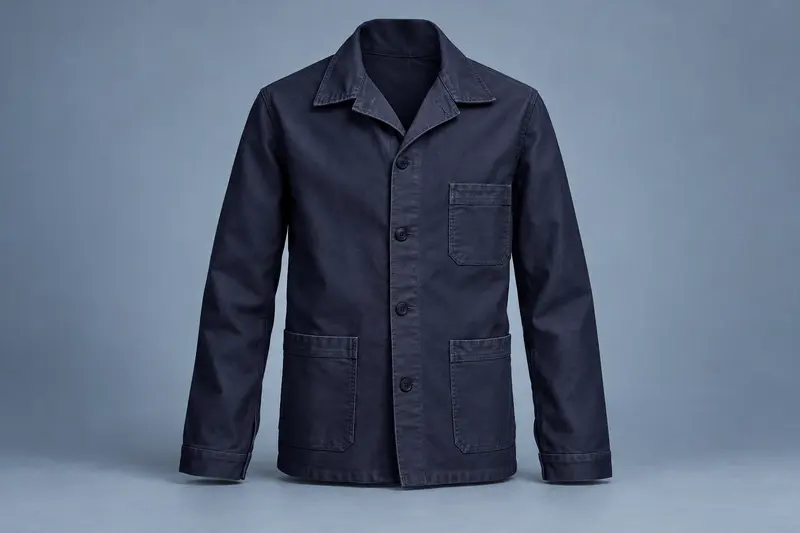
The chore jacket started life as practical workwear, particularly in Europe. It was built for people who needed comfortable clothing with enough pockets to carry everyday tools and essentials.
That no-nonsense design is exactly why it still works today.
A chore jacket usually has a straight, relaxed cut, a simple button front, and two or three generous patch pockets. Cotton twill, canvas, and denim are popular fabric choices. Unlike a fitted jacket, it generally has enough room through the body to slip over a shirt or sweater without feeling restrictive.
The chore jacket is a natural fit for casual wardrobes, especially if you prefer understated clothing.
It also suits heritage-inspired and minimalist menswear collections, where fabric texture and small construction details do much of the work.
4. Barn Jacket
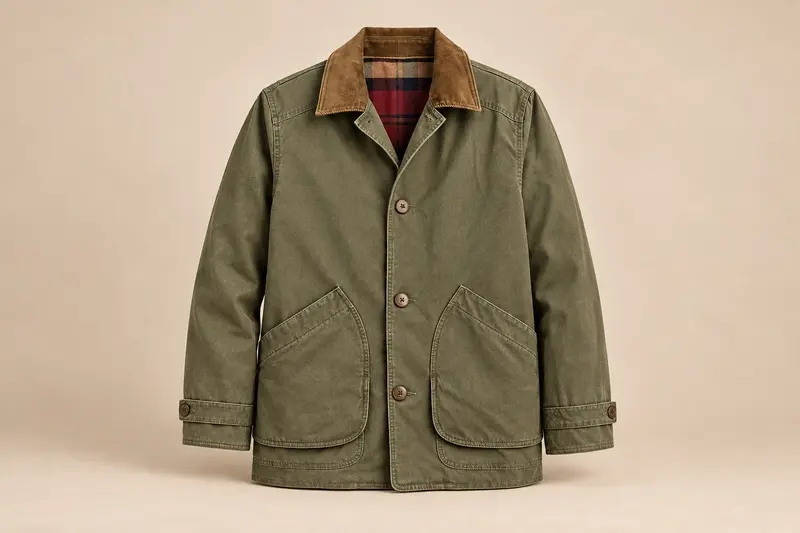
If you like classic country clothing, the barn jacket is worth knowing. Originally associated with outdoor work and rural life, it has become a familiar fall staple.
Think of it as a practical jacket with a little more coverage and a more traditional countrywear feel than a chore jacket.
A barn jacket generally has a roomy, hip-length body, large front pockets, a sturdy zipper or button closure, and a contrasting collar, often made from corduroy. Cotton canvas and waxed cotton are common choices, while lined versions provide extra warmth when temperatures drop.
Barn jackets look especially good with denim, knitwear, and boots.
They’re most at home during fall and early winter, when you need something substantial enough for a cool day without reaching for a heavy coat.
5. Shirt Jacket (Shacket)
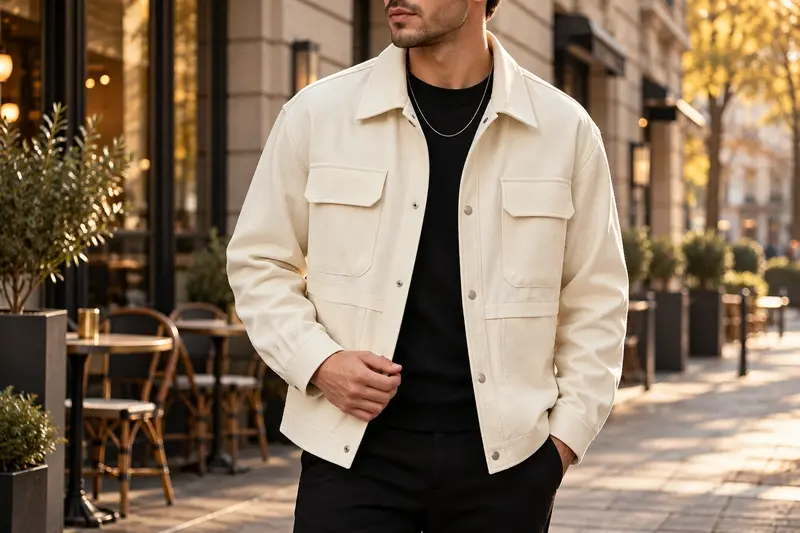
Not quite a shirt, not quite a jacket. That’s the appeal of the shacket.
It’s an easy layering piece for those in-between days when a T-shirt isn’t enough but a winter coat would be overkill.
A shirt jacket keeps familiar shirt details such as a pointed collar, button front, and chest pockets, but uses heavier fabric and a roomier cut. Flannel, brushed cotton, wool blends, and heavyweight twill are common options. Some versions add quilted lining or light insulation for extra warmth.
Throw one over a T-shirt in early fall, or wear it with a lightweight sweater as the weather cools.
Its laid-back feel makes it a strong option for casualwear, outdoor-inspired fashion, and relaxed streetwear collections.
6. Harrington Jacket
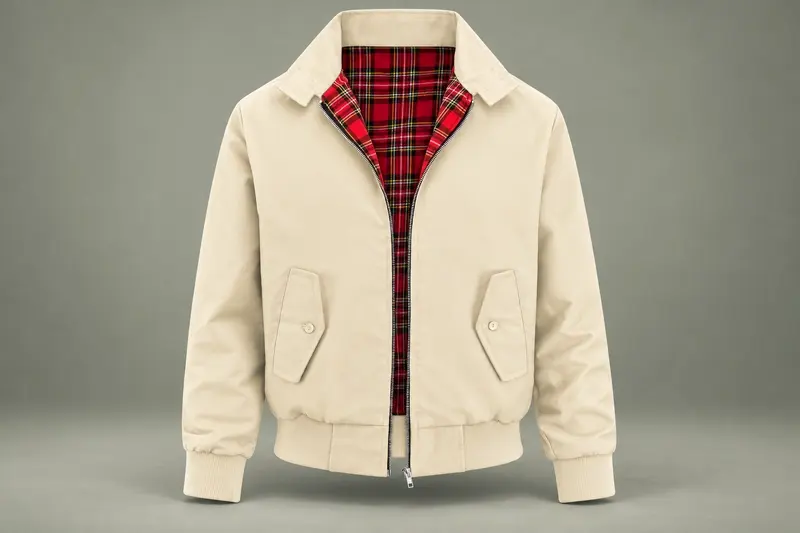
The Harrington is one of those jackets that manages to look casual without feeling sloppy.
The style is closely associated with the Baracuta G9, developed in Britain in the 1930s. Originally designed with golf in mind, it later found a following among musicians, actors, and British youth subcultures.
The classic Harrington has a short, neat-fitting body, a two-button stand collar, front zipper, ribbed cuffs and hem, and slanted buttoned pockets. The original Baracuta G9 is also known for its umbrella-shaped back yoke and Fraser Tartan lining. Together, these details give the jacket a clean, distinctive shape.
A Harrington looks right at home with chinos, jeans, or a polo shirt. It’s a good choice for spring and fall, particularly when you want something smarter than a windbreaker.
Further Reading: Baracuta — What Is the G9?
7. Coach Jacket
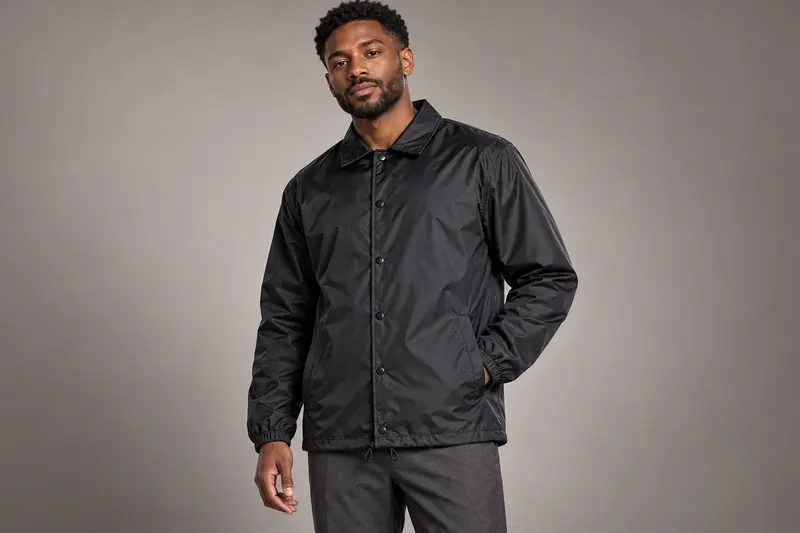
The coach jacket has come a long way from the sidelines of American sports fields. It’s now a familiar piece in skatewear, streetwear, and casual team apparel.
Its appeal is simple: lightweight construction, an easy fit, and plenty of room for graphics.
A coach jacket typically has a pointed collar, snap-button front, straight-cut body, and simple side pockets. Lightweight nylon or polyester is common, along with elastic cuffs and a drawcord hem. Unlike a hooded windbreaker, the coach jacket has a cleaner, shirt-like neckline.
It’s an easy layer for mild spring or fall weather.
The simple front and back panels also make it useful for brands developing graphic-led collections, team merchandise, or embroidered outerwear.
Streetwear & Sports Jackets
Some jackets begin as sports equipment or military clothing and end up becoming everyday fashion staples. The following styles are good examples.
8. Bomber Jacket
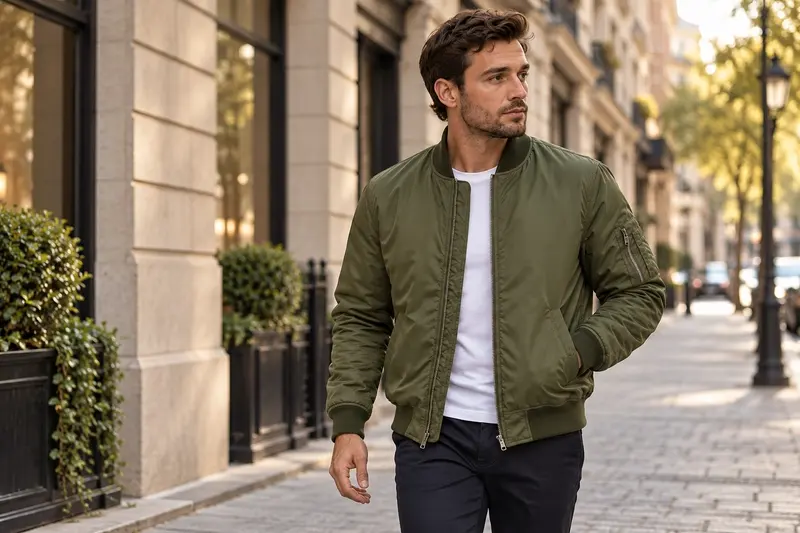
The bomber jacket has been part of men’s wardrobes for decades, but its roots go back to military aviation.
Early flight jackets were designed for pilots who needed practical outerwear in demanding conditions. Over time, those functional designs evolved into the casual bomber jackets we know today.
A bomber jacket is easy to spot thanks to its short body, front zipper, ribbed cuffs, fitted waistband, and slightly rounded shape. Traditional MA-1-inspired versions often use smooth nylon, while contemporary bombers come in cotton, suede, leather, and other fabrics. Some also feature sleeve pockets or lightweight padding.
A lightweight bomber is an easy choice for spring and fall. Wear it with jeans and sneakers, or pair an oversized version with cargos for a more streetwear-focused look.
For brands developing contemporary outerwear, Custom Bomber Jacket styles offer plenty of room to experiment with fabrics, embroidery, and color combinations.
9. Varsity Jacket
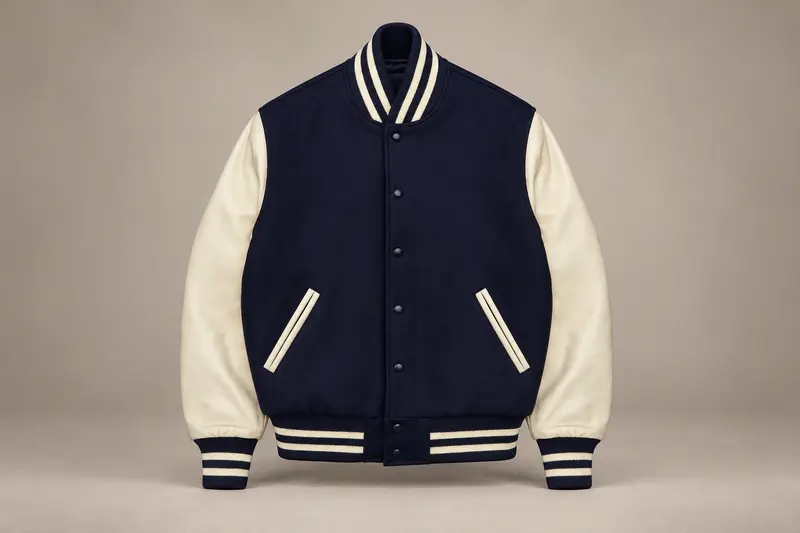
Few jackets have a stronger connection to American school and college culture than the varsity jacket.
Also known as a letterman jacket, it began as a way to recognize athletic achievement. Eventually, the look moved beyond campuses and into mainstream fashion.
A traditional varsity jacket combines a contrasting body and sleeves with striped ribbing, snap-button closures, and decorative lettering or patches. Classic versions often use a wool body with leather sleeves, although modern designs also use synthetic leather, cotton blends, and other materials. Chenille letters and embroidered badges are especially recognizable details.
Varsity jackets work naturally with jeans, relaxed trousers, and sneakers.
Today, Custom Varsity Jacket designs are popular in campus-inspired fashion, lifestyle collections, and streetwear, where bold colors and decorative patches can give each design its own identity.
10. Track Jacket
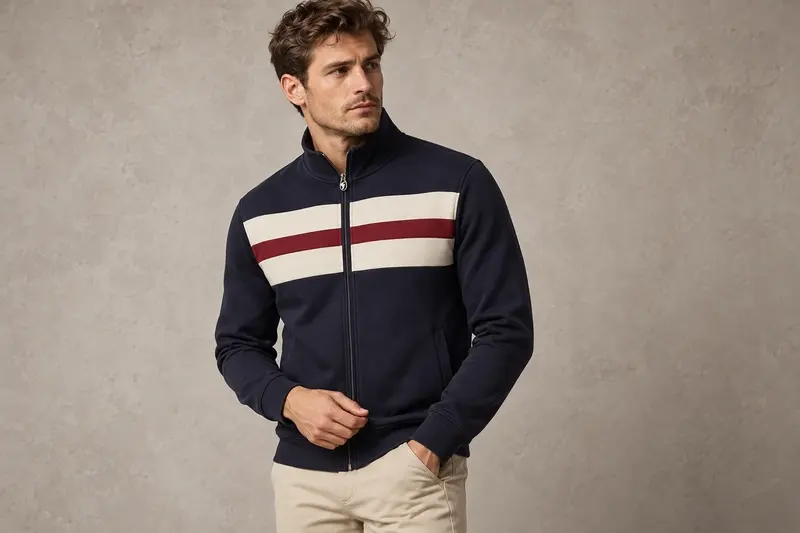
The track jacket started as athletic warm-up clothing, but it didn’t stay on the track for long.
Its comfortable fit and recognizable sportswear details made it a natural part of everyday casual fashion.
Most track jackets have a full-length zipper, stand collar, ribbed or elastic cuffs, and an easy athletic fit. Polyester knit, interlock, and stretch fabrics are common choices. Contrast panels and stripes running down the sleeves are also familiar features, especially on retro-inspired designs.
A track jacket works well for travel, light activity, or casual weekends.
Pair it with matching track pants for a coordinated sportswear look, or wear it with denim for something more relaxed.
11. Windbreaker Jacket
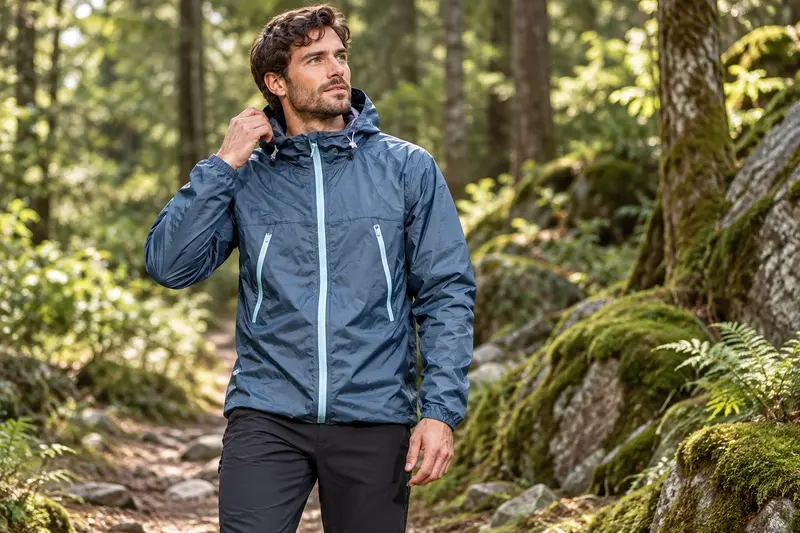
When the wind picks up, but the temperature isn’t particularly cold, a windbreaker is often all you need.
It’s designed to provide a lightweight barrier against wind without the weight of an insulated jacket.
Windbreakers usually use tightly woven nylon or polyester, with elastic cuffs, adjustable hems, and a hood or stand collar. Many are lightweight enough to pack into a bag. Some include mesh linings, ventilation panels, or water-repellent finishes, but a standard windbreaker isn’t necessarily fully waterproof.
Windbreakers are useful for spring, fall, travel, and outdoor activities.
They’re also a practical choice for activewear and lifestyle collections that need lightweight outerwear with a sporty feel.
Leather & Motorcycle Jackets
Leather jackets have a character of their own. Some are clean and understated; others are all about bold zippers, hardware, and motorcycle-inspired details.
12. Leather Jacket
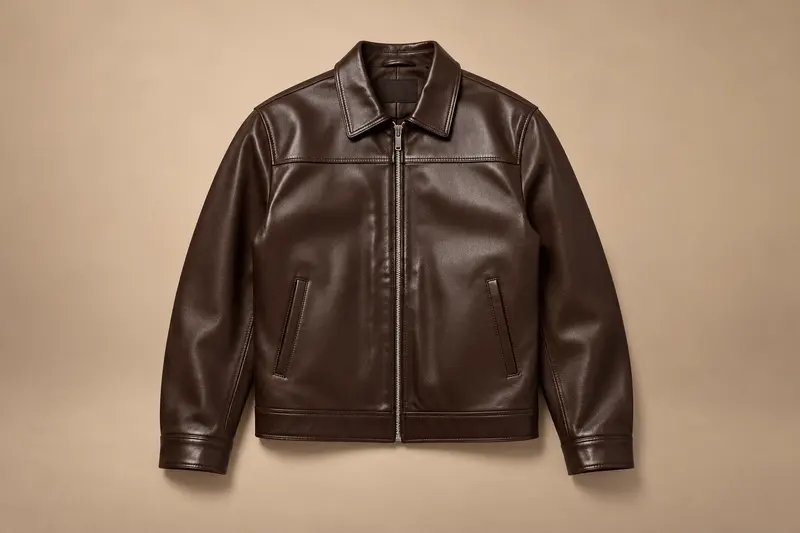
A good leather jacket can stay in a wardrobe for years. But a leather jacket is a broad term, not one particular design.
A bomber, biker, or cafe racer can all be leather jackets. What separates them is the cut and construction.
Leather jackets come in a wide range of shapes, from clean zip-front designs to fitted motorcycle-inspired styles. Smooth leather, suede, distressed finishes, and different surface treatments can completely change the look. Collars, pocket placement, hardware, and body length also play a major role in defining the finished jacket.
Leather jackets work particularly well in spring and fall, although lined versions can be worn in cooler weather.
For premium casualwear brands, material quality and finishing are just as important as the silhouette itself.
Lorem ipsum dolor sit amet, consectetur adipiscing elit. Ut elit tellus, luctus nec ullamcorper mattis, pulvinar dapibus leo.
13. Biker Jacket
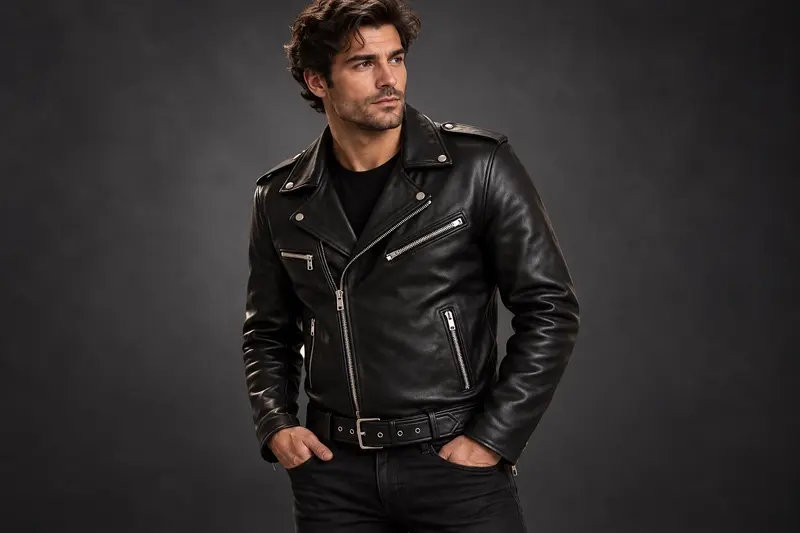
The biker jacket is one of the most instantly recognizable pieces of leather outerwear.
Its classic double-rider look is closely associated with motorcycle culture, particularly the Schott Perfecto introduced in 1928.
The traditional biker jacket features an asymmetric front zipper, wide lapels, metal hardware, zippered pockets, and a short, structured body. Many versions also have a waist belt and zippered cuffs. The diagonal zipper allows the front panels to overlap, creating the distinctive double-rider appearance.
That bold construction has made the biker jacket a favorite in rock-inspired fashion and vintage menswear.
Modern fashion versions often borrow the look without being designed as protective riding equipment.
Further Reading:Schott NYC — The Schott Story
14. Cafe Racer Jacket
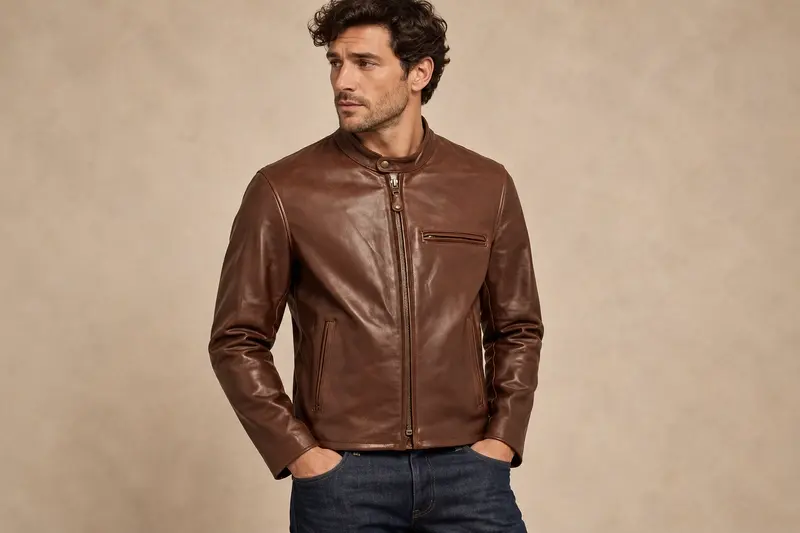
Prefer your leather jackets without all the extra hardware? The cafe racer might be more your style.
Inspired by motorcycle clothing, it takes a much cleaner approach than the traditional biker jacket.
A cafe racer jacket has a short stand collar, straight front zipper, minimal hardware, and a relatively close-fitting body. It generally avoids the wide lapels, diagonal zipper, and prominent belt found on a classic double-rider jacket. Smooth front panels give it a streamlined appearance.
The result is a jacket that feels understated but still has plenty of character.
It pairs easily with jeans, boots, and simple knitwear, making it a natural choice for premium casual menswear.
15. Motorcycle Jacket
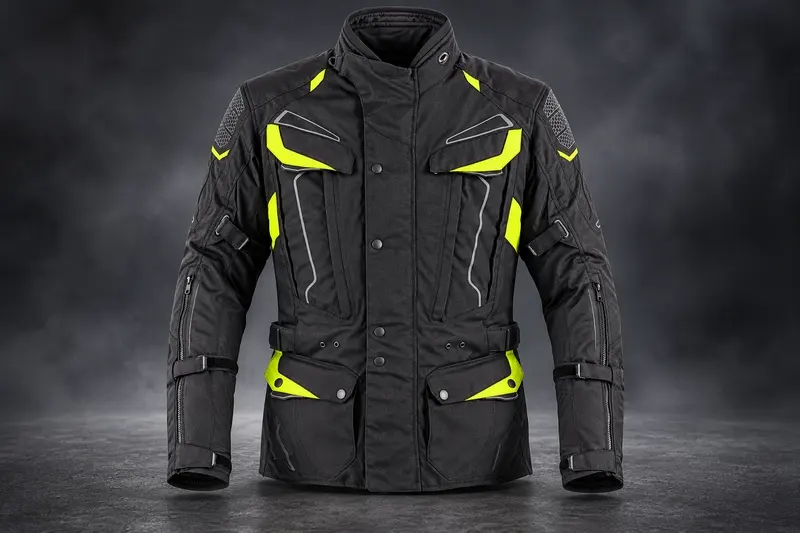
A motorcycle jacket isn’t necessarily the same thing as a fashion biker jacket.
If it’s designed for actual riding, protection and comfort on the bike matter far more than appearance alone.
Protective motorcycle jackets may use abrasion-resistant leather or technical textiles, impact protectors, reinforced seams, adjustable closures, and ventilation panels. Their fit is often designed around a riding position rather than ordinary standing posture.
Different designs suit commuting, touring, and other riding conditions.
A motorcycle-inspired fashion jacket may look similar, but it shouldn’t be treated as protective equipment unless it has been designed and tested for that purpose.
Military & Utility Jackets
Military and workwear styles have influenced menswear for generations. The best-known designs combine practical details with shapes that still work in everyday wardrobes.
16. Field Jacket
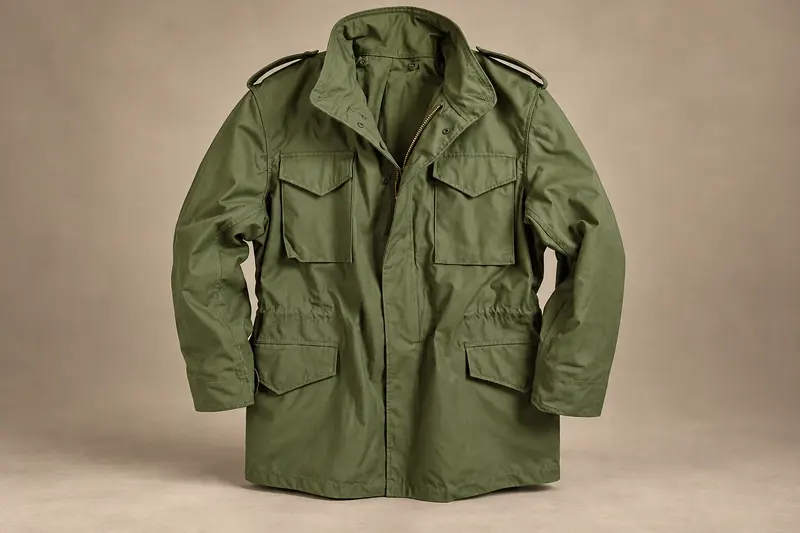
The field jacket has its roots in military clothing, where extra pockets and dependable outerwear were part of the job.
The M-65 is one of the most recognizable examples, and its influence is still easy to see in modern casual jackets.
A classic field jacket has a longer, relaxed body, four front pockets, a covered zipper, and a storm flap. M-65-inspired designs may also include adjustable cuffs, a stand collar, and a concealed hood. Cotton and cotton-blend woven fabrics are common, especially in olive and khaki shades.
Field jackets work well with jeans, cargos, and heavier knitwear.
They’re a natural choice for anyone who likes military-inspired clothing without going all-in on technical outdoor gear.
17. Work Jacket
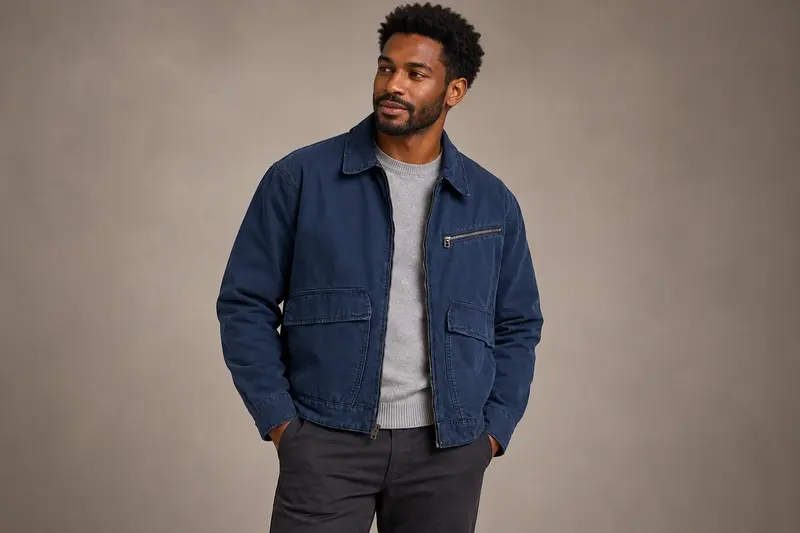
Work jackets were built around a simple idea: clothing should be tough enough for the job and comfortable enough to wear all day.
That practical approach has also made them popular in casual fashion.
A work jacket generally uses sturdy fabrics such as cotton duck, canvas, or twill, with functional pockets, reliable closures, and a straightforward fit. Depending on the design, it may have a short zip-front body, reinforced stress points, or a longer button-front construction.
Unlike the chore jacket, which refers to a more recognizable style, the work jacket covers several different designs.
The look works especially well in heritage workwear and everyday casual collections.
18. Utility Jacket
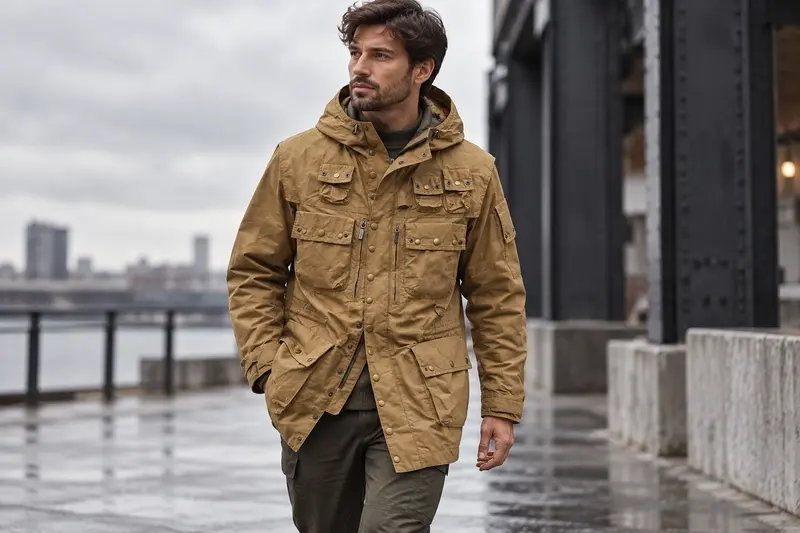
The utility jacket takes the practical side of outerwear and makes it part of the design.
Rather than following one fixed historical pattern, it brings together useful details from workwear, military clothing, and outdoor gear.
Utility jackets often feature multiple cargo-style pockets, adjustable cuffs or hems, relaxed fits, and durable woven fabrics. Some have military-inspired front panels, while others use cleaner, more contemporary construction. Pocket placement and functional-looking details are central to the style.
Utility jackets are easy to wear with cargos, denim, and casual trousers.
They suit brands developing urban workwear and outdoor-inspired collections, especially when practical details are part of the overall look.
19. Anorak Jacket
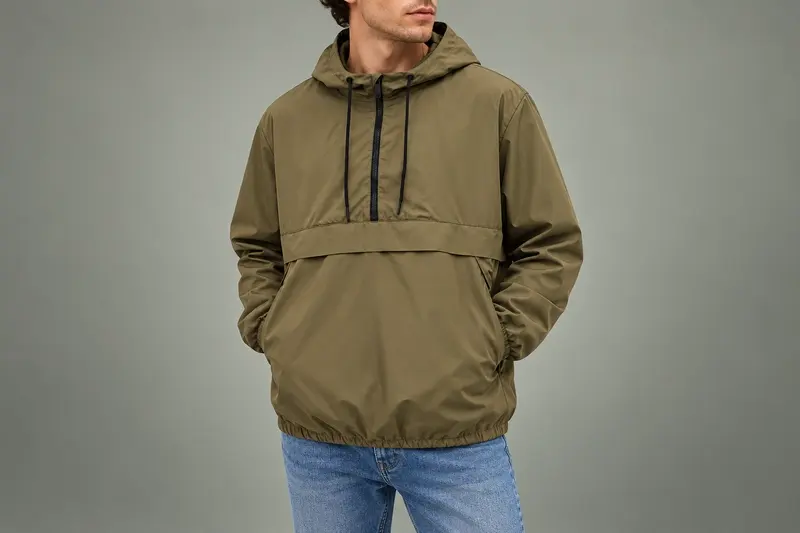
An anorak is a great option if you want lightweight outerwear with a different shape from the usual zip-front jacket.
Its pullover construction gives it a distinctive look, while the hood and front pocket keep things practical.
A typical anorak has a hood, partial front zipper or button opening, pullover body, and large front pocket. Lightweight woven fabrics, adjustable cuffs, and drawcord hems are common. Some versions add insulation, while others are designed mainly for wind protection.
Anoraks work well for hiking, travel, and casual outdoor wear.
They’ve also become familiar in streetwear, where the oversized front pocket and relaxed silhouette offer plenty of styling possibilities.
Outdoor & Technical Jackets
Not every outdoor jacket is designed to do the same job. Some keep rain out, some help manage warmth, and others focus on comfort during movement.
20. Rain Jacket
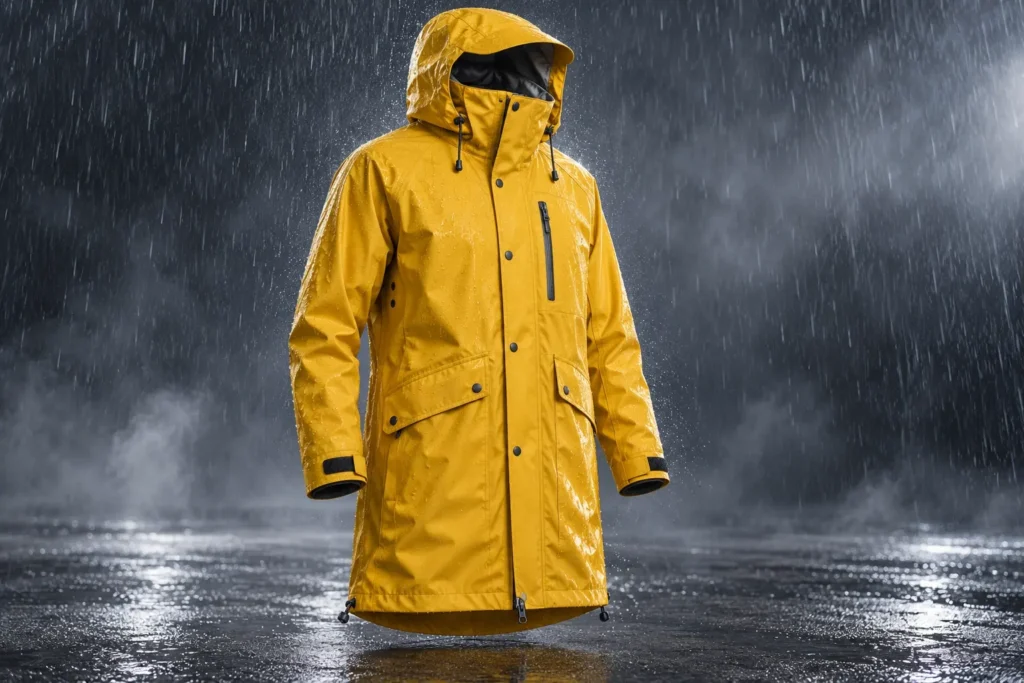
A rain jacket should do more than look ready for bad weather. Its main job is to keep water from reaching the layers underneath.
That means the fabric, seams, and closures all matter.
A waterproof rain jacket may use a membrane or coating, sealed seams, an adjustable hood, and protected zipper openings. Many waterproof-breathable fabrics also have a durable water-repellent finish that helps water bead on the surface. That finish alone, however, doesn’t make a jacket fully waterproof.
Rain jackets are useful for wet-weather commuting, travel, hiking, and everyday outdoor activities.
When choosing one, pay attention to waterproof construction rather than relying only on labels such as water-resistant.
Technical Reference: REI — How Does Waterproof Rain Gear Work?
21. Hardshell Jacket
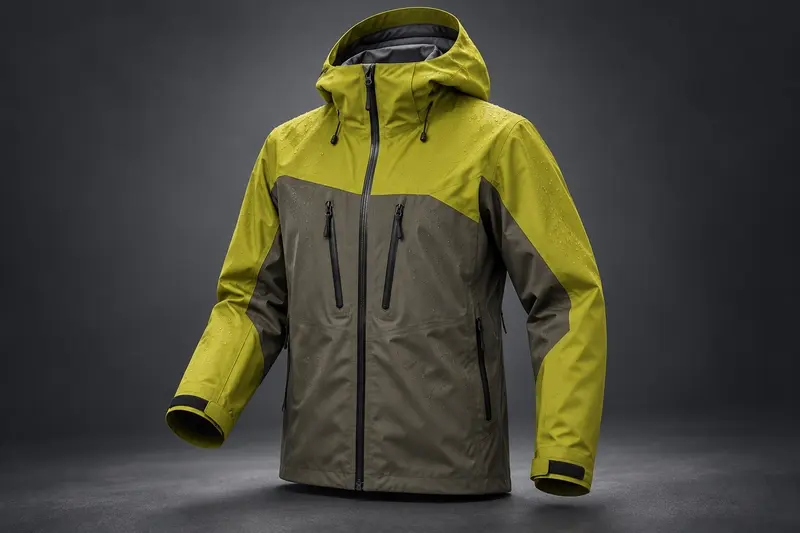
If you’re heading into wet, windy mountain conditions, a hardshell is designed to provide a dependable outer barrier.
It’s built around weather protection rather than softness or warmth.
Hardshell jackets typically use waterproof-breathable membranes or laminates, sealed seams, adjustable hoods, and protective closures. More technical designs may include articulated sleeves, ventilation zippers, and pockets positioned to remain accessible when wearing a backpack or climbing harness.
A hardshell is commonly worn over insulating layers when conditions turn cold or wet.
Compared with a softshell, it generally offers stronger protection against sustained rain, although the exact performance depends on the fabric and construction.
Technical Reference:REI — How Does Waterproof Rain Gear Work?
22. Softshell Jacket
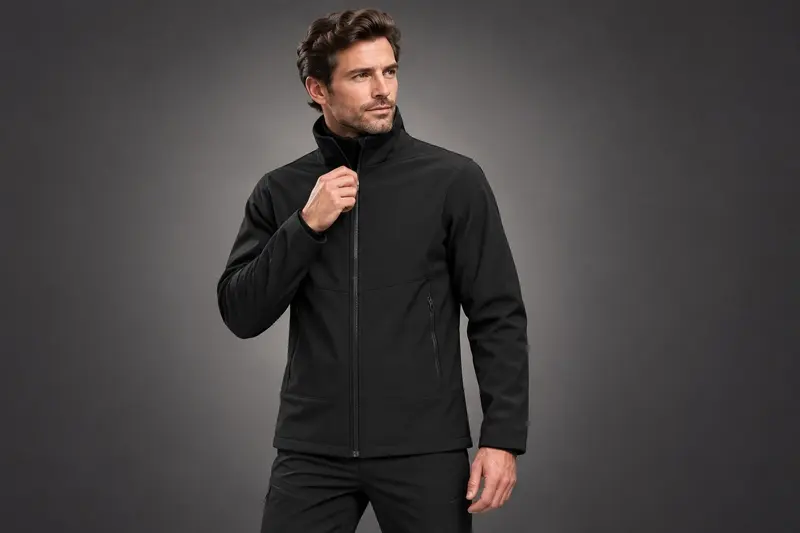
A softshell is for the days when you want some protection from the weather but don’t want to feel restricted.
It’s especially useful when you’re moving around, and comfort matters as much as coverage.
Softshell jackets often use flexible woven fabrics with mechanical or elastane-based stretch. They generally have a softer feel than traditional hardshells and may offer wind resistance, breathability, and protection against light precipitation. Not all softshells are fully waterproof.
They’re a good choice for hiking, travel, active work, and cool-weather outdoor activities.
If heavy rain is expected, a properly waterproof hardshell is usually the more appropriate option.
23. Fleece Jacket
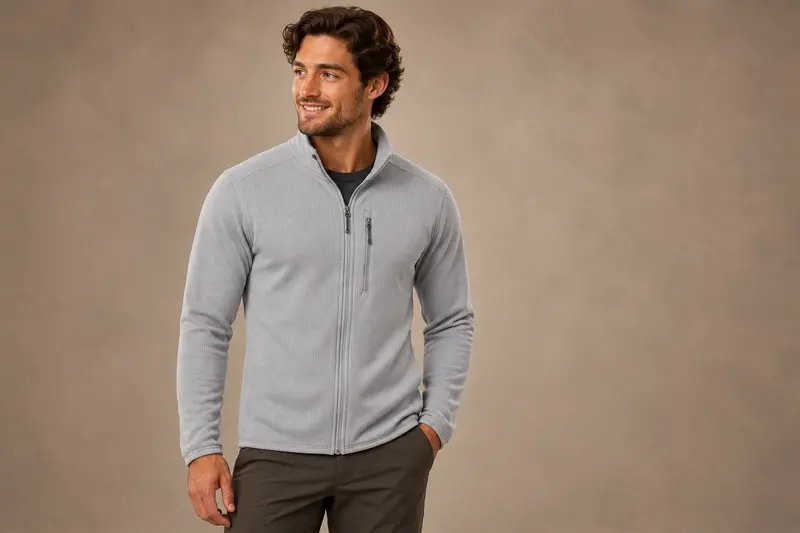
A fleece jacket is one of the easiest ways to add warmth without piling on unnecessary weight.
It’s a familiar piece of outdoor clothing, but it’s just as useful for everyday wear.
Fleece jackets use soft synthetic pile or brushed fabrics that trap air to provide insulation. Most have a full or half zipper, a stand collar, and practical pockets. Some designs add woven panels at the shoulders or elbows for durability.
Wear a fleece on its own during a cool fall day, or use it as a midlayer beneath a rain shell when the weather gets worse.
It’s a practical choice for outdoor collections, travel clothing, and casual winter layering.
24. Waxed Jacket
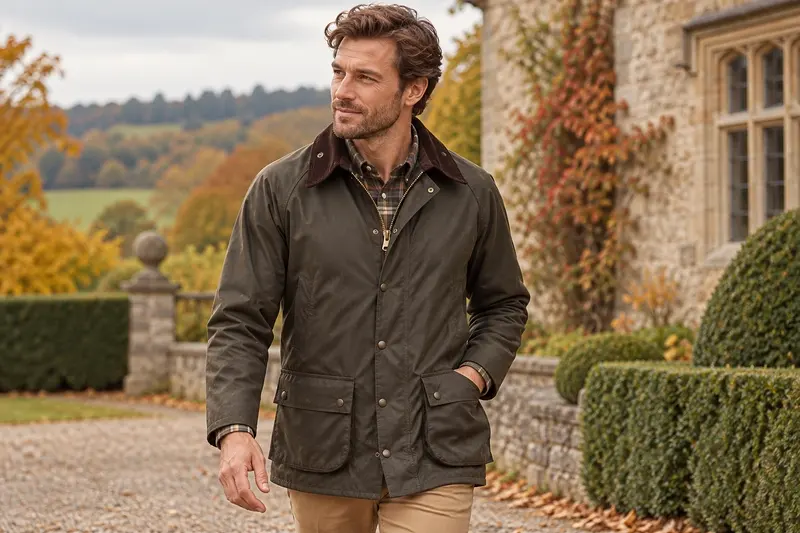
Waxed jackets have a character that’s hard to replicate with modern synthetic shells.
They’re closely associated with traditional country clothing, particularly British heritage outerwear.
A waxed jacket uses fabric, usually cotton, treated with wax to improve resistance to moisture. Traditional designs often include sturdy front closures, practical pockets, a contrasting collar, and a relaxed fit. The waxed surface develops a distinctive appearance with wear and may need periodic reproofing.
Waxed jackets work well in cool, damp weather and pair naturally with denim, knitwear, and boots.
They’re particularly appealing in heritage-inspired collections where material texture and a lived-in look are part of the design.
25. Ski Jacket
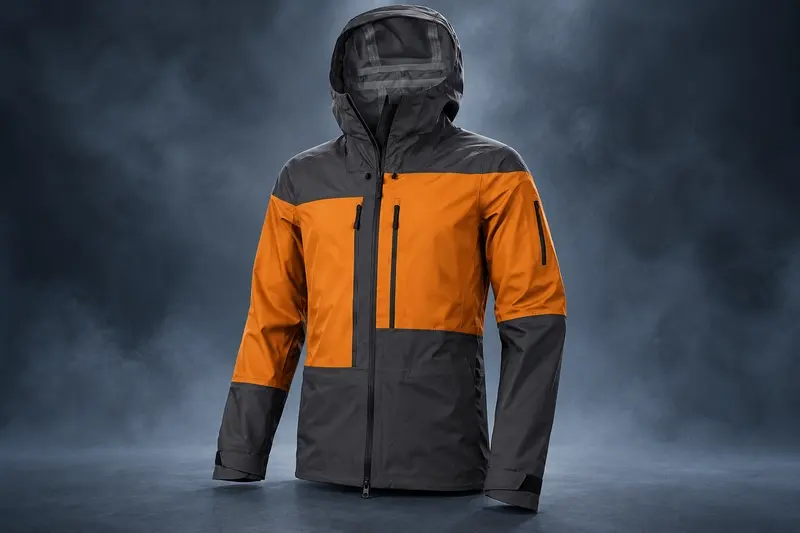
A ski jacket needs to handle more than low temperatures. Snow, wind, movement, and changing activity levels all affect how comfortable it feels.
That’s why technical details matter so much.
Ski jackets may include waterproof outer fabrics, built-in insulation or shell construction, adjustable hoods, snow skirts, ventilation zippers, and specialized pockets. Articulated sleeves and adjustable cuffs help the jacket move with the wearer while maintaining coverage.
Some skiers prefer insulated jackets, while others choose shells and adjust their layers throughout the day.
The right option depends on the weather, activity level, and how much warmth is needed.
26. Snowboard Jacket
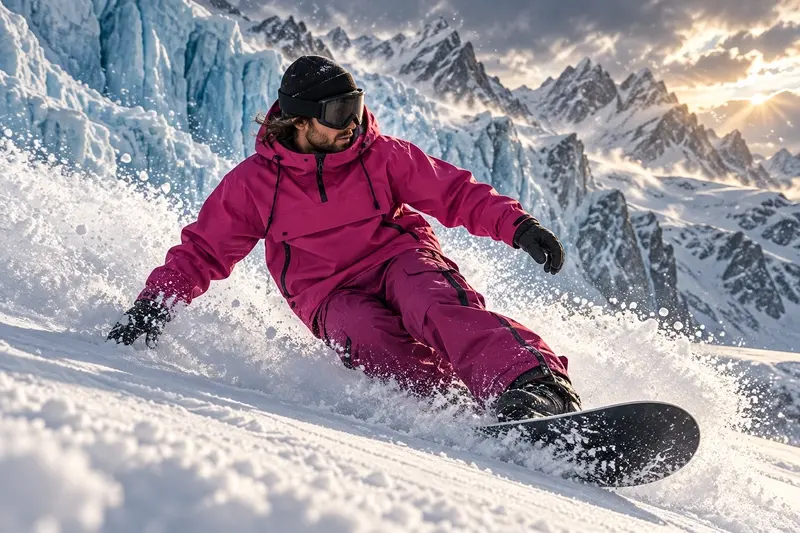
Snowboard jackets share plenty of features with ski jackets, but many take a more relaxed approach to fit and styling.
Streetwear has also had a noticeable influence on snowboard outerwear.
A snowboard jacket often has a roomy silhouette, weather-resistant shell, adjustable hood, snow skirt, and protective cuffs. Longer body lengths, oversized fits, and accessible storage pockets are common. Technical features overlap considerably with ski jackets, and some designs work for both sports.
The relaxed proportions leave room for layering and movement.
For winter sportswear brands, snowboard jackets also offer opportunities to explore bold color blocking and more fashion-led silhouettes.
Winter & Insulated Jackets
When temperatures drop, warmth becomes the priority. But not every winter jacket delivers insulation in the same way.
27. Puffer Jacket
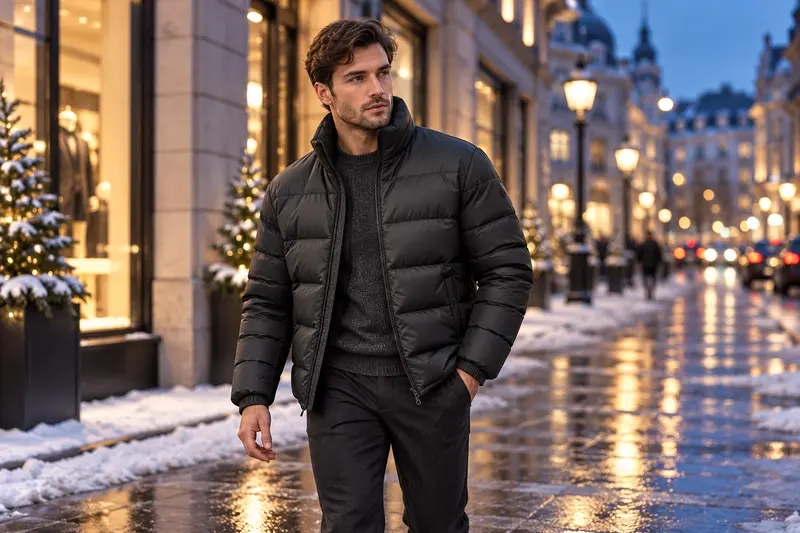
The puffer jacket has become a winter essential, from lightweight everyday versions to oversized streetwear designs.
Its padded appearance is part of the appeal, but the insulation inside is what matters most.
A puffer jacket uses down or synthetic insulation held within padded compartments. These sections may be created with stitching or other baffle construction. Designs range from slim, lightweight jackets to heavily padded oversized styles. The warmth depends on insulation type, fill amount, construction, and overall coverage.
A short puffer works well for everyday winter outfits, while longer versions provide more coverage.
For streetwear brands, oversized shapes and bold surface finishes can give the familiar design a completely different feel.
28. Quilted Jacket
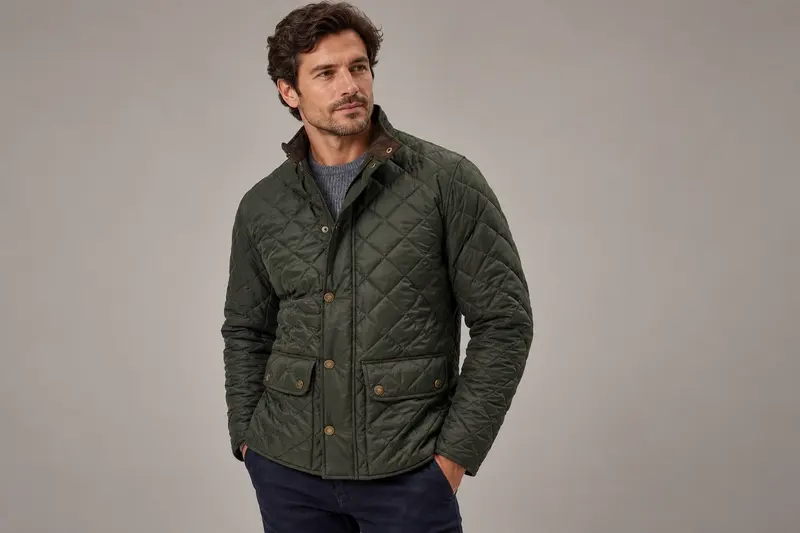
Quilted jackets are a good choice when you want some warmth without the bulk of a heavy winter coat.
They’re especially popular for transitional weather and classic casual outfits.
A quilted jacket has stitched patterns that hold fabric layers and, in many cases, light insulation together. Diamond quilting is the most recognizable design, although horizontal and geometric patterns are also common. Many styles have a relatively slim profile, simple front closures, and neatly finished edges.
Wear one over a sweater in fall or as an extra layer under a larger coat.
Compared with a puffer, a quilted jacket often has a flatter, more understated appearance.
29. Shearling Jacket
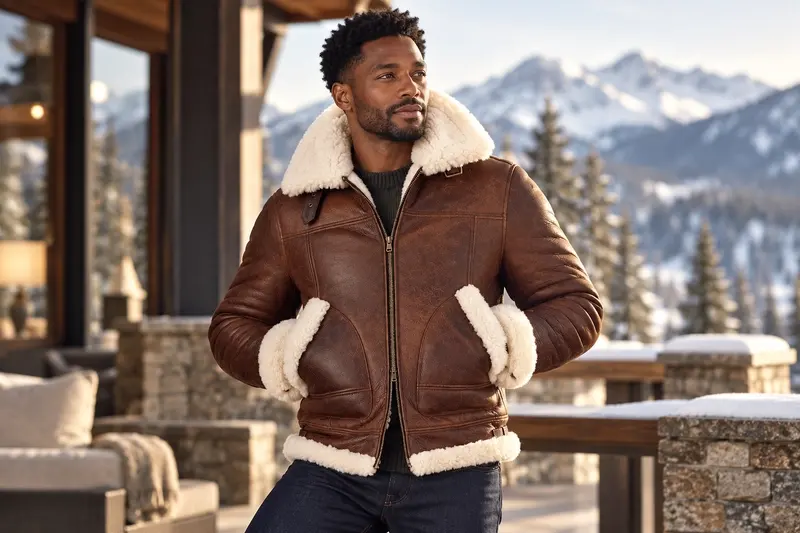
A shearling jacket brings together warmth and a distinctive vintage look.
The style is especially associated with aviation-inspired winter clothing, although modern versions range from rugged to refined.
Traditional shearling jackets are made from sheepskin with the wool retained, creating a leather or suede outer surface and a warm wool interior. Large collars, visible wool trim, substantial closures, and structured bodies are common. Synthetic alternatives can recreate a similar look using different materials.
Shearling jackets work particularly well with denim, boots, and heavier knitwear.
They’re a strong choice for premium winter collections where material texture is a major part of the design.
30. Parka Jacket
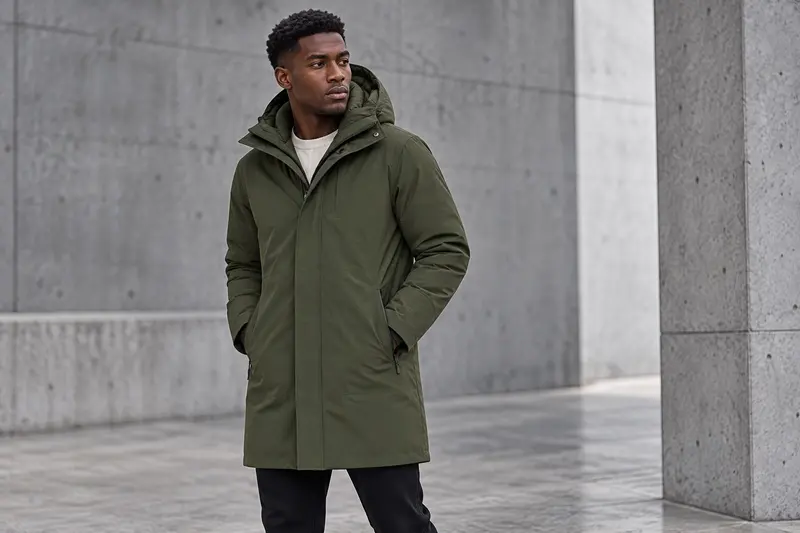
When winter weather calls for more coverage, a parka is often the jacket to reach for.
Its longer body and hood make it a practical option for cold-weather commuting and outdoor use.
A parka generally has a longer silhouette, hood, roomy pockets, and construction designed to provide additional protection from cold conditions. Winter versions may use down or synthetic insulation, weather-resistant shells, adjustable cuffs, and protective front closures.
Not every parka is built for extreme cold. Some are lightweight casual styles, while others are heavily insulated.
The right choice depends on climate, activity, and how much layering room you need.
Tailored & Formal Outerwear
Not every outerwear piece is designed for jeans and sneakers. Tailored jackets and longer coats offer a cleaner, more refined alternative.
31. Blazer
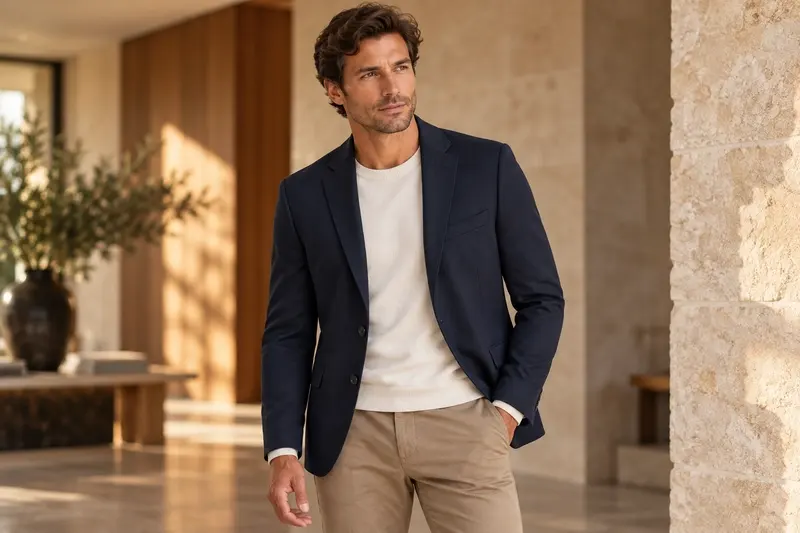
A blazer is one of the easiest ways to make a casual outfit look more put together.
Unlike a suit jacket, it’s generally designed to be worn on its own rather than with matching trousers.
A blazer has tailored lapels, a button front, shaped shoulders, and a structured or softly constructed body. Single-breasted and double-breasted styles are common. Navy remains a classic choice, but blazers also come in neutral shades, seasonal colors, and textured fabrics.
Pair one with chinos for a smart-casual outfit or with dark denim for a more relaxed look.
It’s a useful option for business-casual wardrobes and contemporary menswear collections.
32. Sport Coat
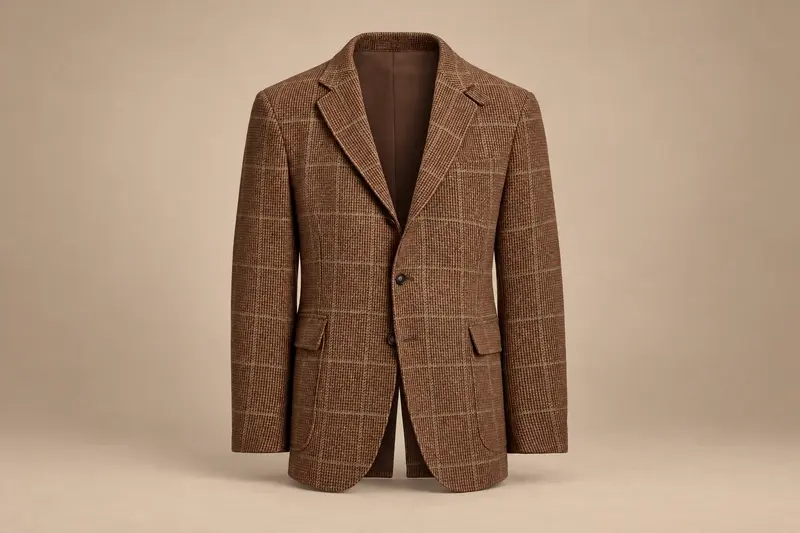
The sport coat sits in the space between casual clothing and formal tailoring.
It looks more polished than an everyday jacket but doesn’t require a matching pair of suit trousers.
Sport coats often use textured or patterned fabrics such as tweed, wool blends, and linen. They feature tailored lapels and shaped shoulders, but many have a softer, less formal construction than traditional suit jackets. Patch pockets and seasonal fabric textures are also common.
Sport coats work well with chinos, wool trousers, and dark denim.
The difference between a sport coat and a blazer isn’t always clear-cut, but sport coats tend to place more emphasis on fabric texture and pattern.
33. Suit Jacket
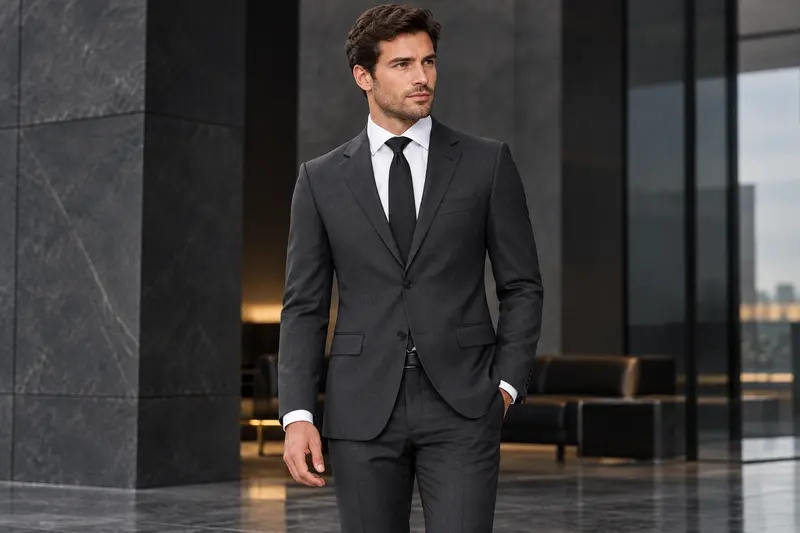
A suit jacket is designed to be part of a matching outfit.
That sounds simple, but it’s the main detail that separates it from a blazer or sport coat.
A suit jacket features tailored lapels, carefully shaped shoulders, structured or semi-structured front panels, and proportions designed to work with matching trousers. Single-breasted and double-breasted versions are common, with different fits, button arrangements, and fabric choices.
Suit jackets are most often worn for business, formal occasions, and professional settings.
Although some can be styled separately, they’re generally designed with the full suit in mind.
34. Tuxedo Jacket
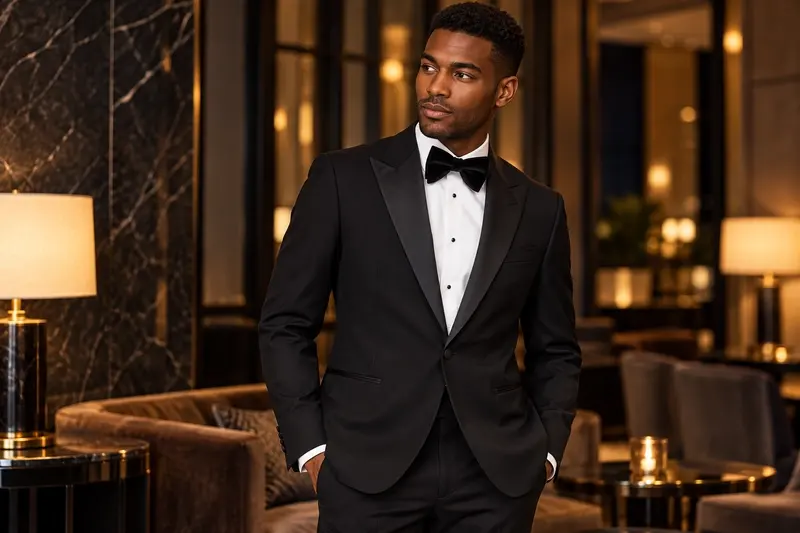
A tuxedo jacket is made for occasions when ordinary businesswear isn’t quite formal enough.
Also called a dinner jacket, it’s a key part of traditional black-tie dressing.
A classic tuxedo jacket has refined tailoring, satin or grosgrain lapel facings, formal buttons, and a clean eveningwear silhouette. Shawl and peak lapels are traditional choices, while black and midnight blue remain the most familiar colors.
Unlike a standard suit jacket, a tuxedo is designed around formal eveningwear conventions.
It’s typically worn with coordinated formal trousers and the appropriate accessories.
35. Peacoat
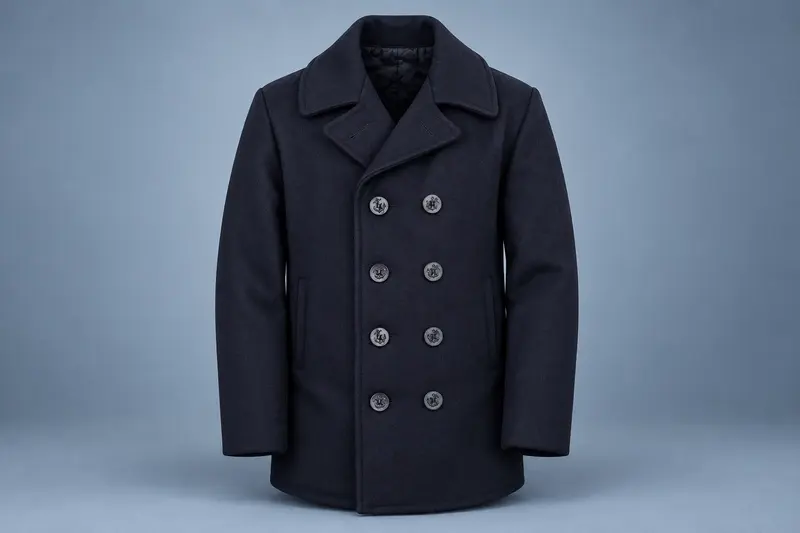
The peacoat is a classic winter coat with naval roots.
Its shorter length and broad lapels give it a distinctive look that’s easy to dress up or down.
A traditional peacoat has a double-breasted front, broad lapels, substantial wool fabric, and a relatively short body compared with a full-length overcoat. Large buttons and practical side pockets are familiar details.
A navy peacoat works particularly well with knitwear, denim, and tailored trousers.
It’s a good choice for anyone who wants winter outerwear that looks more structured than a puffer jacket.
36. Duffle Coat
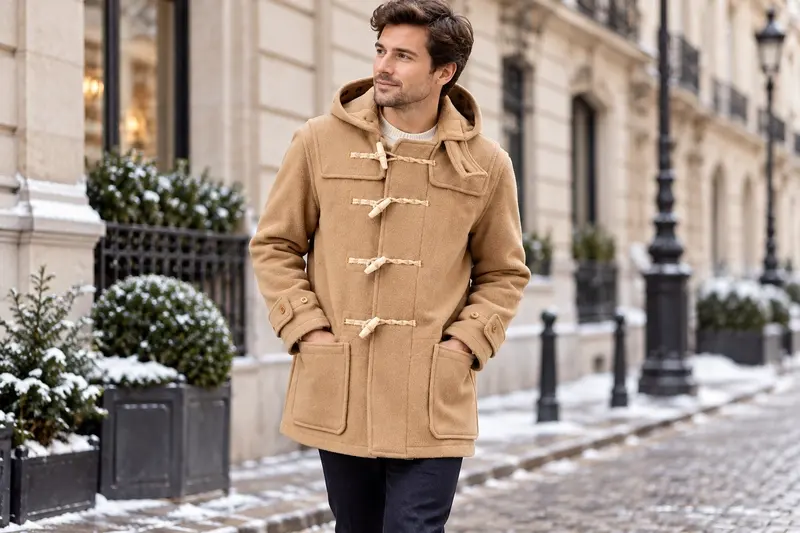
You can usually recognize a duffle coat from across the room.
Its distinctive toggle fastenings give it a look that sets it apart from almost every other classic winter coat.
A duffle coat typically features toggle-and-loop closures, a hood, large patch pockets, a straight body, and substantial wool fabric. The roomy cut makes it easy to wear over sweaters and other winter layers.
Duffle coats have a relaxed, heritage-inspired feel.
They work particularly well with casual winter outfits and are a familiar option in traditional British outerwear.
37. Trench Coat
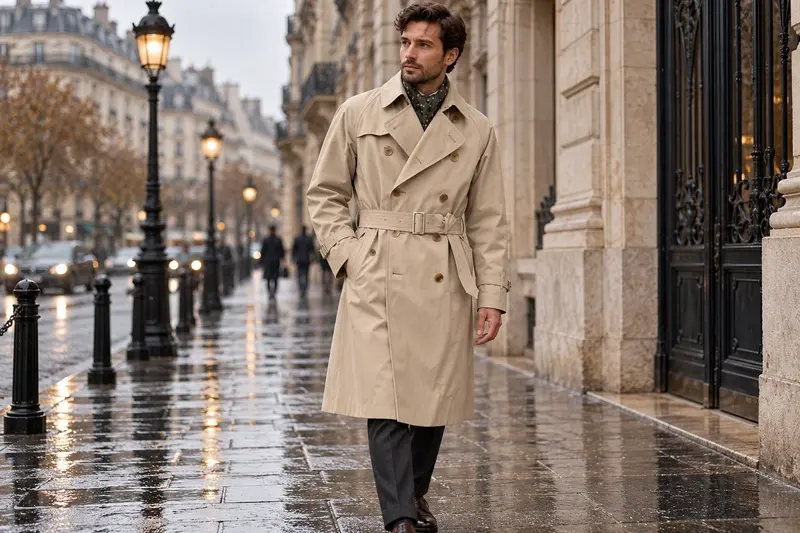
Few coats are as recognizable as the trench.
Originally developed from military outerwear, it has become a classic piece for transitional weather and smarter everyday dressing.
A traditional trench coat features a double-breasted front, waist belt, storm flaps, shoulder epaulettes, and a longer body. Many versions use tightly woven cotton or blended fabrics, with adjustable cuff straps and a structured collar.
A trench works well over a suit, but it looks just as natural with jeans and knitwear.
It’s particularly useful in spring and fall, when you need an extra layer without heavy insulation.
38. Overcoat
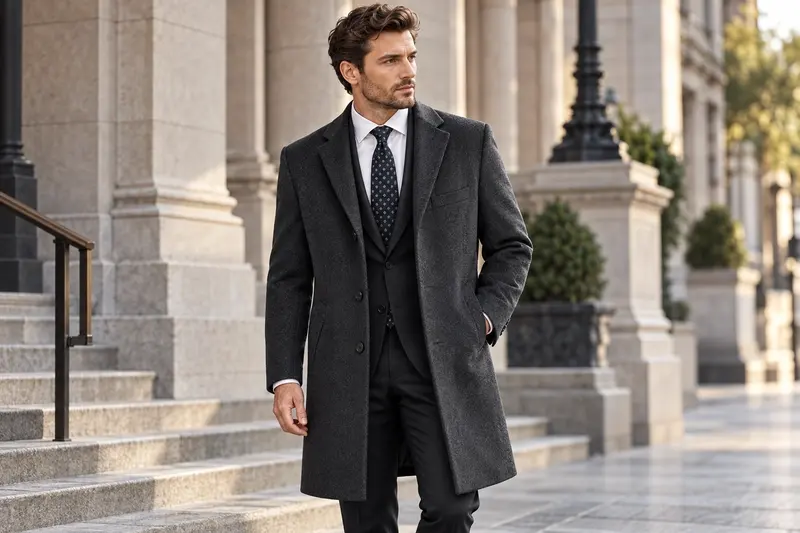
An overcoat is designed to go over the rest of your outfit, especially when colder weather calls for a more substantial outer layer.
It’s a familiar part of formal winter dressing, but modern versions work just as well with casual clothes.
An overcoat generally has a long tailored body, structured collar, button-front closure, and wool or wool-blend construction. Single-breasted and double-breasted designs are common, with lengths ranging from above the knee to below it.
A charcoal or camel overcoat can work with tailoring, knitwear, and dark denim.
Compared with a peacoat, it usually offers more length and a cleaner, more streamlined appearance.
How to Choose Jacket Styles for Your Clothing Brand
Choosing the right jacket starts with your target customers, season, and brand positioning.
Streetwear: Bomber, varsity, and coach jackets work well for bold designs, embroidery, and custom graphics.
Casualwear: Denim, trucker, Harrington, and chore jackets are versatile choices for everyday collections.
Outdoor & Activewear: Windbreakers, softshells, and rain jackets suit collections focused on comfort and weather protection.
Winter Collections: Puffer jackets, parkas, and quilted jackets offer different levels of warmth and coverage.
Premium Menswear: Leather jackets, blazers, and overcoats create a more refined look.
Before production, confirm the fabric, fit, construction, and decoration details. Working with an experienced custom jacket manufacturer can help turn your design into a production-ready sample.
Final Thoughts
From classic denim jackets to technical outerwear, each style has its own design features and purpose. The right choice depends on your customers, collection direction, and intended season.
Looking to develop your own jacket collection? Contact OEM Fashion to discuss your designs, materials, and customization requirements.
FAQs About Types of Jackets for Men
What are the most popular types of jackets for men?
Denim, bomber, varsity, leather, puffer, and windbreaker jackets are widely recognized styles. Their popularity varies by season, market, and fashion trends.
What's the difference between a bomber jacket and a varsity jacket?
Bomber jackets usually have a front zipper and ribbed waistband, while varsity jackets often feature contrasting sleeves, snap buttons, and decorative patches.
Which jackets are best for fall and winter?
Denim, Harrington, and chore jackets work well for fall. Puffer jackets, parkas, and insulated coats are better suited to colder winter conditions.
Which jacket styles work well for streetwear brands?
Bomber, varsity, coach, and oversized denim jackets are common choices because they offer recognizable silhouettes and room for custom graphics or embroidery.
Can clothing brands customize these jacket styles?
Yes. Many jacket styles can be customized through fabric selection, fit development, colors, labels, and decoration. The available options depend on the design and manufacturing requirements.
Discuss Your Project
Related Articles




Hot Products
Share With