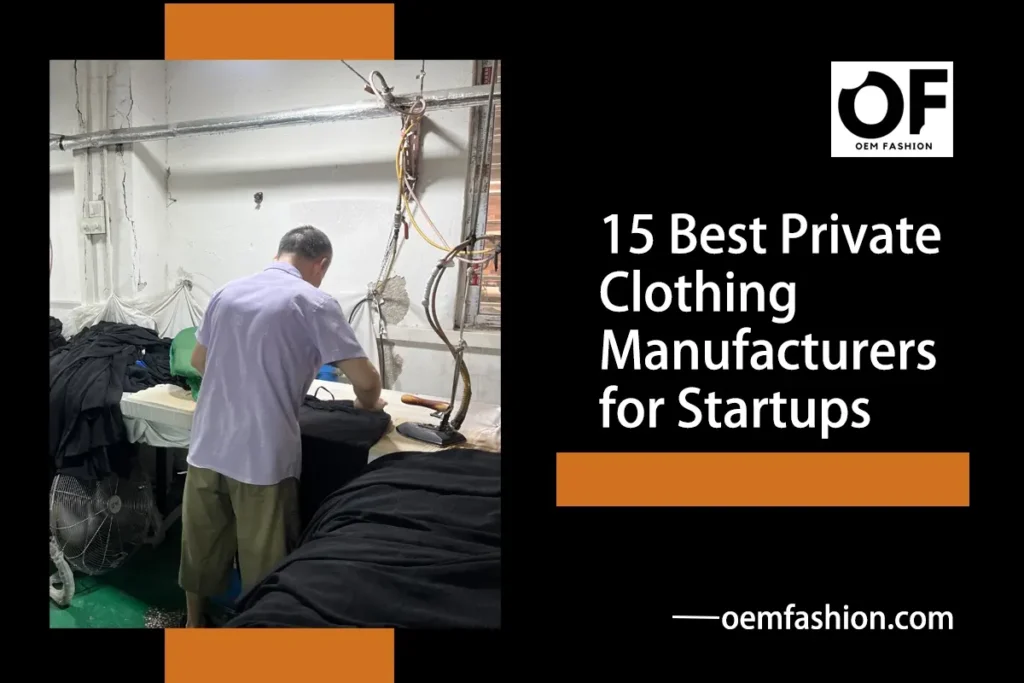
15 Best Private Label Clothing Manufacturers for Startups
Finding the right private label clothing manufacturer is one of the first major decisions for a new fashion brand. Some suppliers offer ready-made garments with custom labels, while others develop original clothing from sketches, tech packs, and fabric specifications.
For startups planning their first collection, OEM Fashion provides custom clothing development with a minimum order of 100 pieces per design per color.
This guide compares 15 clothing manufacturers across China, India, Portugal, and the United States, highlighting their production models, minimum orders, specialties, and suitability for different startup businesses.
Quick Comparison of 15 Private Label Clothing Manufacturers
| Manufacturer | Location | MOQ / Entry Point | Best For |
|---|---|---|---|
| OEM Fashion Our Pick | China | 100 pcs/style/color | Full custom OEM/ODM |
| Mingxing Clothing | China | 100 pcs/style/color | Startup private-label manufacturing |
| Hongyu Apparel | China | From 50 pcs* | Multiple sourcing routes |
| Appareify | China | Project-based | Fashion collections |
| The Evans Group | USA | Project-based | Designer development |
| Create Fashion Brand | Portugal | No MOQ for stock blanks | Premium European apparel |
| Apliiq | USA | No minimum for eligible items | On-demand private label |
| Qianshiwear | China | Confirm with supplier | Streetwear |
| KnitSeek | China | Confirm with supplier | Knitwear |
| Royal Apparel | USA | Program-dependent | US-made basics |
| Henan Newasia Garment | China | Product-dependent | Repeat production |
| Indie Source | USA | Project-based | Fashion development |
| Berunwear | China | Confirm with supplier | Sportswear |
| Laiwen Clothing | China | Confirm with supplier | Fashion collections |
| Lezhou Garment | China | From 200 pcs for selected styles | Washed streetwear |
1. OEM Fashion — Best for Full Custom Clothing Development
Location: Dongguan, China
MOQ: 100 pcs per design per color
Sample Time: 10–15 working days
Bulk Lead Time: 25–30 working days
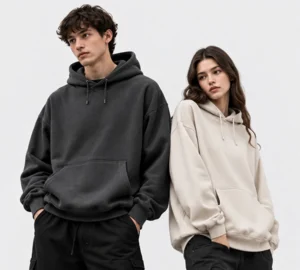
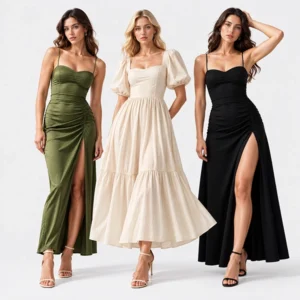
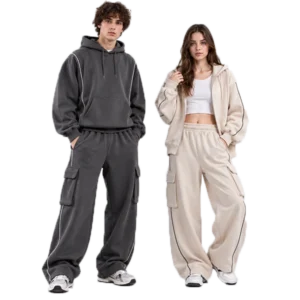
Main Products: Hoodies, T-shirts, jackets, pants, tracksuits, dresses, and shirts
Best For: Startups building original private-label clothing collections
OEM Fashion is a custom clothing manufacturer specializing in OEM and ODM garment development for fashion brands, private labels, wholesalers, and businesses.
Unlike suppliers that primarily decorate ready-made blanks, OEM Fashion focuses on manufacturing garments according to confirmed customer requirements.
Startups can develop their collections through fabric selection, fit and size development, pattern adjustments, printing, embroidery, custom accessories, private labels, and packaging.
The company supports different apparel categories, making it suitable for brands developing several coordinated products under one label.
Its MOQ is 100 pieces per design per color, with different sizes allowed within that quantity. Sampling typically takes 10–15 working days, followed by 25–30 working days for bulk production after sample approval.
Buyer Consideration: OEM Fashion is better suited to startups ready for custom production than businesses seeking a handful of ready-made garments with simple logo printing.
2. Billoomi Fashion — Best for Small-Batch Fashion Production
Location: India
MOQ: From 25 pcs for eligible basic styles
Sample Time: Approximately 2–3 weeks
Bulk Lead Time: Approximately 6–8 weeks
Main Products: Womenswear, kidswear, woven and knitted apparel
Best For: Startups launching smaller fashion collections
Billoomi Fashion is an India-based export manufacturer serving startup labels that need small production runs and detailed garment development. Its focus includes womenswear, kidswear, fabric sourcing, patterns, embroidery, printing, labels, and packing. A basic solid-color design can start at 25 pieces per style and color, while printed or embroidered styles commonly require 100 pieces. This makes it useful for founders comparing a simple first collection with a more decorated launch.
Buyer Consideration: Its lowest MOQ does not apply to every decoration method. Confirm the quantity for each style before budgeting.
3. Hongyu Apparel — Best for Flexible Manufacturing Routes
Location: China
MOQ: From 50 pcs for selected services; 100 pcs/style/color for full custom
Sample Time: 8–15 days for full custom
Bulk Lead Time: 24–30 days for full custom
Main Products: Fashion apparel, dresses, hoodies, streetwear
Best For: Brands comparing blanks, logo customization, and cut-and-sew
Hongyu Apparel offers three distinct sourcing routes: ready-made wholesale, logo customization, and full cut-and-sew development. That separation helps new brands avoid confusing a relabeled blank with a completely original garment. Its published full-custom program starts at 100 pieces per style and color, with published timelines for that route. It is particularly relevant to founders who already have a design direction and need patterns, fabric, sizing, and construction developed.
Buyer Consideration: Ask for a quotation based on the correct service category rather than comparing blank prices with full-custom manufacturing prices.
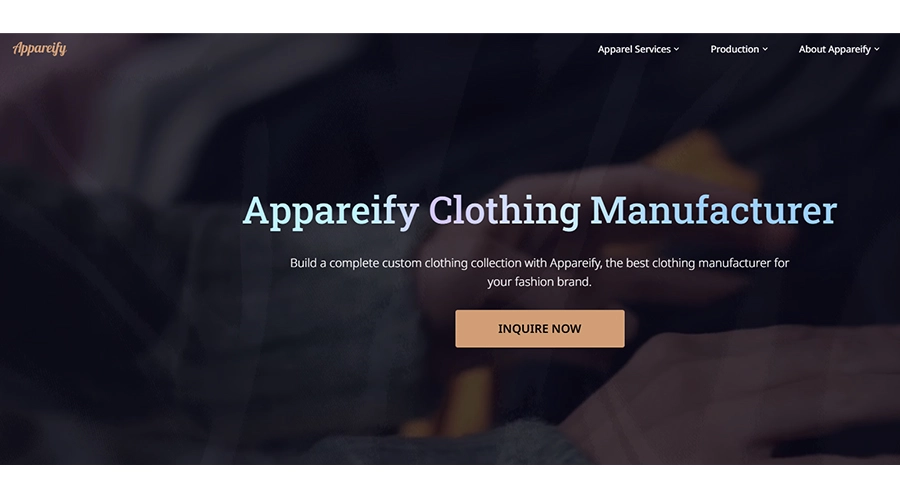
4. Appareify — Best for Coordinated Fashion Collections
Location: China
MOQ: Depends on product and customization
Sample Time: Confirm by project
Bulk Lead Time: Confirm by project
Main Products: Custom fashion apparel, casualwear, streetwear
Best For: Brands developing multiple related products
Appareify positions itself around custom apparel production and private-label services for fashion businesses. Startups can explore fabric selection, garment development, branding, and coordinated product categories rather than treating every item as a separate supplier search. The important buying decision is whether the project uses an existing base style or needs original cut-and-sew work. Founders should confirm minimums, development fees, and the exact scope of customization before paying.
Buyer Consideration: Confirm whether the supplier is offering a modified existing design or a completely new pattern.
5. The Evans Group — Best for Designer-Led Development
Location: United States
MOQ: Project-dependent
Sample Time: Confirm by project
Bulk Lead Time: Confirm by project
Main Products: Designer fashion and custom apparel
Best For: Emerging designers seeking US-based development
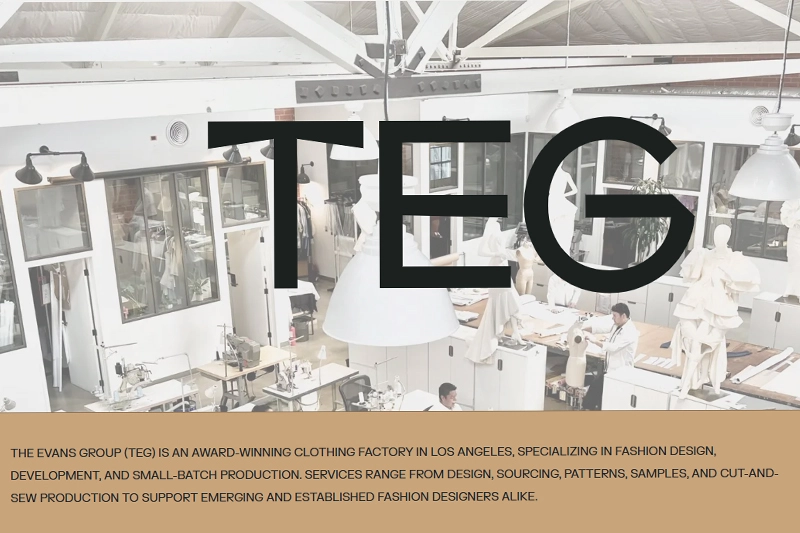
The Evans Group is a US-based fashion development and production option for emerging designers who place a high value on close collaboration. It is a different sourcing proposition from a factory selling standardized blanks: founders may need guidance with patterns, prototypes, fit revisions, and production planning. It is most relevant to design-led launches where local communication and development oversight matter more than finding the lowest possible unit price.
Buyer Consideration: Request a complete breakdown of development, sampling, and manufacturing fees.
6. Create Fashion Brand — Best for Premium European Apparel
Location: Portugal
MOQ: No MOQ for stock blanks; from 150 pcs/style/color for full custom
Sample Time: Approximately 4–6 weeks for custom development
Bulk Lead Time: Approximately 8–10 weeks for custom production
Main Products: Premium basics, hoodies, T-shirts, jackets, pants
Best For: Startups seeking European production and premium materials
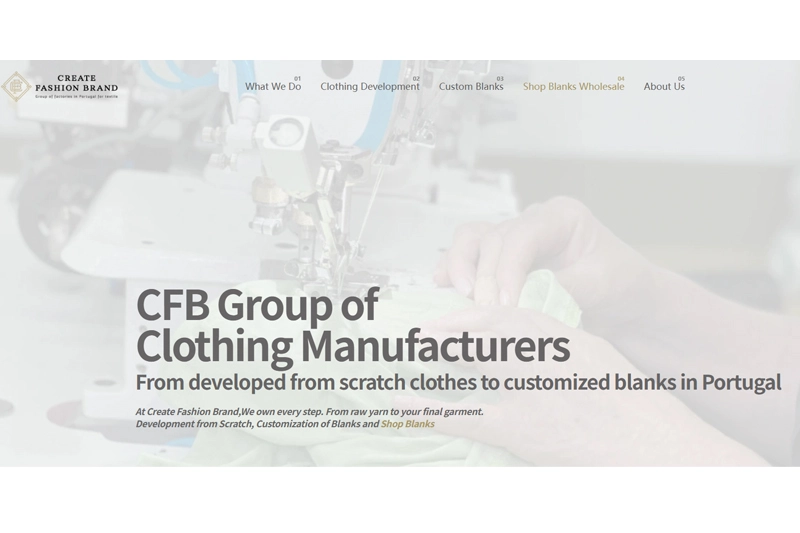
Create Fashion Brand offers three different entry points in Portugal: stock blanks, customization of blanks, and fully custom development. Its full-custom minimum begins at 150 units per style and color, while blank programs follow separate rules. That makes it attractive to founders considering European production, premium fabrics, and a gradual move from ready-made bases to original garments. Buyers should choose a route before comparing minimums, sample timing, or costs.
Buyer Consideration: Stock blanks and original cut-and-sew garments have different minimums, costs, and lead times.
7. Apliiq — Best for On-Demand Private Label Clothing
Location: United States
MOQ: No minimum for eligible private-label products
Sample Time: Depends on product and service
Bulk Lead Time: Depends on fulfillment route
Main Products: T-shirts, hoodies, jackets, hats, and accessories
Best For: Testing a clothing brand without conventional inventory
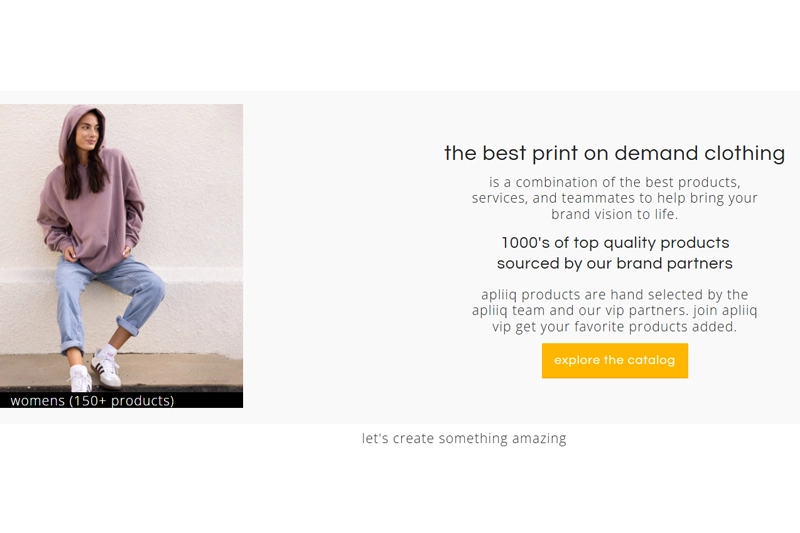
Apliiq is a US-based option for founders who want to launch branded apparel without first financing a conventional cut-and-sew production run. It offers on-demand decoration and private labeling on eligible catalog products, including no-minimum private-label options. This is especially useful for testing designs and demand. However, brands generally choose from existing garments, so the model is not equivalent to developing a proprietary fabric, fit, and construction from scratch.
Buyer Consideration: Suitable for testing branding and demand, but less appropriate for completely original garment development.
8. Qianshiwear — Best for Streetwear-Focused Startups
Location: China
MOQ: Confirm with supplier
Sample Time: Confirm with supplier
Bulk Lead Time: Confirm with supplier
Main Products: Streetwear, hoodies, T-shirts
Best For: Brands developing oversized and fashion-led streetwear
Qianshiwear is a candidate for founders building a streetwear label around oversized silhouettes and visible branding. Compared with a general apparel supplier, the key questions are whether it can develop the intended hoodie or T-shirt block, control decoration placement, and consistently reproduce washed or oversized styles. Buyers should request recent samples matching their product category and confirm minimums and lead times before selecting a route.
Buyer Consideration: Verify current product capabilities and request samples matching the exact streetwear style you plan to produce.

9. KnitSeek — Best for Private Label Knitwear
Location: China
MOQ: Confirm by yarn and style
Sample Time: Confirm with supplier
Bulk Lead Time: Confirm with supplier
Main Products: Sweaters, cardigans, knitted apparel
Best For: Startup knitwear and sweater collections
KnitSeek is a more specialized option for brands planning sweaters, cardigans, and other knitted garments rather than basic printed T-shirts. Knitwear development depends on yarn composition, gauge, stitch structure, shaping, and finishing, so the technical conversation differs from ordinary cut-and-sew apparel. Startup buyers should request yarn and stitch references, clarify size grading and sample revisions, and check the minimum quantity for each yarn color and style before placing an order.
Buyer Consideration: Confirm yarn minimums, gauge options, knitting techniques, and washing requirements before requesting prices.
10. Royal Apparel — Best for US-Made Clothing Basics
Location: United States
MOQ: Depends on wholesale or custom program
Sample Time: Depends on program
Bulk Lead Time: Depends on program
Main Products: T-shirts, fleece, basics
Best For: Brands prioritizing domestic sourcing
Royal Apparel offers a US-based sourcing direction for brands interested in domestically made basics and wholesale apparel. It can be relevant when a startup values familiar base styles, domestic supply, or the option to add branding to an existing garment. That is a different proposition from full custom pattern development. Founders should check which items are actually made in the USA, and what minimums apply to stocked garments versus special production programs.
Buyer Consideration: Verify the country of manufacture for each selected product rather than assuming all catalog items share the same origin.
11. Henan Newasia Garment — Best for Scalable Production
Location: China
MOQ: Product-dependent; some programs start at 100 pcs
Sample Time: Product-dependent
Bulk Lead Time: Product-dependent
Main Products: Hoodies, casualwear, custom apparel
Best For: Brands planning repeat production
Henan Newasia Garment is a China-based apparel production option for founders preparing to scale an established design into repeat orders. Its custom garment and hoodie offerings cover fabrics, weights, fits, colors, and private-label details. The strongest use case is a brand that has already decided what it wants to sell and needs a stable production specification. Buyers should confirm the exact minimum for each product, obtain a sample, and document specifications before bulk approval.
Buyer Consideration: Discuss fabric lot consistency, approved samples, and reorder requirements before placing a long-term core product.
12. Indie Source — Best for Fashion Development Support
Location: United States
MOQ: Project-dependent
Sample Time: Confirm by project
Bulk Lead Time: Confirm by project
Main Products: Fashion apparel and custom collections
Best For: Founders needing structured development support
Indie Source is a US-based fashion development and manufacturing option for founders who want support turning a concept into a sellable collection. Its appeal is the possibility of coordinating development tasks such as technical specifications, patterns, sampling, and production planning within one project. Because service packages and manufacturing arrangements can differ, startups should ask which work is performed directly, how revisions are billed, and practical production quantities.
Buyer Consideration: Confirm whether development, production, sourcing, and project management are billed separately.
13. Berunwear — Best for Startup Sportswear Brands
Location: China
MOQ: Confirm by product
Sample Time: Confirm with supplier
Bulk Lead Time: Confirm with supplier
Main Products: Sportswear, activewear, teamwear
Best For: Athletic and performance-focused collections
Berunwear is a candidate for startup brands focused on teamwear, activewear, and sports-oriented custom apparel. These require decisions about fabric performance, stretch, fit, decoration durability, and size consistency that differ from everyday fashion basics. Founders should evaluate samples under use conditions, not just in product photos. Before ordering, confirm whether the quote covers original pattern development, existing teamwear templates, branding, and size and color options.
Buyer Consideration: Ask whether the quoted fabric and garment construction meet the intended activity and performance requirements.

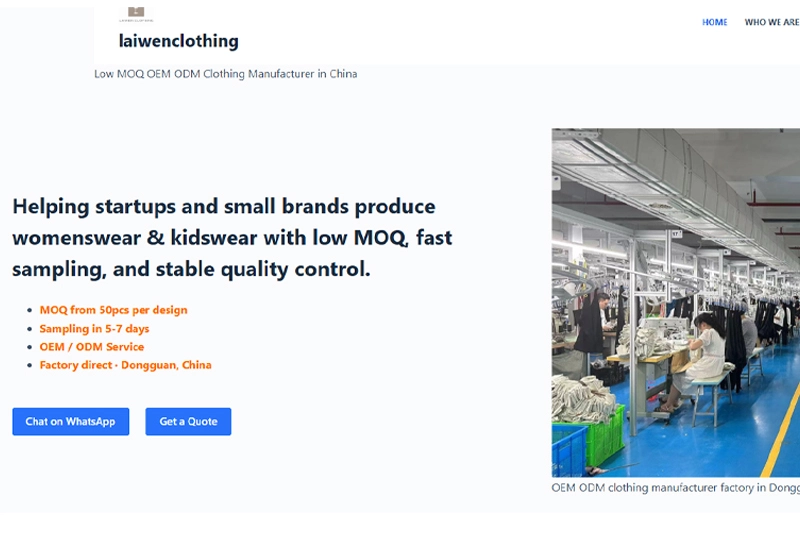
14. Laiwen Clothing — Best for Fashion-Led Collections
Location: China
MOQ: Confirm with supplier
Sample Time: Confirm with supplier
Bulk Lead Time: Confirm with supplier
Main Products: Fashion apparel
Best For: Brands seeking garment-style development
Laiwen Clothing is a candidate for founders seeking a manufacturing partner for fashion-led collections, particularly where style variety and garment details matter. For startup womenswear or childrenswear, the buying challenge is often not merely low minimums but accurate fit, appropriate fabric, and reliable size grading. Buyers should review samples in their actual category, establish trim and measurement specifications, and verify product scope, minimums, and timing.
Buyer Consideration: Confirm current product specialization and review finished samples from the same garment category.
15. Lezhou Garment — Best for Washed Streetwear
Location: China
MOQ: From 200 pcs for selected hoodie programs
Sample Time: Around 7–10 days for selected programs
Bulk Lead Time: Around 18–28 days for selected programs
Main Products: Hoodies, T-shirts, washed streetwear
Best For: Brands developing decorated or vintage-inspired apparel
Lezhou Garment is relevant to streetwear startups developing custom hoodies, T-shirts, and pieces with distinctive washing or decoration. Its publicly presented hoodie options include washed fabrics, oversized proportions, embroidery, and printed details. These techniques make physical sampling especially important: a digital mockup cannot show the final wash effect, hand feel, or fit. Founders should approve a complete sample and specify variation before authorizing a larger production run.
Buyer Consideration: Approve a physical reference for garment washing, distressing, and print appearance before bulk production.

Private Label vs. White Label vs. Full Custom OEM: What Should Startups Choose?
These terms are often used interchangeably, but they can describe very different production arrangements.
| Manufacturing Model | What You Control | Suitable For |
|---|---|---|
| White Label | Branding on an existing product | Quick product testing |
| Private Label | Labels, packaging, and varying levels of customization | Building a branded collection |
|
Full Custom OEM Full Control |
Fabric, pattern, fit, construction, decoration, and labels | Original clothing products |
The terms are not standardized across every supplier. Always ask what customization is actually included.
A startup with a limited budget may begin with existing blanks to test its branding and customer demand.
A brand developing a distinctive oversized hoodie, tailored dress, or custom jacket may need full cut-and-sew manufacturing because the fabric, pattern, and fit are part of the product identity.
Neither route is universally better.
The right choice depends on whether the brand’s competitive advantage comes primarily from its graphics and marketing or from the garment itself.
How to Choose a Clothing Manufacturer for Your First Collection
1. Calculate MOQ Across Your Entire Collection
A factory offering 100 pieces per style per color may sound manageable until a brand plans five styles in three colors.
That could mean 1,500 pieces before accounting for size distribution.
Build your first assortment around a realistic inventory budget rather than selecting too many variations.
2. Match the Manufacturer to Your Product Category
A factory experienced in hoodies may not be the best choice for structured dresses, knitted sweaters, or compression activewear.
Request examples of garments similar to your intended collection.
3. Compare Total Project Costs, Not Just Unit Prices
A quotation may exclude sampling, pattern development, labels, hangtags, packaging, freight, duties, or other project costs.
Request a clear breakdown so that competing quotations cover comparable services.
4. Approve a Physical Sample
Check fit, fabric, stitching, decoration, measurements, and finishing.
A digital mockup cannot reliably show fabric drape, actual color, comfort, or construction quality.
5. Confirm the Production Schedule
Ask when production begins, what approvals are required, and whether the stated lead time starts after sample approval, deposit, or material confirmation.
Allow additional time for shipping and potential customs clearance.
Common Mistakes Startup Clothing Brands Should Avoid
Choosing the lowest MOQ without checking the production model
A no-minimum blank supplier and a 100-piece custom manufacturer may offer completely different products.
Launching too many styles
A large first collection increases sampling costs, inventory complexity, and the number of products that must sell.
Approving only a digital design
Fabric, fit, print appearance, and measurements must be checked on a physical garment.
Ignoring hidden costs
Labels, packaging, development, freight, and import charges can materially affect the final cost.
Selecting a supplier without relevant product experience
The best supplier for a basic printed T-shirt may not be suitable for a technical jacket or a fully fashioned sweater.
Final Thoughts
The best private label clothing manufacturer for a startup depends on the product, budget, customization requirements, and planned order quantity.
On-demand suppliers can help brands test demand without substantial inventory, while full custom manufacturers are more appropriate for developing original fabrics, fits, and garment construction.
Compare suppliers based on their actual production model, product experience, sampling process, and total project cost—not MOQ alone.
For startups developing original clothing collections, Contact Us to discuss your designs, fabric requirements, quantity, branding, and sample development.
Frequently Asked Questions
Can I start a private label clothing brand without a tech pack?
Yes, depending on the manufacturer and production model. Ready-made blanks may only require artwork and branding instructions. For full custom production, sketches, reference garments, measurements, and fabric requirements can help begin development, although more detailed specifications may be needed before sampling and bulk production.
Is 50 pieces enough to start a clothing brand?
It can be enough for certain blank, decorated, or small-batch programs. However, full custom manufacturers may require 100 pieces or more per style and color. Confirm whether the advertised MOQ applies to your fabric, construction, decoration, and size assortment.
What is the difference between a private label manufacturer and a print-on-demand supplier?
A print-on-demand supplier usually decorates existing products as orders arrive, while private label manufacturing can include branded garments produced in batches. Some suppliers offer both. Full custom manufacturing goes further by allowing the brand to control the garment’s fabric, fit, pattern, and construction.
Should a startup order samples from more than one manufacturer?
Comparing samples can be useful when evaluating fabric, construction, fit, decoration, and communication. However, request comparable specifications and understand the development charges before ordering. A cheaper sample is not necessarily a better representation of the finished product.
Can I mix different sizes to meet a clothing manufacturer's MOQ?
Many manufacturers allow mixed sizes within a style and color, but the rules differ. Some impose additional minimums for fabric colors, printing methods, or special sizes. Confirm the size breakdown and any surcharges before approving the order.
Share With
Related Articles

Hot Products