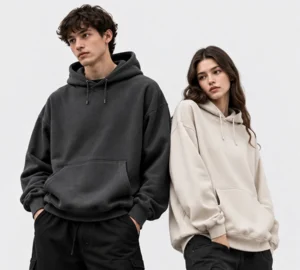
Top 10 Plain Hoodie Manufacturers in China
A plain hoodie leaves very little room for poor manufacturing to hide.
With no large print or embroidery dominating the garment, buyers notice the fabric surface, weight, fit, hood shape, rib quality, stitching, color, and overall silhouette first. Even small problems—such as a twisting side seam, loose cuff, shallow hood, excessive shrinkage, or inconsistent black shade—can affect how premium the finished hoodie feels.
For clothing brands, sourcing a plain hoodie is therefore less about finding the factory with the longest list of decoration techniques and more about finding one that can consistently reproduce a strong base garment.
This guide compares 10 manufacturers in China from that perspective, with particular attention to fabric development, GSM, fit, garment construction, private labeling, sampling, and repeat-order consistency.
Brands developing a proprietary core style can also work with a Custom Plain Hoodie Manufacturer to control the garment from fabric and pattern through labels, packaging, and bulk production.
What Should Brands Compare When Sourcing Plain Hoodies?
A useful plain hoodie comparison should begin with the garment rather than the decoration.
Fabric hand feels: Two fabrics with identical GSM can feel completely different because of yarn, knit density, composition, brushing, and finishing.
Silhouette: Shoulder drop, chest width, body length, sleeve volume, hood size, and hem opening determine whether the hoodie feels regular, relaxed, boxy, or oversized.
Hood construction: Fabric weight and hood structure should work together. A heavyweight double-layer hood can provide structure but may pull backward if the pattern is poorly balanced.
Rib recovery: Cuffs and waistbands should stretch comfortably and return to shape after wearing.
Wash stability: Shrinkage, twisting, pilling, surface changes, and color loss become especially noticeable on plain garments.
Repeatability: A successful core hoodie may be reordered repeatedly. Fabric, measurements, shade, and construction therefore need to remain close to the approved standard.
Choosing the Right Fabric Weight
| Fabric Weight | General Feel | Typical Direction |
|---|---|---|
| 260–300 GSM | Lighter | Layering and transitional wear |
| 300–350 GSM | Midweight | Everyday casual hoodies |
| 350–420 GSM | Heavyweight | Premium basics and streetwear |
| 420+ GSM | Very substantial | Structured heavyweight styles |
These ranges are useful starting points rather than quality grades. A well-developed 320 GSM fabric can be more suitable for a brand than an unsuitable 450 GSM fabric.
Composition, knit construction, interior finish, climate, fit, and target retail price should all be considered alongside GSM.

1. OEM Fashion
Location: Dongguan, China
MOQ: 100 pcs per design per color
Sample Time: 10–15 working days
Bulk Lead Time: 25–30 working days
Best For: Custom core hoodie and private-label programs
OEM Fashion develops plain hoodies for brands that want control over the base garment rather than purchasing standard ready-made blanks.
Development can start with reference garments, sketches, measurements, or a tech pack. Buyers can specify cotton or blended fabrics, French terry or brushed fleece, GSM, fit, hood construction, rib, pockets, garment colors, labels, hangtags, and packaging.
For a plain hoodie, sampling focuses heavily on the details that remain visible without decoration: fabric surface, shoulder balance, hood shape, sleeve volume, rib recovery, stitching, measurements, and post-wash behavior.
This makes the approach particularly suitable for brands developing a core hoodie that may later be offered in several colors or reordered across multiple seasons.
2. Mingxing Clothing
Location: Dongguan, China
MOQ: 100 pcs
Sample Time: 10–15 working days
Bulk Lead Time: 25–30 working days
Best For: Private-label core hoodie development
Mingxing Clothing is suitable for brands building a proprietary plain hoodie rather than sourcing a generic blank. Development can cover fabric GSM, fleece or French terry, garment fit, rib, hood, pockets, labels, trims, and packaging before sampling. For plain styles, this is valuable because fabric hand feel and construction become the main selling points. Brands can establish an approved base garment and use it as a reference for later colors or repeat orders.
3. YC Apparels
Location: China
MOQ: Varies by hoodie program
Sample Time: 4–7 days for selected programs
Bulk Lead Time: 10–18 days for selected programs
Best For: Flexible custom and private-label hoodies
YC Apparels supports custom hoodie programs covering fleece selection, garment construction, trims, private labeling, and bulk production. Its sampling process emphasizes using the actual fleece so buyers can evaluate hand feel and construction before production. That approach is particularly relevant to plain hoodies, where fabric and silhouette carry most of the product value. Buyers can focus on weight, softness, hood balance, rib performance, seams, and repeat-order consistency.
4. Arisman Garment
Location: Zhongshan, Guangdong, China
MOQ: 100 pcs
Sample Time: Varies by project
Bulk Lead Time: Varies by project
Best For: Multi-weight plain hoodie collections
Arlisman Garment is relevant to buyers comparing plain hoodies across several fabric weights and product positions. Its hoodie manufacturing range supports different GSM directions together with fabric, sizing, labels, and finishing customization. This allows a brand to develop lighter everyday basics or more substantial streetwear hoodies without making decoration the main feature. For plain products, buyers should compare softness, fabric density, fit balance, rib quality, shrinkage, and color consistency.
5. Hongyu Apparel
Location: Guangdong, China
MOQ: 100 pcs for cut-and-sew customization
Sample Time: 8–15 days
Bulk Lead Time: 24–30 days
Best For: Blank-to-full-custom hoodie development
Hongyu Apparel offers several production routes, making it useful for buyers deciding between an existing blank and a fully developed plain hoodie. Its cut-and-sew service allows brands to control fabric, measurements, construction, and private-label details, while simpler programs use existing garments. This distinction matters for basics: brands testing demand may start with a blank, whereas a long-term core hoodie benefits from proprietary fit, fabric weight, hood proportions, rib, and finishing.
6. Timberword
Location: China
MOQ: Varies by project
Sample Time: Varies by project
Bulk Lead Time: Varies by project
Best For: Casualwear and fabric-led hoodie projects
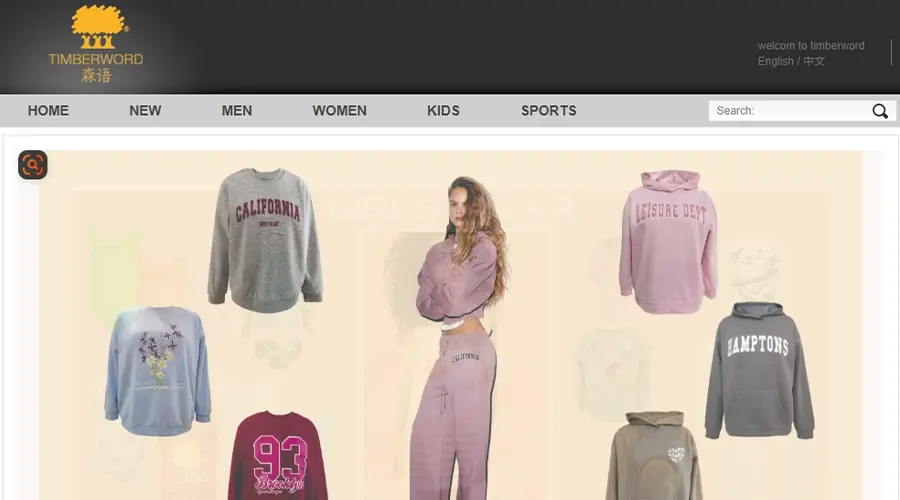
Timberword can be considered by brands developing plain casualwear where fabric and garment construction take priority over graphic decoration. A plain hoodie project gives buyers an opportunity to define the qualities customers actually feel when wearing the product, including weight, softness, interior finish, fit, hood structure, and rib tension. The sample stage should therefore be used to establish measurable standards for shrinkage, dimensions, surface appearance, seam quality, and future production consistency.
7. Henan Newasia Garment
Location: Henan, China
MOQ: 100 pcs per color
Sample Time: 5–10 days
Bulk Lead Time: 15–30 days
Best For: Scalable and repeatable hoodie programs
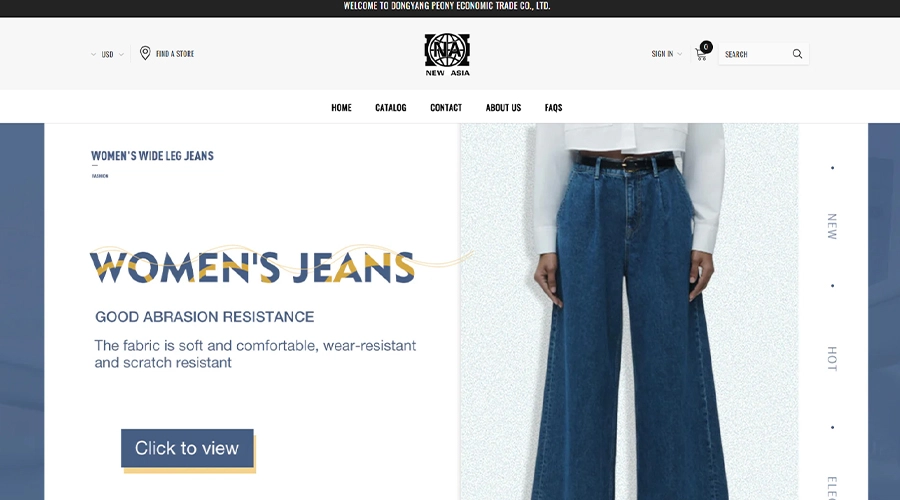
Henan Newasia Garment is particularly relevant for brands planning repeatable plain hoodie programs at a larger scale. Its hoodie development covers fabric, GSM, fit, hood construction, sewing, branding, and quality control, with custom production starting from 100 pieces per color. For basics, the important advantage is establishing a garment specification that can be reproduced. Buyers can define fabric behavior, measurements, rib recovery, hood balance, and finishing before scaling into repeat orders.
8. mladengarment
Location: China
MOQ: Varies by project
Sample Time: Varies by project
Bulk Lead Time: Varies by project
Best For: Fabric and fit-focused hoodie development
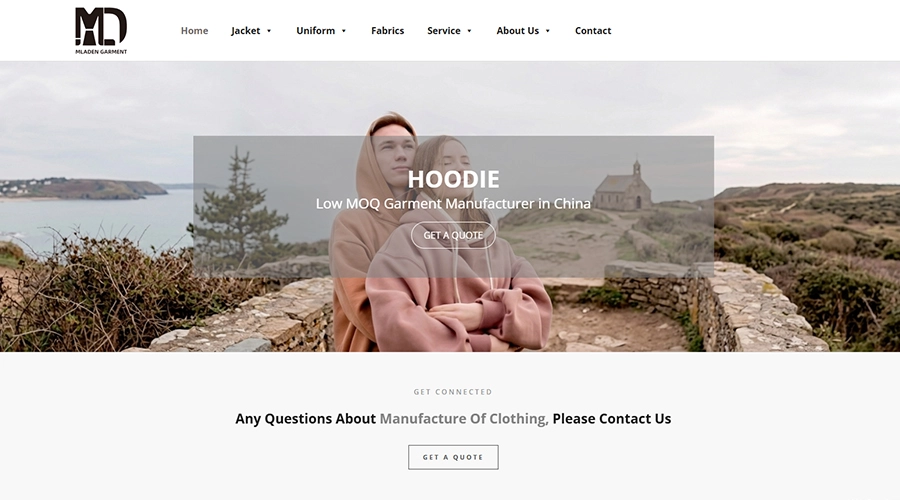
mladengarment is relevant to brands that want the plain hoodie to be defined primarily by material and fit. Its hoodie manufacturing direction includes different cotton-based fabric constructions and custom development from buyer specifications. This gives brands room to evaluate softness, drape, structure, hood shape, and garment proportions before adding private-label details. For a minimalist hoodie collection, the sample should become the physical standard for measurements, fabric character, sewing, and wash performance.
9. Ninghow
Location: Shenzhen, China
MOQ: Flexible
Sample Time: About 5–10 days
Bulk Lead Time: About 20–35 days
Best For: Flexible fit and fabric development
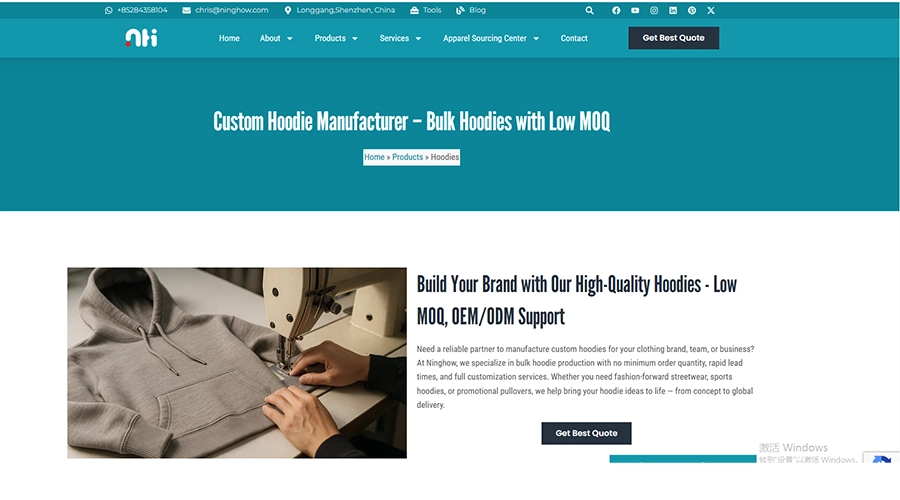
Ninghow offers hoodie manufacturing with cotton, blends, fleece, and French terry alongside regular, relaxed, and oversized fit development. Its public information also emphasizes pre-shrunk materials, reinforced construction, and sample approval before bulk production. These areas are particularly relevant to plain hoodies because there is no graphic treatment to distract from garment quality. Buyers can concentrate on silhouette, fabric surface, shrinkage, seam stability, rib recovery, and colorfastness.
10. MGOO Fashion Apparel
Location: China
MOQ: Varies by custom program
Sample Time: Varies by project
Bulk Lead Time: Varies by project
Best For: Fabric-led cut-and-sew basics
MGOO Fashion Apparel is suitable for brands that want to build a plain hoodie around selected fabric and cut-and-sew specifications instead of beginning with decoration. Its custom apparel approach allows fabric choice, pattern, fit, labels, and finishing to become part of product development. That suits minimalist hoodie programs where the customer judges the garment through weight, softness, silhouette, hood balance, cuff recovery, stitching, and color rather than visible graphics or complex decorative techniques.
Quick Comparison
| Manufacturer | MOQ | Sample | Bulk |
|---|---|---|---|
| OEM Fashion | 100 pcs | 10–15 days | 25–30 days |
| Mingxing Clothing | 100 pcs | 10–15 days | 25–30 days |
| YC Apparels | Varies | 4–7 days* | 10–18 days* |
| Alisman Garment | 100 pcs | Varies | Varies |
| Hongyu Apparel | 100 pcs | 8–15 days | 24–30 days |
| Timberword | Varies | Varies | Varies |
| Henan Newasia Garment | 100 pcs | 5–10 days | 15–30 days |
| mladengarment | Varies | Varies | Varies |
| Ninghow | Flexible | 5–10 days | 20–35 days |
| MGOO Fashion Apparel | Varies | Varies | Varies |
Why a Heavier Plain Hoodie Is Not Automatically Better
Heavyweight hoodies have become popular in streetwear, but increasing GSM does not automatically create a premium product.
A dense heavyweight fabric can provide a stronger silhouette, but it can also create problems if the rest of the garment is not developed around it. An excessively heavy hood may pull backward, thick seams can become bulky, and inappropriate rib can distort the cuffs or waistband.
Meanwhile, a lower-GSM hoodie made from suitable yarn with good knitting, finishing, and pattern balance may perform better for an everyday collection.
Brands should therefore define the intended wearing experience first and select GSM afterward.
Why Black Plain Hoodies Can Be Harder to Reorder Than Expected
Black looks simple, but maintaining the same shade across production batches can be challenging.
Different fabric lots, dye batches, compositions, and finishing processes can create visible shade variation. Even two garments described as “black” may look different when placed next to each other.
For a core black hoodie that will be restocked regularly, brands should keep an approved reference and confirm the fabric and color standard before each new production run.
This becomes especially important when customers may purchase the same product again months later.
What Should You Check After Washing the Sample?
A plain hoodie should not be approved only in its new condition.
Wash testing can reveal issues that are difficult to see during the first fitting.
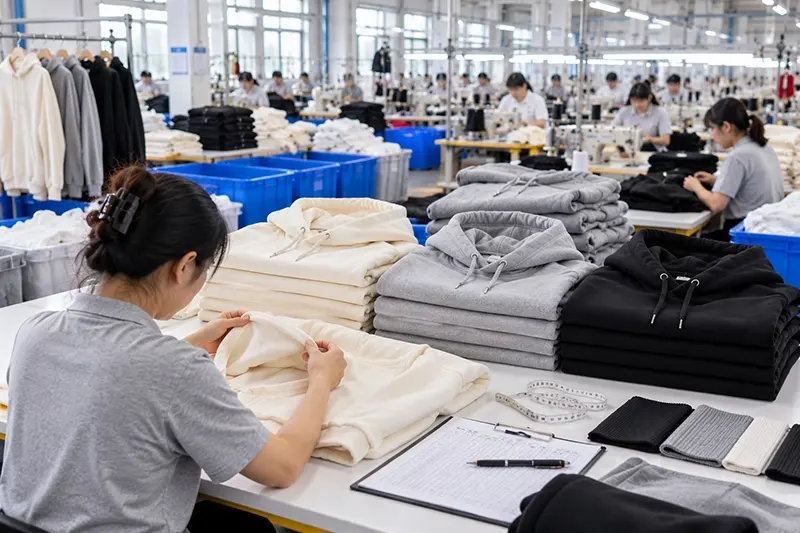
Measure the hoodie before and after washing and check body length, chest width, sleeves, hood, and hem. Look for twisting side seams, surface pilling, excessive fleece shedding, color change, uneven shrinkage, and rib deformation.
Then wear the garment again.
The final question is not simply whether it survived washing, but whether it still fits and feels like the product your brand intended to sell.
Why Repeat-Order Consistency Matters for Core Hoodies
A successful printed hoodie may disappear after one collection. A successful plain hoodie can remain in a brand’s assortment for years.
That makes repeatability part of product quality.
Brands should maintain an approved sample and specifications covering fabric composition, GSM, color, measurements, tolerances, rib, construction, labels, and finishing.
When reordering, the new batch should be compared against these standards rather than assuming that using the same product name or GSM will produce the same hoodie.
Final Thoughts
Plain hoodie sourcing rewards attention to details that are easy to overlook.
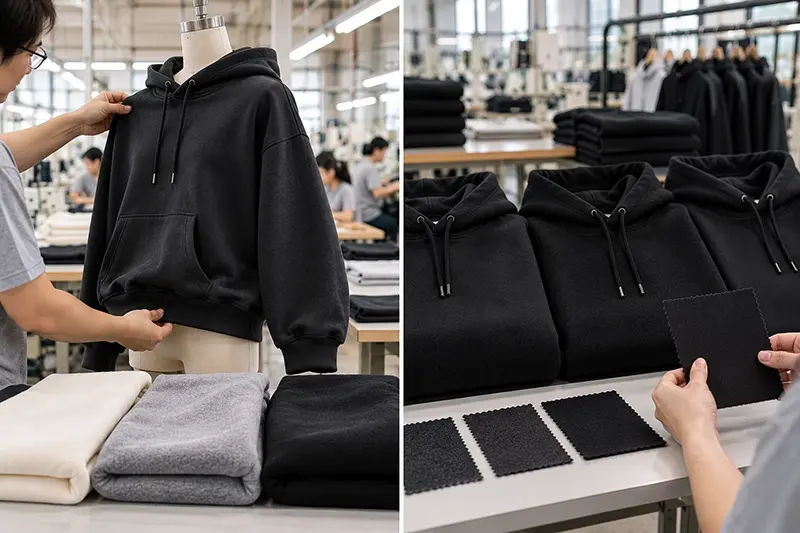
The strongest product is not necessarily the one with the highest GSM or the softest first touch. Fabric structure, silhouette, hood balance, rib recovery, shrinkage, stitching, color stability, and repeatability all contribute to how the garment performs over time.
For brands building a core basics collection, it is therefore worth treating the approved plain hoodie as a product standard—not simply another production order.
Compare physical samples, wash them, measure them, wear them, and determine which manufacturer can reproduce the characteristics your brand actually needs.
Planning a Custom Plain Hoodie Collection?
Send your reference garment or design, preferred fabric direction, GSM range, fit, colors, size requirements, quantity, labels, and packaging details.
Contact Us to discuss fabric development, sampling, and bulk production for your plain hoodie collection.
Frequently Asked Questions
What GSM should I choose for an everyday plain hoodie?
There is no single ideal GSM. Midweight fabrics around 300–350 GSM can provide a practical balance of structure and comfort for many everyday hoodies, while heavier fabrics may suit colder markets or structured streetwear. The intended fit, climate, fabric construction, and target retail price should guide the decision.
Why does my plain hoodie feel thinner than another hoodie with the same GSM?
GSM measures fabric weight per square meter, not thickness or quality by itself. Yarn, knitting density, fiber composition, brushing, finishing, and fabric structure can all change how thick or substantial the garment feels. Two fabrics labeled 350 GSM can therefore have noticeably different hand feel and drape.
Is 100% cotton always better than a cotton-polyester blend for plain hoodies?
No. Cotton can provide a natural hand feel and breathability, while polyester in a blend can improve stability, durability, and shape retention. The better choice depends on the desired feel, price point, shrinkage expectations, washing performance, and intended use of the hoodie.
Why does the waistband of a plain hoodie flare outward?
This can happen when the rib tension, rib dimensions, fabric recovery, or relationship between the body and waistband pattern is incorrect. A waistband that does not recover properly can make even a well-made hoodie look poorly fitted, so the rib should be evaluated after stretching and washing.
Why does a heavyweight hoodie hood pull backward when I wear it?
Heavy fabric, double-layer hood construction, hood size, neckline shape, and pattern balance can all contribute. Adding more fabric does not automatically create a better hood. For heavyweight styles, the hood should be developed together with the neckline and body pattern so the garment remains balanced when worn.
Share With
Related Articles
Hot Products